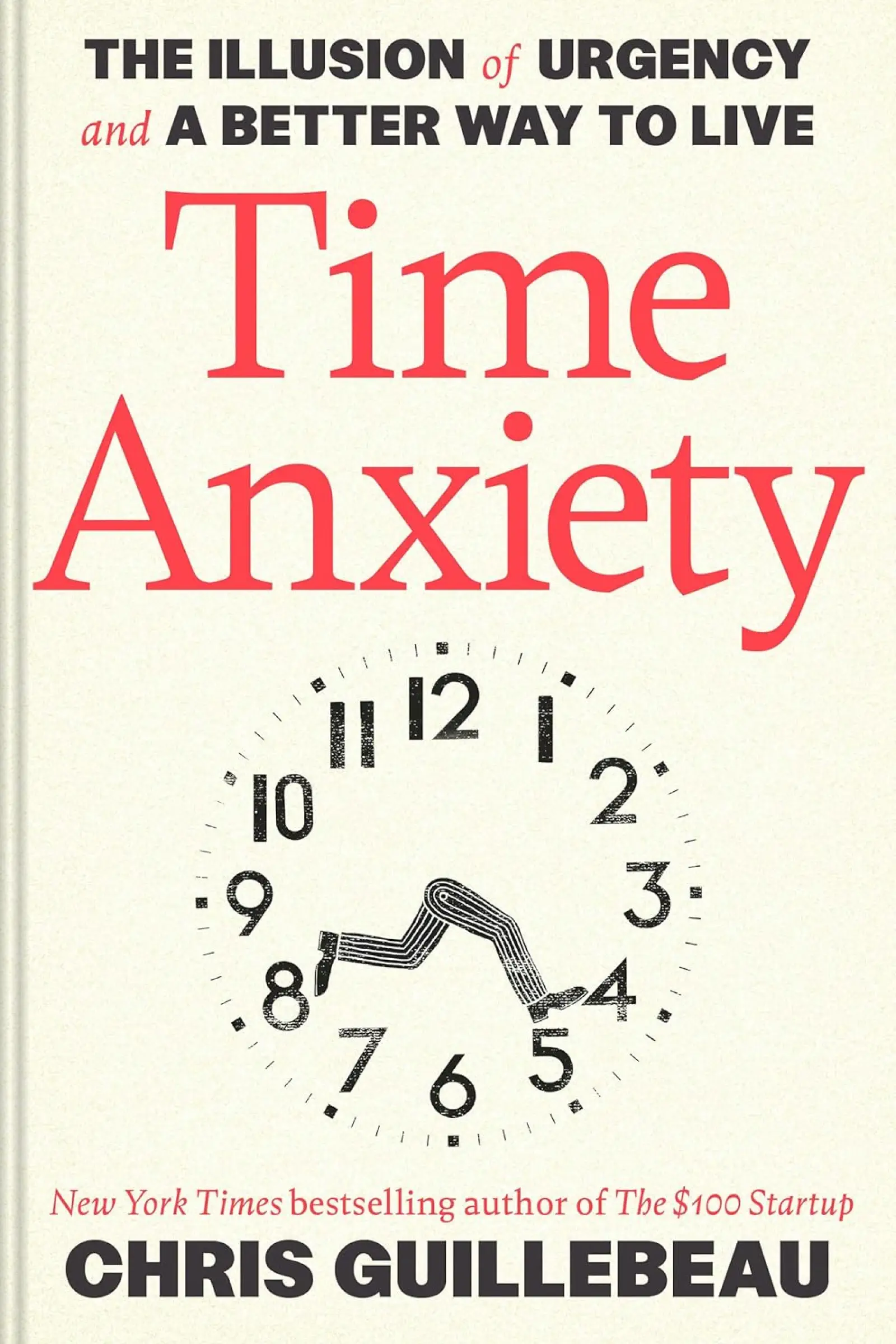
You're scrolling through your phone late at night and you see it again. Someone your age just got the promotion, launched the business, bought the house, had the kid—did the thing you've been meaning to do. Or maybe it's not even something specific. It's just a feeling. A quiet, persistent sense that wherever you are right now, you should be further along.
You do the math in your head. By this age, you thought you'd have more figured out. More savings, more clarity, more something. Instead you're lying here at midnight wondering where the time went.
If this sounds familiar, you're not unusual. You're not broken or lazy or behind schedule. You're experiencing one of the most common feelings of our time—and it has a name.
Almost Everyone Feels This Way
When I started writing about time anxiety, I expected it to resonate with some people. I didn't expect the flood. Readers wrote in with messages like:
"I've always felt this way, but never knew there was a name for it."
"I honestly believe this is the defining problem of my life."
The defining problem of someone's life. That stopped me. Because the feeling of being behind isn't a small thing for the people who carry it. It colors everything—decisions about careers, relationships, even how you spend a free afternoon. You can't enjoy Saturday when part of you is doing the math on how many Saturdays you've wasted.
The research backs this up. Surveys show that large majorities of young adults report feeling "behind" where they expected to be. But here's the thing: it doesn't go away with age. People in their 40s, 50s, and 60s say the same thing. The goalposts just move.
Where "Behind" Comes From
You didn't invent this feeling on your own. It was handed to you.
Most of us grew up absorbing an invisible timeline for how life is supposed to go. Graduate by 22. Start a real career by 25. Have it together by 30. Be established by 40. It's never written down anywhere, but everyone seems to know it. And when your life doesn't match the timeline, the conclusion feels obvious: I'm behind.
On top of that, you're living by what I call time rules—unwritten beliefs about how you should spend your hours. Rules like "I should be productive every morning" or "I can't relax until everything is done" or "If I haven't achieved X by now, something is wrong with me." Some of these rules might serve you. Many of them don't. But you've been following them so long you don't even notice they're there.
Then there's comparison. We've always compared ourselves to the people around us—that's human. But now we're comparing ourselves to the carefully edited highlights of thousands of people, all day long. Your brain doesn't know the difference between your neighbor's promotion and a stranger's vacation on Instagram. It just registers: they're ahead, I'm not.
The Fig Tree
During a hard time in my life, I read a passage by Sylvia Plath about a fig tree. In it, the narrator sits beneath a tree with dozens of beautiful figs, each one representing a different life: brilliant professor, Olympic athlete, famous editor, devoted mother. She wants them all. And because she can't choose, she watches them fall to the ground and rot, one by one.
I felt a deep sadness reading it, because I recognized myself. I could see so many possible paths—but many of them were exclusive. Choosing one meant closing the door on others. How could I possibly decide? What should I have been doing? I wanted more time, but time didn't wait around for my preferences.
Feeling behind often isn't really about what you haven't done. It's about the weight of all the things you could do and the paralyzing awareness that you can't do all of them. Time is limited, but desire is limitless. These facts will always be in conflict.
That's not a problem to solve. It's a truth to face.
Where does your time anxiety show up most?
Take a 2-minute quiz to find out whether you lean toward big-picture worries, daily overwhelm, or both.
Take the QuizYou Can't Be Behind on a Path That Doesn't Exist
Here's the thing about feeling behind: it assumes there's a schedule. A fixed route with mile markers that everyone is supposed to hit at the same age, in the same order. But there isn't one. There never was. The timeline you're measuring yourself against was assembled from cultural expectations, parental hopes, social media snapshots, and your own imagination. It's not real.
I'm not saying your feelings aren't real—they are. But the standard you're judging yourself against? That's made up.
From the book's manifesto: No one ever says, "I wish I'd made that change later." The feeling of "too late" is almost always wrong. It feels urgent, but it's a cognitive distortion—your brain catastrophizing about time the same way it might catastrophize about a plane crash. The fear is vivid. The probability is low.
There's a deeper truth underneath the feeling of being behind, and it's this: the reason time feels short is because it is. We're all on a countdown. That's terrifying until you accept it—and then it becomes the most clarifying thing in the world. Because once you stop pretending you have unlimited time, you can also stop pretending you need to spend it on things that don't matter to you.
What to Do with the Feeling
You can't make it disappear. And honestly, you probably shouldn't try—a little awareness of time passing is healthy. But you can change how you respond to it.
Notice your time rules. Start paying attention to the invisible "shoulds" running your day. Which ones did you choose? Which ones were handed to you? You can't change rules you haven't noticed.
Do things poorly. This might be the most freeing idea in the book. We've been told to "always do your best work," but that standard keeps you stuck. Sometimes eating at McDonald's is better than not eating. Sometimes a half-finished project is better than one you never started. Start things badly. You can fix them later—or not.
Pay yourself first. In personal finance, you set aside savings before paying bills. Do the same with your time. Stop giving your best hours to everyone else's priorities and deferring the things you actually want to do until "someday." Someday is a trap. Today is available.
The question isn't whether you're behind. The question is: behind what? Behind a schedule you didn't write, for a life someone else imagined? You get to decide what your life is for. And wherever you are right now—that's where you start.