Do Things Poorly
Some things are fine if they're "good enough" — and life gets better when you stop trying to be excellent at everything.
Whether or not you had a Santa phase as a child, you probably grew up with another belief — one that runs deeper and is harder to shake. It goes like this: you should always do your best work.
Let's challenge that. For a number of reasons, sometimes it's better to do significantly less than your best. Instead of pursuing perfection, or even "excellence," your life can improve considerably if you instead learn to do things poorly.
I know this sounds counterintuitive, especially if you grew up feeling pressured to finish at the head of the pack. But the desire for all-around excellence may be stressing you out more than you realize.
From a viral thread
The case against perfectionism
I first learned of this concept from a viral thread by Heron Greenesmith, a policy attorney and advocate for LGBTQ issues. Here's how they put it:
From a viral thread
"F*ck perfection. Art? Do it poorly. School work? Do half rather than not doing it at all. Calling a friend? Text them if you're afraid to call rather than not talking to them at all. Parenting? Literally just be there, even if you're half-asleep and on your phone. Eating? Go to McDonald's rather than waiting for something perfect."
— Heron Greenesmith, policy attorney and LGBTQ advocate
This might be contrary to what you tell yourself. You want to do a good job at everything! But being a perfectionist isn't something to be proud of — it's a belief system that can limit important skills, including:
- Your ability to complete tasks and move on
- Your ability to feel a sense of accomplishment about anything
- Your ability to triage — noting the difference between the few things that truly matter and everything else
Heron makes the point that do things poorly isn't only about moving faster. There's a more important reason: "Doing things poorly is CRUCIAL to harm reduction."
If you're trying to stop using harmful substances, for example, using less of them might be more achievable than stopping entirely. Perfectionistic thinking — all or nothing — makes the harder path feel like the only path.
I like Heron's McDonald's example. Many of us would reject it reflexively. "I would never! Fast food is bad." But you know what's better than not eating? Eating. Maybe next time you'll stock healthy snacks and have better options. For now, you eat the Big Mac, because eating is good.
The same principle applies to recycling. Another example comes from KC Davis, a counselor and author who advises people to throw things away when cleaning up their living spaces, instead of feeling paralyzed by the obligation to recycle or find new homes for every unwanted item. Don't miss the point: recycling matters. But when you're overwhelmed, imperfect action beats paralysis. You move into a better place, and from there you can make different choices.
Apply the method
Four ways to put it into practice
Here are four common situations where doing things poorly outperforms waiting for perfect.
Problem
You struggle to complete classwork.
Solution
Lower your standards. Turn in work that is less than amazing, and use the extra time to do something else. You don't need perfect grades in every class.
Problem
Your living space feels messy, but you're exhausted.
Solution
Identify what really needs to be cleaned. Do as much as you can on those things for ten minutes. When the time is up, stop and move on.
Problem
You're buried under a pile of unread messages.
Solution
Delete all unread messages and start fresh. Instead of flailing to catch up, do a better job with new messages going forward, at least for a while.
Problem
You haven't returned a phone call.
Solution
It happens. Don't worry about it. You can always resume the conversation later if it's important.
If you think of yourself as a perfectionist, this concept is difficult — maybe terrifying. But think about what you could accomplish if you did some things poorly. You'd have more energy to spend on what matters.
A personal story
The three-quarters-ass rule
You might know the expression "half-ass," usually as an admonition. "Don't half-ass it." Give it everything, in other words.
On the events team I used to lead, we had a saying that pushed back on that mentality. With a big conference coming up and many moving parts to manage, we wanted the core experience to be excellent. But if we pursued excellence everywhere, we'd inevitably fall short. So we made a rule: whenever anyone found themselves getting bogged down in some tiny detail that probably wouldn't matter much, anyone on the team could speak up in favor of what we called the three-quarters-ass rule.
The three-quarters-ass rule
Find the minimally acceptable solution for whatever you're stuck on — then move on to bigger things.
Sure, we don't want to half-ass anything. Let's do a decent job. But not everything requires full engagement. Figure out the floor, clear it, and redirect your energy.
Feel free to adapt this however it suits you. Not everything can be done with excellence, and you'll feel less anxious when you stop trying to meet an impossible standard everywhere at once.
Doing things poorly can also free you to focus on the few things that genuinely deserve your full attention — and you might do an even better job with those. When in doubt, let go and move on.
A practice for this week
Choose one thing to do poorly
The goal here is one concrete experiment — not a lifestyle overhaul. Pick one task you've been avoiding because you couldn't do it well enough, and commit to the three-quarters standard.
The 75% experiment
Pick one thing you've been stuck on due to perfectionism. Run it through these four steps and see what happens.
-
Name the thing
Identify one specific task you've been putting off because you couldn't do it perfectly. Make it concrete — not "exercise more" but "go for a 15-minute walk."
Example: "Reply to the three emails I've been avoiding all week."
-
Set a time limit
Decide how long you're willing to spend on it at 75% effort. The cap is the point — once the time is up, you stop, regardless of how polished the result feels.
Example: "I'll spend 10 minutes on these replies. Short, honest responses. Send."
-
Do it poorly — on purpose
Start the timer and work without trying to hit your usual standard. The constraints are the exercise. Resist the urge to go back and polish when time is up.
-
Notice what didn't collapse
After you're done, check: did anything break? Was the 75% version good enough for what it needed to do? Most of the time, the answer is yes — and that's worth knowing.
That energy you saved belongs to something that deserves more of you.
From the book
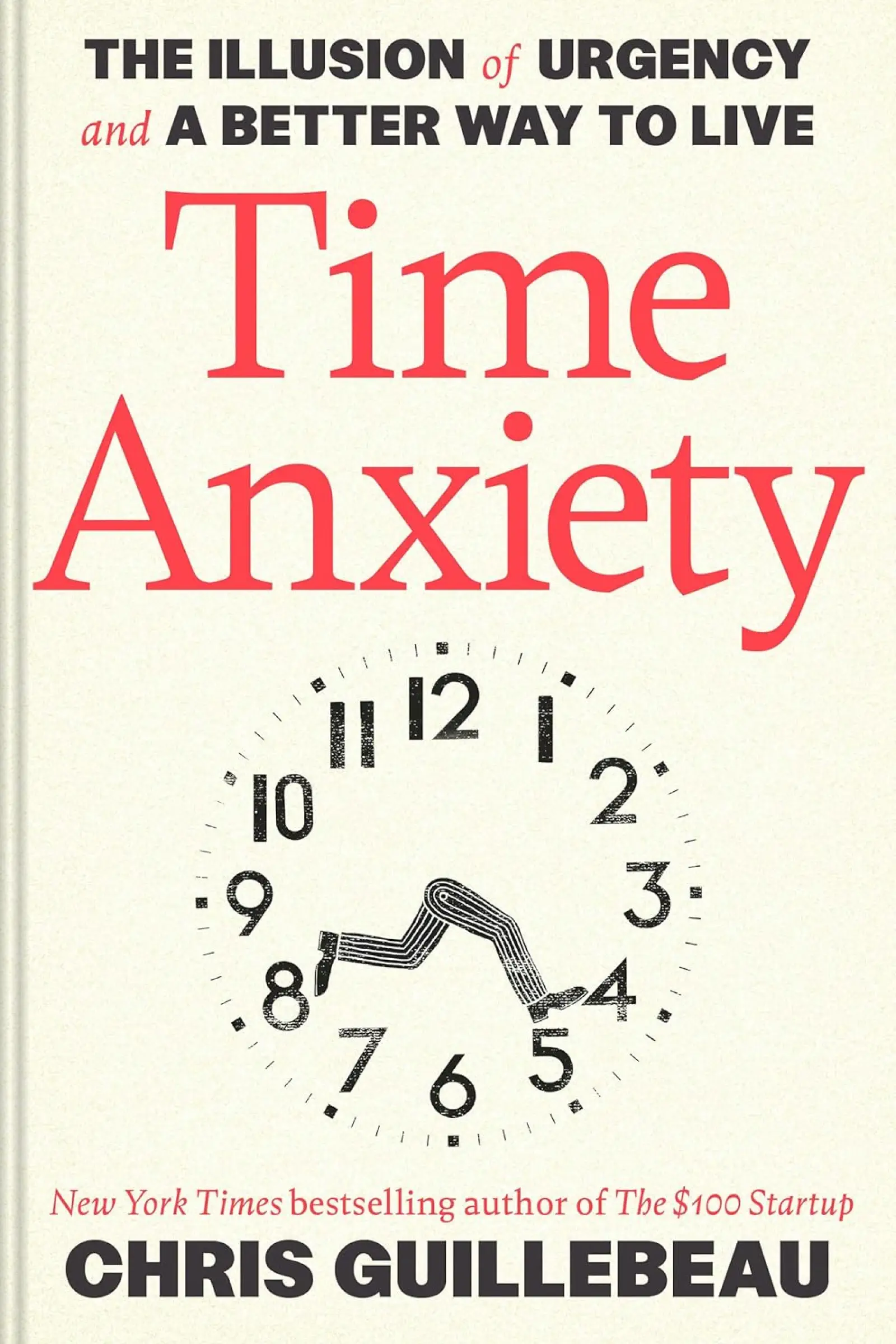
Do Things Poorly is Chapter 9 of Time Anxiety: The Illusion of Urgency and a Better Way to Live. The full chapter expands on Heron Greenesmith's harm-reduction framework and connects perfectionism to the broader patterns of time anxiety — including why the pressure to do everything well is one of the quieter drivers of feeling perpetually behind.
Get the book →