The Eighth Day of the Week
What would you do with an extra free day that came along every week?
Many years ago, I wrote in The Art of Non-Conformity about the model of thinking through an ideal day. The basic idea: if you're not sure what you want to do with your life, it can help to imagine a perfect day from start to finish — what time you wake up, what you have for breakfast, how you spend each hour.
What I'll show you here is a little different, because there are two problems with the ideal-day model.
First, there's a lot of pressure in creating it. I have to decide what my perfect day looks like? That's its own source of anxiety. Second, what you'd do on a single perfect day might differ from what you'd choose if you could repeat it.
The solution to both: instead of imagining one perfect day, think about an imaginary eighth day of the week.
Your week — with one addition
day
An extra day — yours, every week, with no obligations attached.
The thought experiment
What the eighth day looks like
This day is exactly what it sounds like — an extra day that comes along every week, maybe wedged between the weekend and the following week, or maybe midweek. On this day, time stops. All the external forces that usually occupy your hours pause. No one's expecting anything from you. The day doesn't have to be idyllic or perfect — it's that the day is yours, and it repeats.
How would you spend it, not once, but week after week — fifty-two times a year? A few prompts to get you started:
Learning
What could you learn in a year of eighth days? A language, an instrument, a craft you've been putting off since your twenties.
Creating
What could you build or make in fifty-two sessions of uninterrupted creative time? Most people have a project they've been meaning to start for years.
Dreaming
What are the big goals you keep deferring because the timing isn't right? The eighth day asks you to take them seriously.
Resting
Many people's first answer is: nothing scheduled. No agenda, no checklist, no one else's needs for one day. That's a valid answer — and a telling one.
Try not to overthink it. Go with what feels right before second-guessing kicks in.
The reason this works: you don't currently have an eighth day, which means you have no existing plans for it. You're free to imagine without any inherited obligations crowding the picture.
What readers said
Real answers from real eighth days
When I asked readers how they'd spend this bonus day, the answers varied — but patterns emerged fast. Playing music. Reading. Long walks with no destination. And again and again, one specific wish: a day with no agenda at all. Jen Zeman's comment on my blog captured it beautifully.
Jen Zeman, reader
"The eighth day, the ideal day, for me is always one free of an agenda. No one else's agenda, nor a rigid to-do list I've created for myself. I just flow without watching the clock: casual tea time in the morning; exercise for as long as I want; read, daydream, paint, play with the dogs, whatever my heart desires throughout the day. Then end the day with reading in bed (which I do now, every day), maybe even a good movie."
If you have a clear picture of your own eighth day, you've identified something important that's missing or underdeveloped in your life right now. The first thing that came to mind — that's the signal. If it was "go for a walk," that might mean more unstructured movement belongs in your regular week. If it was "have no agenda," your current schedule is telling on itself.
What can you do about that?
Digging deeper
What you truly want
For much of this book, the message has been: you can't do it all. Believing otherwise will only frustrate you. But it's also true that as you focus and live more intentionally, there's a great deal you can do. These are the objectives worth devoting maximum energy to.
One tip as you start to act on what the eighth day reveals: what you want can sometimes differ from what you first imagine you want. To get to the heart of it, peel back the exterior layers covering your actual goal.
Here's a personal example. I once thought about taking pilot lessons. I love being up in the air — moving between cities, watching the world go by from 30,000 feet. When I first had the idea of learning to fly a plane, it felt like a logical fit.
The more I looked into it, the more I realized becoming a pilot wasn't the right goal for me. It would take a long time to get qualified, and at the end of the process, I'd be flying small planes for short distances. If I wanted to go further (literally), it would take even more time and money.
What I loved most about being up in the air was looking at the clouds, daydreaming while a flight attendant brought me coffee and sparkling water. That's not how it works when you're flying a small plane solo. You have to pay close attention. Minimal daydreaming. And no flight attendants with snack packets.
Plenty of people love flying lessons. For me, the exercise taught me more about what I truly wanted. What I wanted was to keep flying as a passenger — relaxed, looking out the window, letting someone else handle the controls. That was already available to me.
By contrast, going to every country in the world — one of my real goals — required hardship that most people would prefer to avoid. Visa stress, airport floors, long stretches of discomfort. I understood that 99.999 percent of people have no interest in that. But for me, facing those challenges was worth it. Pursuing the quest made me feel more alive.
You have to decide for yourself. The more you adopt other people's goals instead of choosing your own, the more likely you'll stay discontented. Finding your own way is worth the effort.
Imagining an *eighth day of the week* helps you identify what's important to you when you feel free from everyday pressures. Use those insights to prioritize your energy and make day-to-day decisions that reflect what you want.
A practice for this week
More of this, less of that
As you go through your days, pay attention to how things feel. Ask yourself: what do I want more of, and what do I want less of?
Get specific. Almost everyone wants more joy and less stress — but what creates stress for you? What brings you joy? The eighth-day exercise helps surface the answers. This practice keeps them visible.
Plan your eighth day
You don't need a free day to do this. You need ten minutes and something to write with. Work through these four steps.
-
Brainstorm without constraints
Write down everything you'd do on your eighth day, without filtering. Cost, time, logistics — set them aside for now. What would you do if nothing was stopping you?
Prompt: "If no one expected anything from me tomorrow, I'd spend the time…"
-
Notice the pattern
Look at your list. What theme runs through it? Rest and recovery? Creative work? Connection with people you care about? Learning something new? Name the underlying need, not the specific activity.
Prompt: "The common thread in what I want is…"
-
Find the gap
How much of that underlying need shows up in your actual week right now? If you craved creative time on your eighth day and your current week has none, that's the gap worth closing.
Prompt: "My real week currently has [a lot / a little / almost none] of this."
-
Add one small piece this week
You don't have to overhaul your schedule. Find one block — even an hour — to bring in something from your eighth-day list. Do it this week, not eventually. The goal is to make the more of this, less of that principle concrete and immediate.
You don't need to solve everything at once. Paying attention to how things feel is itself a form of progress — it builds the habit of noticing, which leads to better decisions over time.
From the book
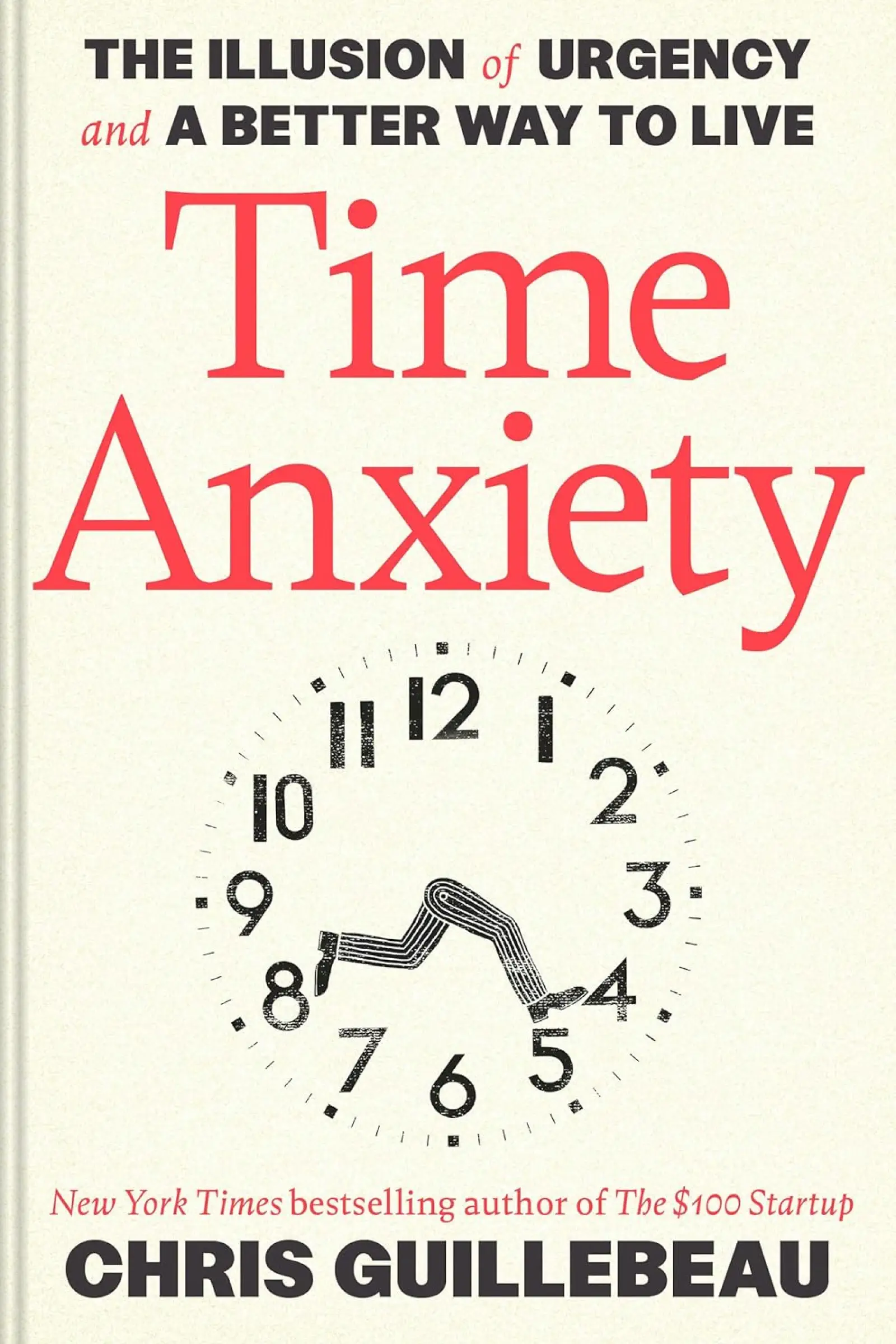
The Eighth Day of the Week is Chapter 22 of Time Anxiety: The Illusion of Urgency and a Better Way to Live. The full chapter goes deeper on the gap between what you imagine you want and what you truly want — and connects this thought experiment to the book's broader framework for making better decisions with finite time.
Get the book →