Start by Giving Yourself More Time
Before you make big decisions about your life, ease the immediate pressure you feel right now.
First aid, not life overhaul
You wouldn't tell someone in the middle of a panic attack to file their taxes. They need to regulate first — and so do you.
When I started writing this book, I first outlined ideas about mortality, leaving a legacy, and how to complete big projects. We'll come back to some of that. But as my editor and I went through the survey results, we realized something: time anxiety prevents people from moving forward in the basic operations of life.
Over and over, readers said things like:
They also tended to use absolute terms — "always," "never," "constantly" — to describe their struggles. They've always felt this way, they would never be better, and they constantly felt the pull of wondering whether they were spending their time well.
Anxiety inhibits your ability to think clearly in the moment. When you feel anxious, you don't always make rational decisions. Sometimes you know what you should do, but you feel incapable of doing it. Other times, you don't have any idea what you should do — you know what you're doing isn't good, but you're stuck.
Either way, you feel trapped. And when you're trapped, the first step is to locate an escape route.
The core idea
Create a time surplus
When you're struggling with time anxiety, deal with the immediate symptoms first. One reason you experience distress is because you perceive a time shortage in your life. So let's help you achieve a time surplus — where more time is available to you, even in the midst of a busy life.
Later, you'll see strategies including: when to do things poorly (not everything needs to be done with excellence), why not finishing things is often fine, and how to decide what "enough" looks like for any project. But for now, take a few quick actions that can help right away. These create space to make bigger decisions and figure out how you want to spend your time.
Do this today
First aid for time anxiety
Time Declutter Your Calendar
Look at your calendar for the next few weeks and challenge yourself to remove a few items. Most likely you'll find appointments that seemed like a good idea when you added them but feel less important now. Ask: Do I need to do this? Is it serving a purpose? Do I still want to do it?
Clear at least 2 items from the coming weekPut a Brick in Your Inbox
How many people have a direct line to your attention right now? Most of us have multiple inboxes: email, voicemail, social DMs, Slack, Teams, apps with messaging features. Being accessible all the time is costly. You can reclaim your attention by stepping away from some of these tools, or at least minimizing your use of them.
Turn off at least one inbox todayRemove Time-Wasting Apps
Delete apps from your phone that drain your attention without giving much back. You know which ones they are. The test: does opening this app make you feel better or worse? Does time spent here feel chosen or compelled?
Delete one app you keep reaching for by reflexTurn Off Non-Essential Notifications
Notifications train you to respond on someone else's schedule. Each one is a small interruption — and interruptions compound. Most notifications aren't urgent. Most can wait. Silence them by default and check on your terms instead of theirs.
Turn off all but your most essential alertsStop Agreeing Without Thinking
Before agreeing to any new request or commitment, pause. Ask yourself: Is this something I genuinely want to do? If I say yes, what am I passing up? You're not powerless here — your attention belongs to you, and you don't have to give it away on demand.
No new commitments without a deliberate pauseAs you work through these, notice how it feels. You've been worried about not having enough time — and now you're giving it back to yourself. These practices aren't about doing less overall. They're about removing constant pressure so you can feel more in control and make better decisions about what comes next.
Even if you gain an extra twenty minutes, spend it however you'd like. Don't automatically assign it to the same tasks you were doing before. Use some of it for activities that feel joyful or refreshing. This time belongs to you.
A different way to see yourself
Identity shift
Beyond the immediate actions, start thinking differently about your relationship with time. A common pattern from the survey: people had taken on an identity of "having this problem." It sounds like:
This type of thinking frequently makes things worse, sending you into a spiral of negativity and blocking real change. It might be true that your brain operates differently from other people's — but even if you're neurodivergent, this doesn't mean you're destined to keep having the same problems. You need to approach them differently from what you've been doing so far.
The feelings of being crushed and overwhelmed don't need to become a permanent state. Things can be better. Try thinking of yourself differently:
Try saying this instead
- I am a person who is figuring things out.
- I am learning to be more assertive.
- Even though this is hard for me, I'm making progress.
There's more to be done, but this is a good start. When you give yourself the gift of time, you begin a process of feeling more free.
When you're overwhelmed
Overcome overwhelm by starting small
"I'm so overwhelmed that I can't do anything." Have you felt that way? There's either too much to take in, you don't know where to start, or you experience so much distress thinking about it that you do nothing at all.
When we're overwhelmed, we sometimes freeze — and that freeze can look like laziness or even stupidity to others. (Maybe we've thought this about someone else: why can't that person make simple progress? The answer: they would if they knew how.) The next time you feel overwhelmed, try this:
- 1st Calm your nervous system. Take three deep breaths, holding each for a few seconds before releasing. Then ground yourself by noticing five things in your environment that you can see — this brings your focus to the present.
- 2nd Reject catastrophic thinking. You're not in the middle of a disaster — you're overwhelmed, and it happens. You've been here before and made it through.
- 3rd Pick one thing you can do, and do it. If you need to answer an email, open it and type the first sentence — something low-energy, like "Hi there" or "Thanks for the message."
You might not need a huge project-management system. It might be better to take it slow, work through things piece by piece, and remember that "do it poorly" is sometimes the right call.
A practice for this week
Your Time Declutter
Clear two things from your calendar
Most schedules carry commitments that made sense when you added them but have since lost their purpose. This exercise helps you reclaim that time deliberately — before another week passes.
-
Open the next two weeks
Pull up your calendar and look at everything scheduled for the next fourteen days. Don't filter yet — see it all in front of you.
Prompt: What's on here that I added out of obligation instead of genuine interest?
-
Run each item past three questions
For every commitment, ask: Do I need to do this? Is it serving a purpose in my life? Do I still want to do it? If you can't say yes with confidence to at least one, it's a candidate for removal.
Prompt: What will happen if I cancel this?
-
Remove at least two items
Cancel, decline, or reschedule. Then notice how it feels to see that space open up. You're not clearing your schedule to do nothing — you're clearing it to choose.
Prompt: How does it feel to reclaim this time as a gift to yourself?
-
Protect the space you created
Before the week begins, decide in advance not to refill that time automatically. Let it stay open for a few days. Use some of it for whatever feels joyful, refreshing, or restful.
From the book
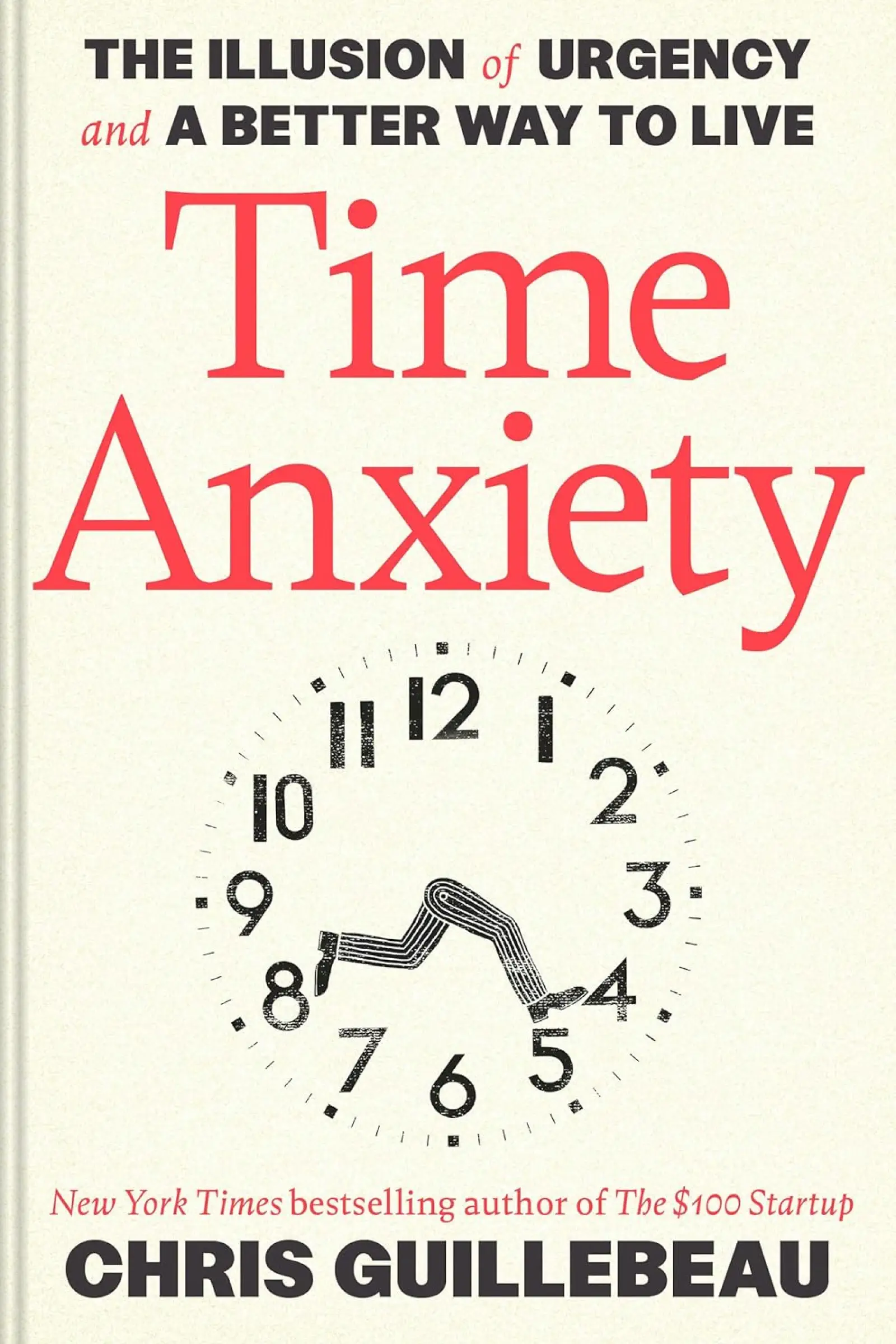
"Start by Giving Yourself More Time" is Chapter 1 of Time Anxiety: The Illusion of Urgency and a Better Way to Live. The full opening chapter introduces the time surplus framework and sets the stage for everything that follows — from cognitive distortions to the rules of engagement that protect your attention long-term.
Get the book →