Weddings, Holidays, and Other Depressing Events
If you sometimes feel sad or anxious during big life events or holidays, it might be easier to create memorable moments on more ordinary days.
When we think about special days, we tend to think of two categories: big life events and holidays. Both can be stressful — even to the point of becoming genuinely distressing.
Big life events
Graduations, weddings, births. Sometimes these are great days. But sometimes they aren't — and you're still expected to look like they are.
Holidays
Recurring dates on the calendar. The end-of-year season, birthdays, Mother's Day, Valentine's Day. The kind of days that can feel heavy even when they're supposed to feel light.
In both categories, the participants are generally expected to be happy. A new mother isn't supposed to complain about a difficult birth. Getting married? Everything about your life must be amazing, because look around at all the single people. (Slight exaggeration.)
This pressure doesn't only come from other people. Sometimes it's self-applied. "Why wouldn't I be happy to have arrived at this moment," you ask yourself. Everything in your life has been leading up to this point — so how dare you feel sad or confused about it. And then you end up masking your true feelings, even to yourself.
The recurring ones
Holidays and the pressure to perform
Many people who struggle with time anxiety also experience complex emotions around holidays. When everyone else appears to be exuberant, you feel the pressure to pretend. You might be sad, worried, overwhelmed, or stressed.
The end-of-year season in December can be especially challenging. No matter what you're feeling, you're supposed to go around acting like everything is wonderful. The same is true with birthdays, or themed days like Mother's and Father's Day. If you've lost a parent or child — or if you didn't have a healthy relationship with a parent — you might dread the arrival of these dates on the calendar. Valentine's Day is similarly complicated for many people.
Complex feelings during holidays aren't a sign that something is wrong with you. They're a reasonable response to unreasonable expectations.
The universal one
We all enter a time warp
However you feel about designated annual celebrations — even if you love them — there's one thing that applies to all of us: time is weird during the holiday season. Like it or not, we all enter a time warp.
When we're in the time warp, our emotions tend to be exaggerated — good ones and bad ones.
In many industries, work essentially stops for several weeks during the holiday season, even when employees are still showing up. At a certain point, people start saying things like "Let's circle back on this in the new year." Your schedule and routine changes, with or without your consent, and for many of us, so do our habits.
If you've been feeling mostly happy by the time December rolls around, you might feel even happier as the season of merriment unfolds. But if you've been feeling anxious or sad, the same principle holds: your negative emotions can become exaggerated, the same as any others.
What actually helps
Find something to focus on
So if you're like me and holiday seasons are sometimes difficult — what do you do? For better or worse, extended hibernation for weeks or months is only an option for animals like bears and hedgehogs.
Since outright escape is impossible, start by recognizing what's happening and have compassion for yourself. You don't need to share your feelings with everyone around you, but you also don't need to pretend to be joyful when you're not.
Personally, I love a good project during the holidays. It helps keep me grounded. Looking back on recent holiday seasons, I can spot a clear difference in my mood and well-being based on whether I had something specific to focus on or not.
Granny hobbies are ideal for this. If you like to knit, set a goal to make five new hats or attempt a bold sweater design. Getting lost in a long, story-driven video game works too. The specific activity matters far less than your genuine enjoyment of it.
- A creative project you've been putting off
- A long video game with a real story
- A physical craft with a defined goal
- A book you've wanted to read but never started
- Anything that's yours — absorbing, low-stakes, and chosen by you
The bigger picture
Movies vs. real life
The idea of manufactured special days — whether through big life events or holidays — is one area where movies and real life are different. In a movie, scenes are placed to represent touchstones of progression. The director wants to elicit a certain emotional response from viewers. Big life events become stand-in scenes designed to lead the audience along.
Worth remembering
In life, many of the truly special moments seem ordinary or unexpected. Far better to recognize special moments on ordinary days — moments that only appear special in hindsight.
— Chapter 24 of Time Anxiety
If you can increase the quantity of these moments — both in their overall occurrence and in your own recognition of them — you'll feel more purposeful. It's normal to struggle during holiday seasons and big life events. Accept the complexity of emotions, choose a personal project to regain some footing, and create your own special times.
A practice for any season
The One-Minute Ease Break
One small practice can help you stay grounded no matter what's happening around you — a one-minute ease break that trains you to notice when friction is building before it takes over.
The One-Minute Ease Break
Set a timer on your phone to go off at three random points during your day. When you hear the chime, ask yourself: "Am I feeling friction or ease right now?" Then respond to whatever you find.
-
Set the timer
Three random alerts during the day — not at predictable times. The randomness is the point: you're training yourself to check in, not only at scheduled moments.
-
Check in: friction or ease?
Friction EaseIf you're feeling ease, pause and feel that lightness in your body. Anchor it by tapping your wrist and saying "ease" — a physical trigger you can use anytime to return to that feeling.
If you're feeling friction, use this minute to get unstuck. Stand up, shake out your hands, and take three slow, deep breaths.
-
Take the one small action
Ask yourself: "What's the simplest next step I can take to reduce this friction?" Trust the first answer that comes to mind. Take that one small action and let the momentum carry you forward.
Over time, you'll train yourself to recognize friction quickly — and switch back into ease.
From the book
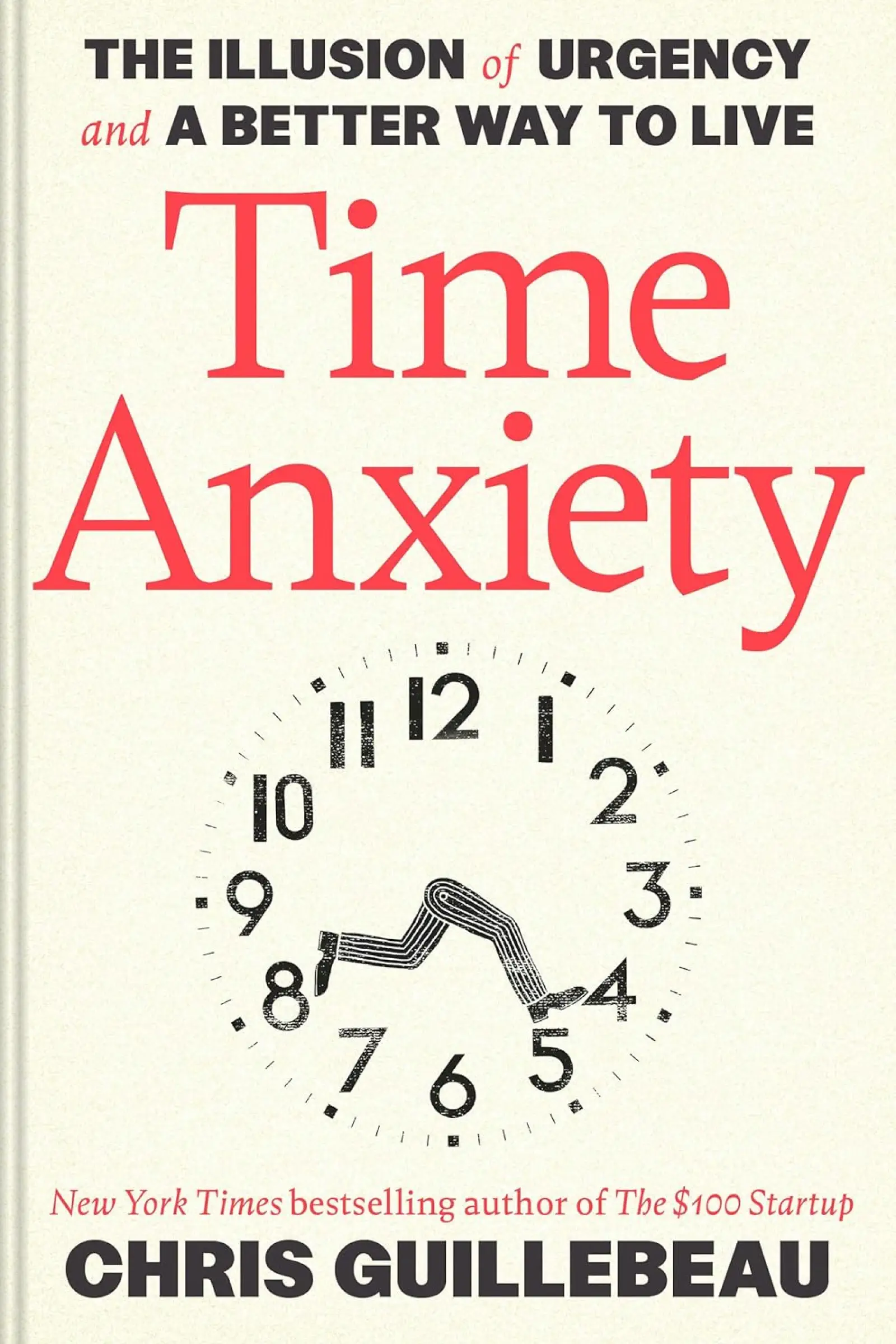
"Weddings, Holidays, and Other Depressing Events" is Chapter 24 of Time Anxiety: The Illusion of Urgency and a Better Way to Live. The full chapter goes deeper into the emotional mechanics of big life events, the specific calendar dates that tend to hit hardest, and the broader practice of creating meaning on ordinary days rather than waiting for designated ones.
Get the book →