A Light Schedule Is Sometimes Harder than a Full One
Why an open calendar can feel more stressful than a packed one — and what to do about it.
Light schedule
Full schedule
The inverted relationship between schedule density and felt anxiety
Tania, a professional voice actor from Los Angeles, told me she was having trouble understanding where her time goes. "Did you always feel this way," I asked her, "or has it been more pronounced since the pandemic?"
"Kind of always," she said. "Maybe more since the pandemic, but here's the weird thing. I used to have to pack everything into a busy schedule. Now I have a lot of time, and I'm more stressed out."
It's a strange pattern in our relationship with time — one that doesn't make sense at first. If you have more free time, shouldn't you be more relaxed? Yet sometimes your emotions work the other way: having a light schedule can feel more stressful than a full one.
I've noticed this especially with people who are newly self-employed. Sometimes their side business is going so well that they take the leap and quit their day job to work fully on their own. They imagine that they'll have "so much more time" once they no longer have to answer to someone else.
But the opposite occurs. Instead of growing their business with all the extra hours, they can end up stalling. The first few days feel great, maybe even the first couple of weeks — but after a while the great freedom of owning so much time turns into an unexpected burden.
Don't get me wrong: having more free time is better than having less. If your schedule is so jam-packed that you don't have time to breathe, you end up running on fumes. But a preferable alternative isn't without its own issues. For many of us, it's the biggest problem of our lives: out of countless options, how do we best use the time we have?
The research
You have a natural limit on daily productive hours
In the book Daily Rituals, Mason Currey documented the life and work patterns of famous people — Mozart, Beethoven, Tolstoy, and many others. One of the biggest takeaways from Currey's research: most people are able to do no more than three to four hours of focused work per day.
Even prolific writers and artists — Charles Dickens, Maya Angelou, Pablo Picasso — were rarely able to work through the whole day. Their specific routines varied, but a common pattern emerged: a few hours of concentrated work in the morning, followed by almost anything other than focused work.
Dickens took long walks through the city, an act that improved his powers of observation and was integral to his creativity. Beethoven worked much the same way, rising at 6:00 a.m. and counting out exactly sixty beans for his morning coffee. After a work session in a spartan office, he took off for an extended walk in the Viennese woods. Though he returned to work for editing after the break, he viewed the long interruption as essential to his process.
The pattern looks something like this:
Deep work
3–4 hours of concentrated creative focus in the morning
The walk
Extended break — movement, observation, mental rest
Light work
Editing, correspondence, or nothing at all
The ability to concentrate comes with a built-in limitation. You can still do things throughout a full workday, but if you want to be effective, you need to intersperse concentrated tasks with different things. That limitation doesn't disappear when you have more time — it becomes more visible.
The fix
Learn to manage yourself, not time
Once you understand the natural limit of daily productive hours, it makes more sense why a light schedule can feel more stressful or overwhelming than a compressed one. The mistake many newly self-employed people make is to imagine they can seriously ramp up their productive time. They figure they've been cramming their project into a concentrated period. Now, with more time available, they're going to crush it.
The problem: they've likely been doing that concentrated work in a highly effective way that can't be multiplied to fill many additional hours. Going from one hour a day to eight hours a day won't produce eight times more output. Perhaps doubling is possible — and that's a win. But you can't do what you did before, only maximized for a much longer period.
The wrong response is to start padding out your schedule because doing so is a familiar, comfortable pattern. Better to learn to manage yourself within the constraint — then use the rest of the time for other things.
The counterintuitive move
Deliberately create constraints
A thought experiment
If you had to radically reduce your time spent on something, how would you handle it?
I started thinking about this when I had a bad case of the flu that lasted more than a week. I spent a good portion of each day sleeping — and a fair amount complaining about being sick. Of course, I still had to work some of the time. My energy level was constantly low, but every so often I'd muster enough strength to plow through a few tasks or half-heartedly reply to messages before crashing on the couch for another long nap.
No need to get sick to triage your work so severely. You can decide that you only have a certain amount of time to work on something — and then figure out how to best use it. When you have clear constraints, you tend to eliminate a lot of superfluous activities.
What if you had to fit in a workout in under fifteen minutes? What if you had to plan a big trip, and instead of researching for weeks you gave yourself two days to have everything booked? Limitations and constraints can be helpful. If your day isn't naturally designed around a set schedule, create the order you need to thrive.
A light schedule can be more psychologically challenging than a full one — but it doesn't have to stay that way. Don't be afraid to put some parameters around your schedule that serve your needs. The amount of time available to you isn't the only factor that makes you feel busy or overwhelmed. Sometimes, a light schedule feels more constrictive than a full one. The solution is structure you choose, not structure imposed on you.
A practice for this week
Add one anchor to an unstructured day
Find the smallest structure that changes how the day feels
You don't need a full schedule — you need one anchor point. This exercise helps you find it, protect it, and learn what it's worth.
-
Notice the spike
Pay attention to when open, unscheduled time makes you feel anxious instead of free. Write down what was happening — or not happening — in those moments.
Prompt: When does free time feel like pressure instead of rest?
-
Add one anchor
Choose a single small commitment to attach to an unstructured day: a set start time, a morning walk, a standing block for focused work. Keep it modest — one anchor, not a system.
Prompt: What's the one thing that, if I do it, makes the rest of the day feel more intentional?
-
Protect it
Treat the anchor the way you'd treat an appointment with someone else. Don't negotiate with yourself when the moment comes. Let the plan answer for you.
-
Compare the days
After a week, note how a day with one anchor felt versus a day without one. You're not measuring productivity — you're measuring how the day felt to live through.
Prompt: Did having the anchor change my sense of control over the day?
From the book
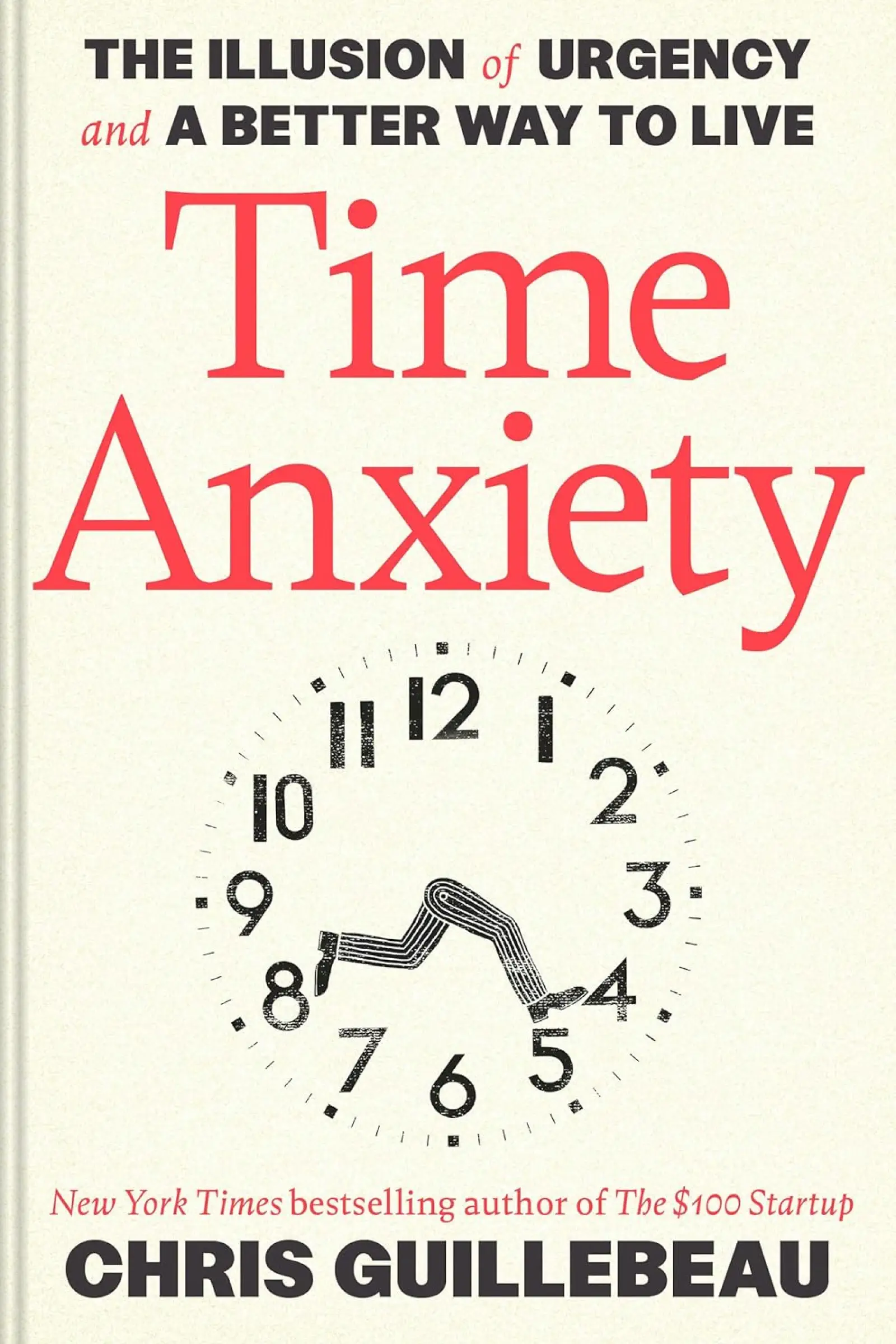
This is Chapter 17 of Time Anxiety: The Illusion of Urgency and a Better Way to Live. The full chapter includes a longer look at how to review unscheduled time — the pockets of your day that slip away without you choosing them — and how to reclaim them without micromanaging every minute.
Get the book →