The Movie of Your Life
If your life were a movie and you were the director, what scenes would you add?
You're the director. Every scene still to come is yours to write — within the constraints of budget, circumstance, and a cast of other people. The question is whether you're shaping the story or only watching it happen.
Imagine you're watching a feature-length movie that tells the story of your life. It's a detailed view of the full story — highlights, lowlights, and everything in between. Now imagine you're the director of this production. You have final say over what goes in and what stays out.
Good film editors know that every scene exists for a reason. So if you had the chance to watch the rough cut of your life up to now — the one you directed — you might wonder why you chose to add certain scenes. What was your character's motivation? What can you learn from those editing decisions?
Watching the rough cut should make you feel proud. There are probably some embarrassing moments — we all have them — but also times when you rose to the occasion. Special memories, accomplishments, relationships, moments where you cared deeply for yourself or someone you love.
Cognitive distortions tend to keep us from those memories. We experience a negativity bias, magnifying failures and downplaying successes. Picturing your life as a movie can help correct that — reminding you that you've already done a lot of things well.
Looking forward
More screen time awaits
The movie isn't over. More screen time awaits — and in this scenario, you get to direct the rest from here on out. There are constraints, of course, as real directors deal with budgets, studio executives, and picky actors. You work within the constraints you have while making the best movie you can.
For a while, I had built-in highlight generators I could count on: a trip to a far-away place always in the queue, new projects starting regularly, a big annual event filled with challenges and energy. Then things shifted during the pandemic, as they did for many people. I traveled far less. We ended the event after ten years. I became even more a creature of habit — a daily podcast episode, an exercise streak of more than 1,500 days in a row.
The order and structure worked well enough. But I had to admit I'd become too rigid. The movie of my life was getting boring. The script needed a touch-up.
In a movie, the writing and directing team will often purposefully create scenes that raise the dramatic tension. Highs are higher, lows are lower — not to distort reality, but to tell a better story. For me, the question became: how could I edit my life in a similar fashion?
A special day
Walking to dinner, twenty miles north
One day, I went on a long walk — a genuinely long one, at least for me. There's a restaurant about twenty miles north of my home that serves delicious cornbread. That morning, I made a dinner reservation for 7:00 p.m., then left my apartment right after lunch.
I wasn't sure I'd make it the whole way. I did. I arrived at 7:09 p.m., six hours after leaving, and celebrated by eating a large pan of cornbread — normally meant as a shared appetizer for the table — all by myself.
I took an Uber back and enjoyed passing many of the places where I'd been walking for hours. During dinner and on the ride home, I thought: This was a special day. I couldn't remember ever having walked so far.
And yet it wasn't that difficult. The hardest thing was deciding to do it. The whole thing seemed a little silly at first — setting out with a small backpack and walking six hours for no particular reason. Once I settled in after an hour or so, it was delightful.
More special days like that — that's what I wanted as scenes for my movie. They didn't have to take up half the day or involve strenuous activity. They needed to be different enough to stand out.
The scenes ahead
Your movie has more to reveal
Some scenes of your life's movie have already been filmed. Many more await production. When you consider painful memories up to this point, you might find yourself thinking:
That was a rough time in my life, but I'm stronger because of it.
I'd probably make some decisions differently now, but I did the best I could at the time.
I wish that relationship hadn't ended the way it did, but I'm still grateful for the lessons it taught me.
You might even end up deciding: I feel so fortunate to have had these scenes in my movie.
When you feel overwhelmed or like you have no control over the future, take a step back and reconsider the movie of your life. Radical acceptance — acknowledging you can't control everything — is one part of the answer. But surrender is the first step, not the last. The next one is moving toward more intentional choices.
I wanted to increase the proportion of meaning in my life. I wanted more memories. I wanted the highlight reel to be longer than all the Fast & Furious movies combined. And I wanted to appreciate the ordinary moments much more. These are achievable goals.
Thinking about your life as a movie — one where you're the director — helps you make key decisions. You can enhance the highlight reel by pursuing more special days, or deciding that more ordinary days will be special. You can pay closer attention to what comprises each week, month, and year. You can move from passively letting life unfold to taking a more active role in its unfolding.
What happens next? What scenes remain to be developed?
A practice for this week
Direct your next scene
Screen Your Rough Cut — Then Schedule a New Scene
Four steps to move from passive audience member to active director of your own story.
-
Watch the rough cut
Write down 5–8 defining scenes from your life so far — moments that shaped you, choices that mattered, times you're proud of or learned something hard.
Prompt: If these were actual film scenes, which ones would make the extended trailer?
-
Notice the patterns
Look at what you wrote. What do those scenes have in common? Where did you feel most alive? What kinds of experiences seem to be missing from the reel?
Prompt: What does my rough cut reveal about what I value — versus what I say I value?
-
Write one scene you want to add
Describe one scene — specific enough to be real — that you want to add to your movie this season. It doesn't have to be grand. It does need to be different enough from your usual routine to stand out.
Prompt: What would I remember from this season if I looked back on it a year from now?
-
Schedule a "special day" to film it
Pick an actual date and put it on your calendar. A special day doesn't need a big budget or a lot of time — it needs a decision. Make a reservation, send the invite, or block the morning. The hardest part is deciding to do it.
Prompt: What is special about this day?
A daily practice
There is always something special about every day.
What was it today?
Anxiety about time pulls your attention forward into dread or backward into regret. This question anchors you to right now. Ask it each evening, looking back on the hours that passed. If you can't find an answer, that's useful information — it means tomorrow is a good day to do something different.
From the book
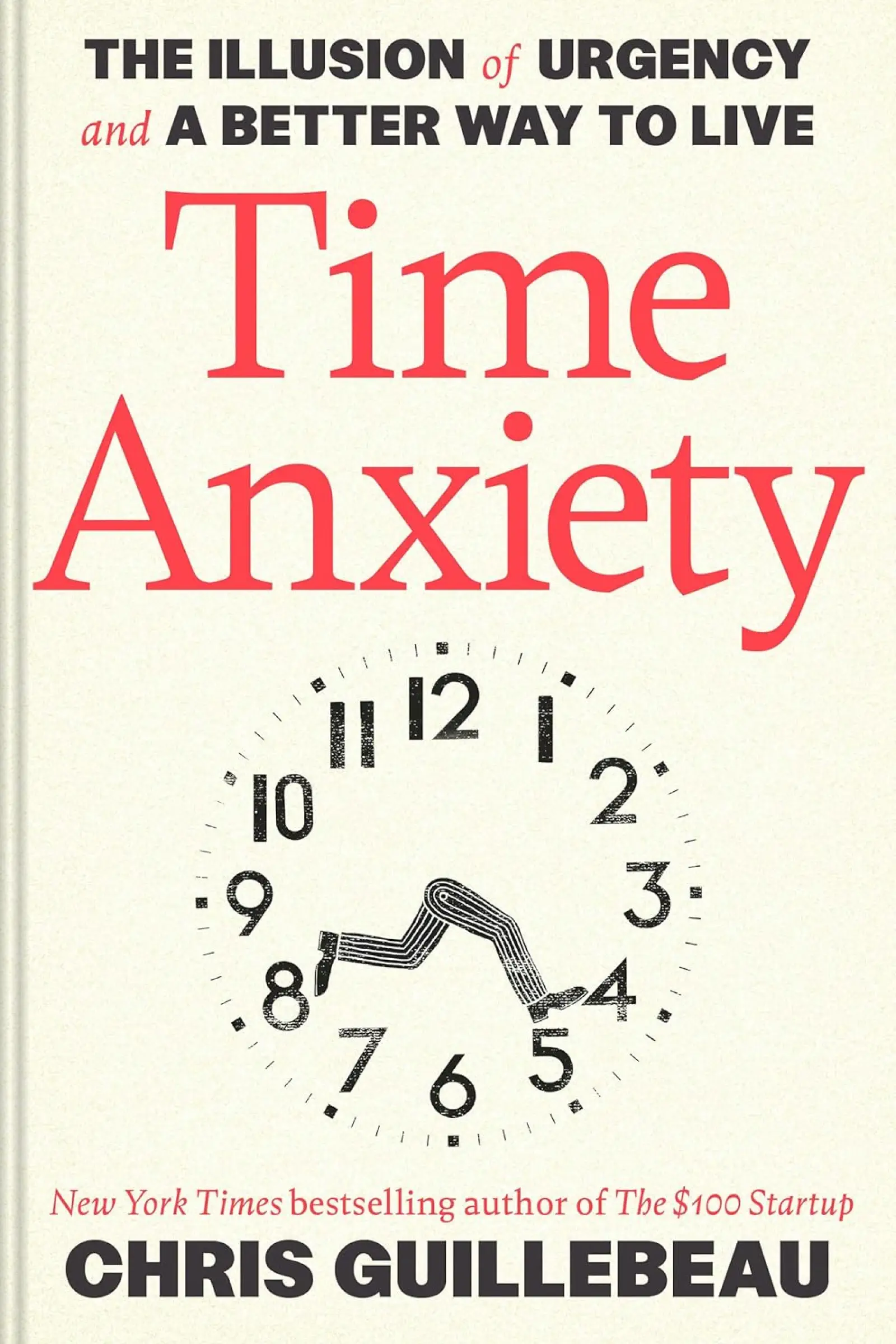
The Movie of Your Life is Chapter 18 of Time Anxiety: The Illusion of Urgency and a Better Way to Live. The full chapter connects the director metaphor to the book's broader argument: that once you've worked through cognitive distortions and released the myth of perfect completion, you're ready to actively shape what comes next.
Get the book →