Instead of Leaving a Legacy, Learn to Live Well
A way to feel better — and a better way to live.
For at least a decade, thinking about legacy was a primary motivator for me. I wanted to be someone, to build something. I connected this motivator with a means of production: if only I wrote enough books, produced events for enough people, started enough projects — then, well, I wasn't sure what I thought would happen. I guess I thought that, cumulatively, these things would add up to a sum greater than the parts and I could look back and say, "Mission accomplished!"
There's some ego involved with thinking like that. But ego isn't the whole problem with the achievement-oriented mindset. It's good to be proud of what you've done and who you've become — I believed that long ago and still do. The greater problem is believing in its permanence.
A familiar idea, seen differently
You can't build what you can't control
As I began to find my way out of the worldview that had governed my thinking for so long, I watched a video a friend sent me — the expert's argument was that what men need is to build a legacy that will endure after they're gone. Watching it, I felt frustrated. You're setting yourself up for failure if you insist on an outcome you have no control over.
But what the speaker said also felt familiar. For years I had believed and said similar things. I too had believed that the purpose of life was to leave something behind, in some important-sounding but vague way.
Maybe that was part of my problem. What I saw as positive — the desire to build something that would endure — was contributing at least as much to my daily sense of frustration and angst as anything else.
The pressure to use every minute well creates an impossible goal, an endpoint that sets us up for repeated failure. And ultimately, attempting to build a legacy might be another way of trying to stem the tide — to stop the natural progress of time, as well as a universe that tends to go on existing fine without us. The ocean is endless. The ocean does what it wants. It doesn't adjust its behavior to suit our schedule or preferences.
From the book
One day, we're going to die.
Until then, we have all the time in the world.
The better goal
Focus on living well
Legacy-building as a motivation is different from the concept of legacy itself. Undoubtedly, some people do leave a legacy, but it's hard to purposely build one. So what can you do instead?
For me, I realized that what I wanted most of all was to live well. This goal still comes with pressures and stressors, of course, but of a lesser kind.
Living well doesn't mean caring only for yourself. Living well involves caring for yourself and others, recognizing them and helping them along wherever possible.
Maybe this is where legacy, if it comes, comes from — not what you build or leave behind, but the logical result of a life lived generously and kind and helpful, without continuously deferring your own dreams. One that practices setting boundaries, both out of respect for others and for yourself.
Living well is a goal you can pursue today, in the way you react to the many things that come your way. You can push aside much of the incoming firestorm, gathering only what you need for the few things you can do well. You can take time for simple pleasures. You can make plans while knowing they may get sidelined — and accept that as part of the deal.
What changed
Old habits, new awareness
As I come to the end of this book, I'm not going to tell you I've solved everything that was troubling me. Even as I wrote these chapters, I struggled. Some days I drank more coffee than was good for me. I felt the pressure of finishing a book that was about the pressure of finishing.
But I wanted to write a book that would change me, in addition to being helpful to others. What's changed is that I have self-awareness, perspective, and some acceptance. I can recognize the cognitive distortions that lead me to feeling distressed. I understand that while striving is important, the ebb and flow of life is also a natural cycle.
The phrase that kept coming back to me: focus on what you can do, not on everything you can't. When it comes to getting things done, focus on the completed list more than the unfinished one. The unfinished list will always remain in that state, because there will always be more to add to it. But the completed one grows as well, and that's something to be proud of.
Letting things wait — refusing to give in to the illusion of false urgency — became a common thread in how I changed. A few other things I learned along the way:
- Not everything we start needs to be finished. It's okay to walk away.
- Not everything needs to be done with excellence. "Do things poorly" is a perfectly acceptable strategy much of the time.
- Though it sometimes seems that the world operates at a single, high rate of speed, we can deliberately slow down how we engage with it.
And so I offer this to you as well. What did you do today? Did you get out of bed? Did you complete a single task? If so, celebrate that. Take the win.
Time is still here
There is still time for so much
We have a certain amount of time in which to choose. Some of us have more than others, both in terms of overall length of life and the amount of freedom we have to spend it. We could dwell on this fact, or we could use what time we have to do what we can.
You suspected there wasn't enough time for everything — and you were right. But this knowledge can be your advantage, your secret strength. If you keep it close, honoring its truth, it can bring you peace in the midst of overwhelm.
By letting go of much, we can hold tight to the few things we choose. And there is still time for so much.
- There is time for risks, leaps, and adventures. There is time to advance, retreat, regroup.
- There is time for big ideas. There is still time for dreaming.
- There is time to walk outside and look up at the sky. There is time to celebrate the miracle of everyday living.
- There is time to get closer to the people you love. There is time to love someone new.
- There are still figs on the tree, waiting for you to select them. Above all, there is time for choosing.
- Truly, there is time for a life well lived.
- If you're reading this right now, there's still time.
A practice for this week
Trade the legacy goal for a living-well goal
Legacy pressure — the need to be someone, to build something — is a specific kind of time anxiety. It attaches your worth to outcomes you can't control. The practice below helps you name what's driving you and redirect toward something you can do.
From legacy-building to living well
Four honest questions. Take ten minutes with a notebook, or sit with each one.
-
Notice the pressure
Where does legacy-pressure — the need to be someone, build something lasting, make a mark — show up in your daily decisions? Name it.
Prompt: What am I doing primarily because I want to be remembered for it?
-
Define living well, for you
Living well isn't a universal formula. What does it look like in your specific life — the relationships, the work, the rhythms, the pleasures?
Prompt: What would a good day feel like if I weren't worried about the long-term score?
-
Pick one generous act
Choose something you can do this week — for someone else, with no agenda. Visit a friend with no project to pitch. Write the email you've been putting off. Show up.
-
Let that be enough
The completed list grows. The unfinished list always will too. At the end of this week, take the wins you have — and let them be enough.
Prompt: What did I do this week that I'm proud of, however small?
From the book
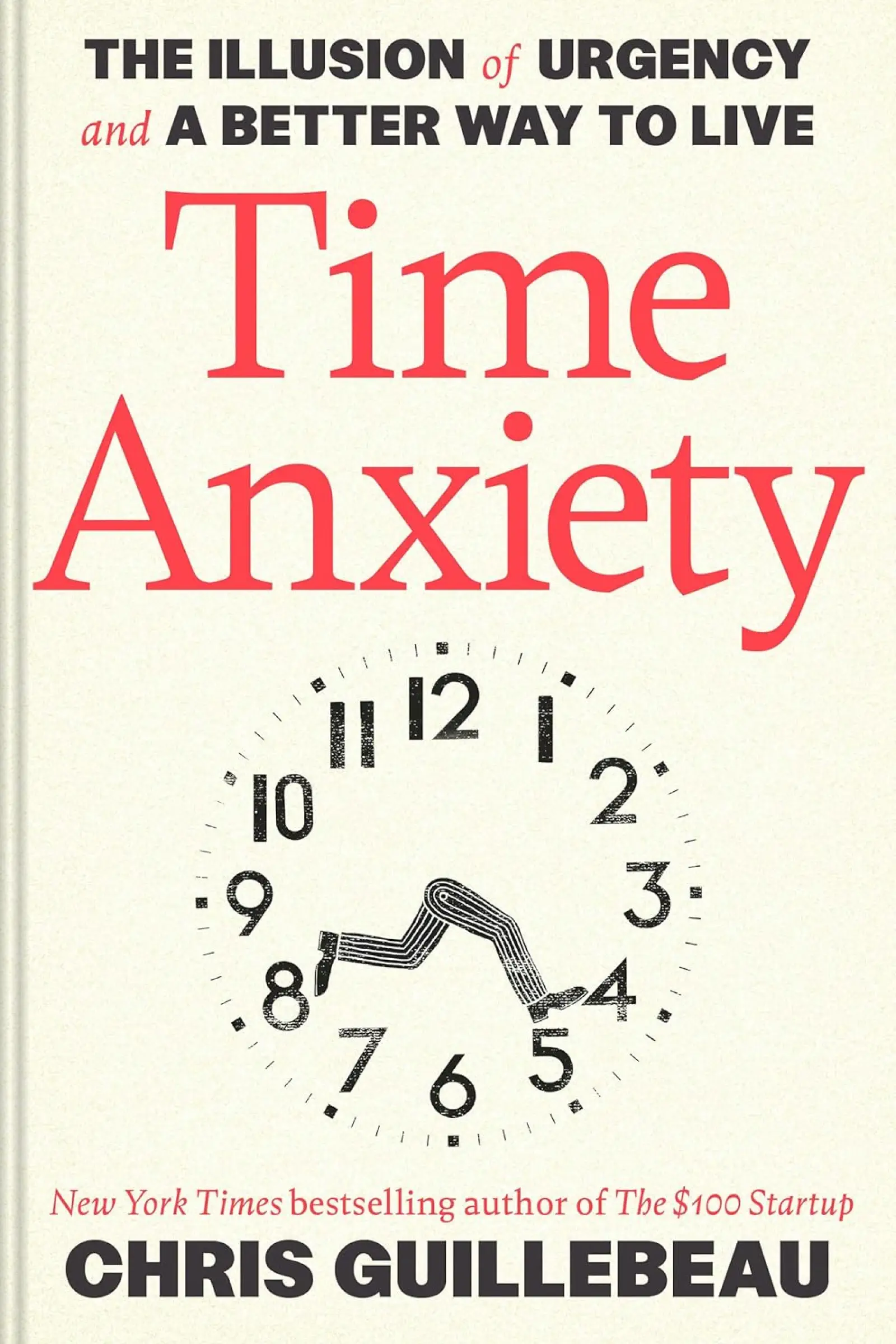
This is the final chapter of Time Anxiety: The Illusion of Urgency and a Better Way to Live. The full book gives you a complete framework — from cognitive distortions and time blindness to rules of engagement, the traffic light model, and this closing reframe — for making peace with finite time.
Get the book →