The Fear of Running Out of Time
Time is passing me by. I don't feel in control of my circumstances. There's something I should be doing — but I don't know what it is.
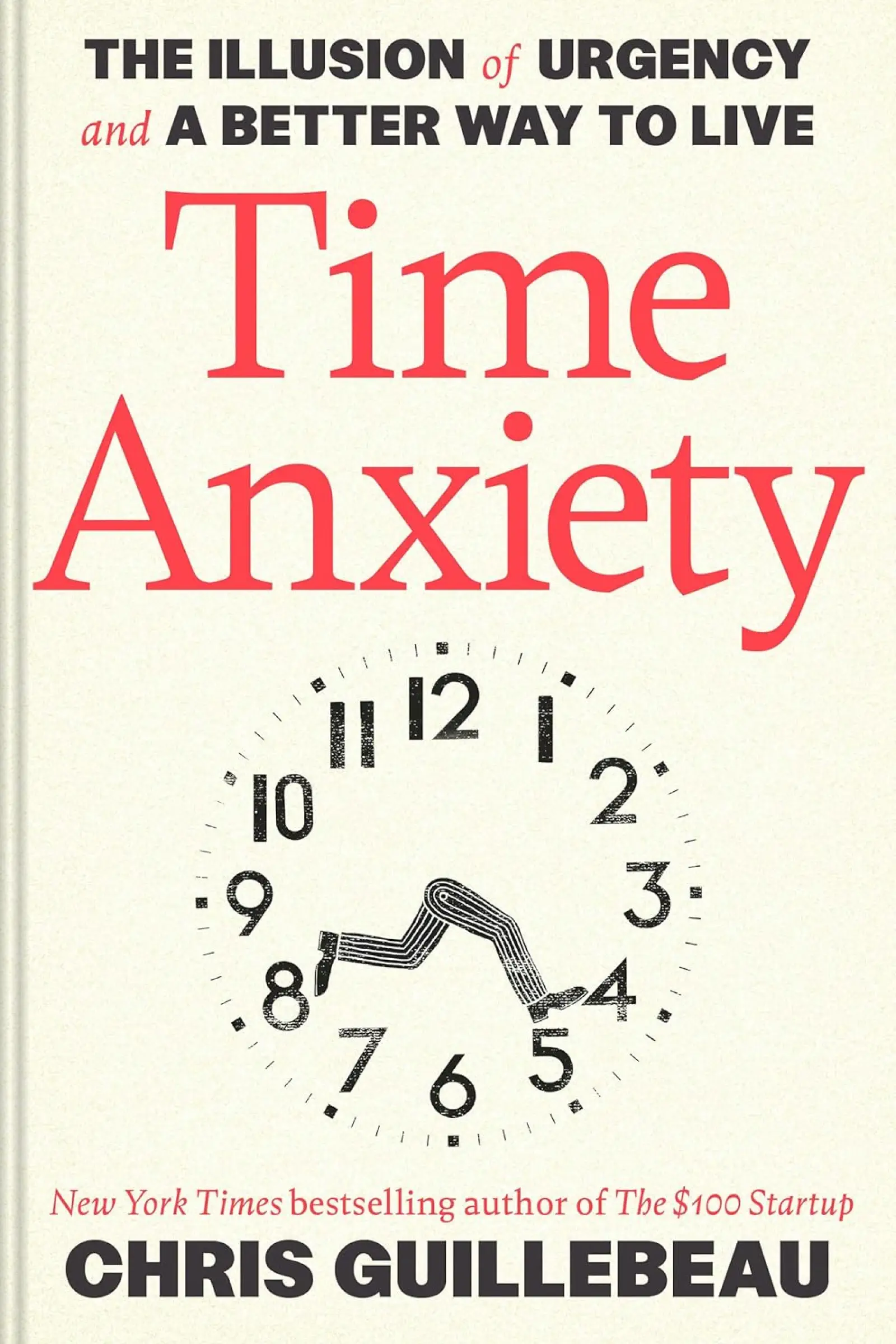
This is a book for people who worry about time running out. It's for those who feel there's never enough time for the things that matter, who fear they're too late for something important, and who sense there's something they should be doing right now — but aren't sure what it is.
Most people can't put a finger on the feeling. They might call it by a name, or they might not call it anything at all. Either way, it never quite goes away. I call it time anxiety. I didn't come to study it out of academic interest — it started with my own struggle over several years. When I wrote a blog post about it, the comments and emails poured in: "I thought it was just me." "I've always felt this way but never knew there was a name for it." "I honestly believe this is the defining problem of my life."
Two forms of the same feeling
It shows up in two ways
As I paid closer attention, I noticed people described their unease in one of two ways — through the big-picture view of life, or through the day-to-day challenge of managing it. For some of us, it's both.
Existential
"Time is running out in my life."
- Ruminating on past decisions that wasted precious time
- Pressure to make every moment count, leading to chronic stress
- Worry that you'll never find your purpose — and will look back with regret
- Dread when contemplating the finite nature of life
Daily routine
"There's not enough time in the day."
- Intense pressure to finish tasks within a certain time frame
- Feeling always "on," unable to disconnect from work
- Constant task-switching, distracted by new demands
- Rarely feeling a sense of completion, even after finishing
Either way, the angst is the same: time is passing me by, I don't feel in control, and there's something I should be doing that I can't name. It tends to come with chronic indecisiveness — a constant, open-ended "What should I do next?" that can attach to a project, a relationship, or anything at all.
What it isn't
More than FOMO, different from ADHD
Time anxiety is sometimes labeled FOMO, but it's broader. FOMO lives in the present — something is happening without you. Time anxiety reaches across all three dimensions of time at once:
Past
I wish I'd done things differently.
Present
I don't know what to do right now.
Future
I'm worried about the days and years to come.
It can overlap with ADHD or autism, but it stands on its own. You can be neurotypical and still fear running out of time; you can have ADHD and find that time anxiety amplifies everything else. I was diagnosed with ADHD as a child, and treatment helped — but my inability to focus was never the whole problem. I also lived in a low hum of distress, always wondering whether I was doing the right things.
Why the usual advice fails
Productivity hacks mask the problem
I was a lifelong fan of productivity methods, until I grew disillusioned. The more I finished, the more remained — there was never any end to it. New habits, new apps, new systems: all of it delivered a misleading sense of progress while the real problem sat untouched. Worst of all was the creeping suspicion that I was getting better and better at doing the wrong things.
The gospel of efficiency runs deep in our culture — hundreds of books and seminars reinforcing the same promise of order in a world of chaos. But it fails to address the root, and creates fresh shame in the process: the cycle of feeling bad for not conquering the beast, then gearing up to try once more.
A different approach
You have the power to feel better
We aren't powerless. The work is to approach the problem differently — to understand why everything you've tried has failed, and to rewrite some deeply ingrained patterns. To get there, I ran surveys that more than a thousand people completed, conducted interviews, reviewed studies, and tried everything I could on myself, from morning pages to ketamine.
I won't promise to fix everything once and for all — that's the overpromise that sets every productivity system up to fail. What this book offers instead is a new perspective and a practical toolkit: a way to face busy days with purpose, and to look at the future with hope instead of dread. In one of my final surveys, I asked people how it would feel to no longer be anxious about time. One answer stuck with me: "I'd feel free. I'd finally let go of something that's bothered me for a long time."
The chapters ahead break the problem down piece by piece — starting with the fastest way to ease the pressure you feel right now.
Start with Chapter 1 →