Knitting Is Good for You
Cozy, tactile hobbies can lower your anxiety and stretch your sense of time.
Hands-on, Thumbs-down
Phone-free & hands-on
You use your hands — but you're not scrolling. The phone stays down. That's the whole point.
Low-intensity
Easy to pick up and put down. No training schedule, no daily minimum. Come back whenever you want.
Transferable skills
What you learn from one craft carries into others. Starting new things gets easier the more you try.
Low stakes
Burn a cake — oh well. You didn't delete a database. Try again whenever you feel like it.
Some of my best early memories are of working with my grandma in her garden. While parts of my childhood were less than idyllic, I was fortunate to have grandparents who cared for me. My grandma and I also spent hours playing all sorts of board and card games — sometimes with other family members, but often the two of us alone.
I couldn't help but think of her when I heard about granny hobbies — which are almost exactly what they sound like: activities like knitting, baking, and gardening that you might associate with older people. These tactile, repetitive activities can pull us into a flow state where time seems to feel more expansive — the opposite of a perceived time shortage.
I first learned of granny hobbies from a post by Anu Atluru, a doctor, artist, and inventor who writes essays in her spare time. Anu notes that some people may not like the phrase — but to her, it's meant to be charming. Besides, the whole point of prescribing "old people activities" to younger generations is this: maybe those grandmas are on to something.
The defining quality
Hands-on, thumbs-down
Anu describes most granny hobbies as being hands-on, thumbs-down — meaning you use your hands, but you aren't scrolling on a device. You probably use your thumbs too, but the point is that these are phone-free activities.
Granny hobbies are also low-intensity, meaning they're easy to pick up and put down. You get better as you practice, but you can learn the basics of most of them quickly. The skills you pick up through one craft tend to carry over to others, making it easier to branch out over time.
And they have low stakes. If you're learning to bake and you burn a cake in the oven, oh well. You haven't deleted a database or cc'd the entire company on the wrong email. You can try again, either the same day or whenever you feel like coming back.
When you fall in with the right granny hobby, time tends to pass differently. It's a hyperfocus of its own — but softer than the hyperfocus of an intense work rush.
Worth knowing
These hobbies are also good for you
A story in The New York Times referred to two recent studies that found hobbies like knitting, gardening, and coloring were associated with cognitive improvements in both memory and attention — and a reduction in symptoms of anxiety and depression. It's hard to beat that.
Granny hobbies also offer something underrated: a small area of control and mastery. Accepting that many things are outside your control is helpful, as we've explored elsewhere in the book. But it's also genuinely nice to have something you have complete control over and that you get measurably better at over time. Most granny hobbies fit that description perfectly.
Thinking about granny hobbies reminded me of people who are into home remodeling, serious woodworking, or otherwise building things in their spare time. Many of us spend most of our hours at a desk in front of a screen. If you don't work in a trade, exploring one of these tactile hobbies might be more fulfilling than you'd expect.
I also heard a reverse version of this idea from a carpenter in Canada who started a side project involving computer work. Before he switched to carpentry, he'd been a graphic designer and missed that kind of work. Both approaches point to the same guideline: doing something substantially different from your day job for your extra-hours projects tends to be a good idea.
Your call
Social or solitary — either works
Most granny hobbies can be done alone or with others, and there are real benefits both ways. If you're looking for companionship with people who also want to put down their phones for a while, look for a group organized around one of these crafts.
"Game nights" featuring board, card, or tabletop games happen in most cities every week. Retail stores often host them too — a puzzle store for puzzle night, a yarn shop for knitting club. Search for "game night" or "puzzle night" in your area. Meetup.com and Reddit are good places to look as well.
Worried you won't be good enough? You don't need to be an expert. The whole point of these groups is community. Book clubs are about more than the book, and knitting groups are about more than knitting.
And of course, you don't have to make any of these hobbies social. If your life is already full of social interaction, pursuing your crafts in peace and quiet might be exactly what you need. Granny hobbies are low-intensity and low-commitment — you can return to them whenever you need a break from everything else.
Getting started
Pick one and begin
Getting started is a straightforward process. First, choose something from the list of possibilities:
quilting, birdwatching, puzzling, candle making, flower art, genealogy, cooking, calligraphy, knitting or crocheting, photography, woodworking, pottery or ceramics, drawing, gardening, board or card games, mahjong, scrapbooking, sewing, reading, journaling, collecting, baking, needlepoint, crafting, painting
Every granny hobby has a large ecosystem of teachers and practitioners. YouTube is full of free, detailed videos aimed at beginners. You can also visit a local craft shop — in addition to hosting events, they'll be glad to help you put together a starter kit of whatever you need.
If you want to go bigger, you could plan a whole year of cozy hobbies, trying a new format each month:
You might be familiar with fidget spinners, or fidgets in general — small handheld objects you can manipulate with your fingers, often repetitively. The visual and tactile feedback they provide can be soothing or satisfying. Well, many granny hobbies are the ultimate fidgets. Some of them, like knitting and needlepoint, are also highly portable. You can easily start, pause, and resume them wherever you are.
From reduced anxiety to improved cognitive attention, there's a lot to recommend here. In a world of constant pressure and time scarcity, maybe a granny hobby is exactly what we all need.
A practice to try
Pack a tactile break with you
Your portable hands-on kit
Whether you go all in on a granny hobby or not, having a small tactile activity with you at all times gives your eyes and mind a genuine rest from screens — on commutes, in waiting rooms, during any spare window of time.
-
Choose your thing
Pick one small, tactile, phone-free activity you're curious about. It could be a knitting kit, a puzzle book, a journal, a fidget, or anything else that fits in a bag.
Prompt: What would I enjoy doing with my hands for 15 minutes?
-
Make it frictionless
Store it somewhere obvious — by the door, with your keys, in your bag — so you remember to take it with you. The easier it is to grab, the more likely you'll use it.
-
Use it instead of scrolling
The next time you have a short break and reach for your phone out of habit, try reaching for your activity instead. Do 15 minutes with no screen.
-
Notice how time felt
When you're done, pause for a moment. Did time feel different? Did the break feel more restoring than a scroll session usually does?
Prompt: Did time feel slow, fast, or — maybe — kind of fine?
From the book
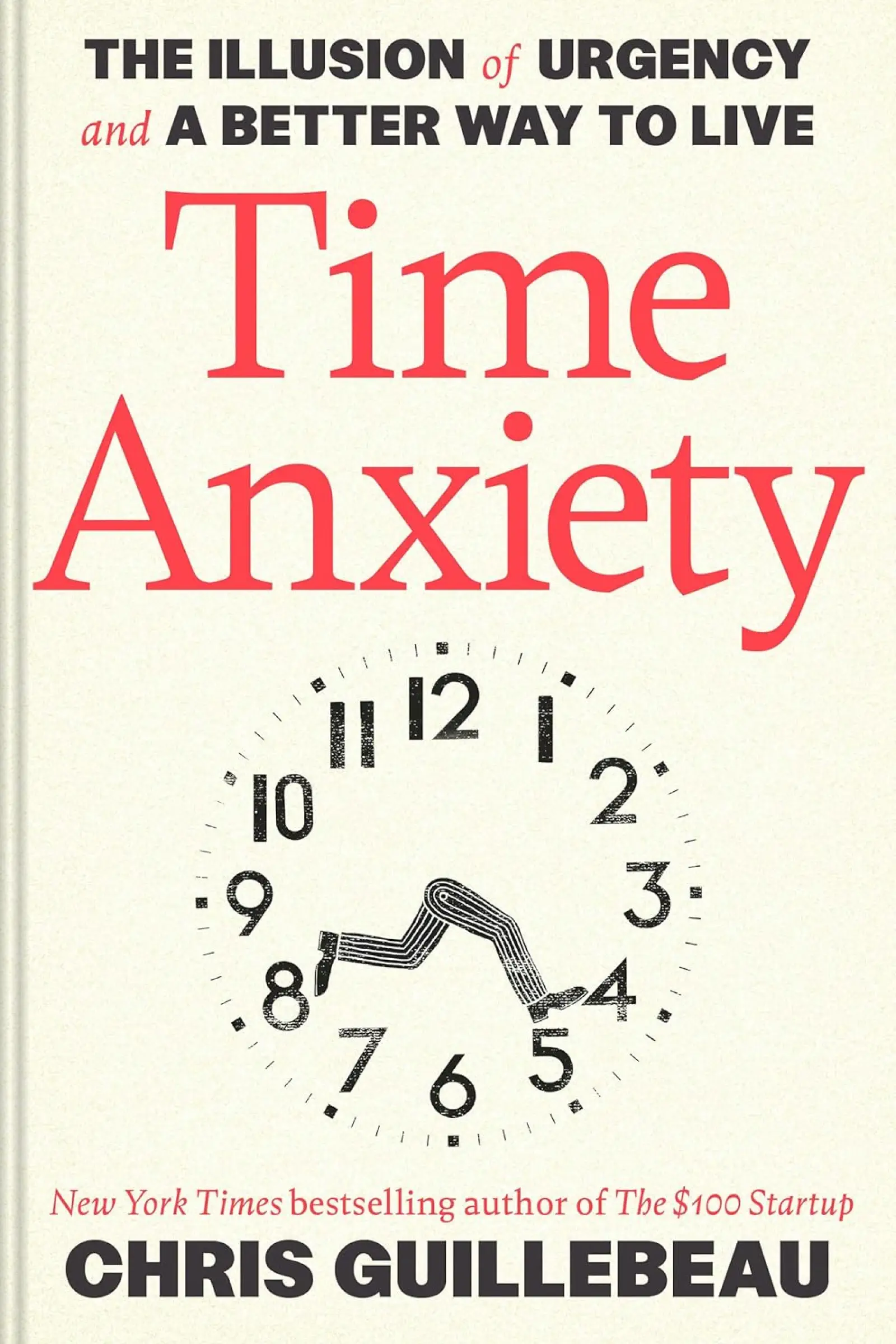
Knitting Is Good for You is Chapter 15 of Time Anxiety: The Illusion of Urgency and a Better Way to Live. The full chapter goes deeper on why these hobbies feel like fidgets, how to find local groups, and how choosing a different kind of extra-hours project from your day job tends to make both better.
Get the book →