The Magical Thinking of Time Management
Time management is a powerful story built on an entirely false premise.
Let's lighten up a little. A book about time anxiety shouldn't make you feel more anxious than you already do. The point is that thinking about hard things — even the difficulty of making exclusive choices — can help us be more purposeful. We can feel hope for the future and live better today.
For now, consider something easier: Santa Claus. Depending on where and how you were brought up, you may have believed in him from a young age. Most likely, at some stage of childhood, the myth was shattered. You learned that there wasn't a guy from the Arctic Circle who traveled around the world every December 24 to leave presents at every child's home. (It makes a great story, until you think about the logistics.)
Believing in Santa is a relatively harmless myth for most kids. But there's another myth many adults swear by — and this one is far more damaging. If you're reading this book, the odds are high that you've been indoctrinated into an invasive, mythological story with consequences far greater than any fairy tale.
The myth you have been told is that you can manage time.
A fable we all believe
Time doesn't like to be told what to do
You've heard of time management. You hear about it every day. This fable is told in countless ways — bestselling productivity books, entire subcultures of videos on every social network. There are more than sixty thousand books on Amazon referencing "time management." For the low fee of $75,000, your company can hire a keynote speaker to pump up your employees and give them "tips" on managing their time.
Yet something is fundamentally wrong with the entire concept.
The hard truth
Time exists independently of us and does not like to be told what to do. Time passes when you sleep, when you procrastinate, when you worry about time running out, or when you're having the time of your life. In all these situations, time marches on.
Time is also the greatest nonrenewable resource in the world. If you run out of milk, you can go to the store. If you run out of money, you can find a way to get more. If you run out of time — you're done.
The misunderstanding of time management shapes much of modern life, especially in the Western world. You're encouraged to buy fancy planners, learn new methods, and build productive habits to become a better manager of a resource that is fiercely independent. You're rewarded at work for mastering an imaginary discipline. And so you dutifully attempt everything you can — write better lists, juggle more obligations, become a better human or at least a more caffeinated one.
And yet — you end up stressed out. Overwhelmed. There are things you aren't doing that you feel you should. There are things you're doing that you'd like to stop but don't know how.
At the end of the day, you wonder: "Where did the time go?"
Time management doesn't deal with time anxiety — the feeling of being crushed by the scarcity of time and the inevitability of things ending. Here's a thought: what if all those things you do to stay ahead are holding you back? What if there's a better way of interacting with time?
The fault is not in you but in a collective delusion — one that pushes a narrative built on an entirely false premise. No matter how hard we push, we cannot manage time. Accepting this fact is the first step to being free of the obligation to try.
A thought experiment
If you could manage time, what would you do?
It might be hard to accept that time management is a myth. After all, you've been deeply conditioned to believe in it. But think about this: if you could manage time, what would you do with that power? Would you use it to study harder or host more efficient meetings?
A true time-management ninja would be far more ambitious. Here's what that subscription plan would look like.
Are you able to do any of those things? If so, you're a superhero with a more useful power than smashing through walls or becoming invisible. Please share your secrets.
Assuming your powers over the whims of time are as nonexistent as everyone else's, this thought experiment illustrates the point. However alluring it may seem, the idea of time management is a lie.
The alternative
Radical acceptance — a better framework
Since we can't manage time, what do we do? There's a better way to interact with it — one that delivers immediate relief and provides tools for a brighter future.
It starts with a concept called radical acceptance. In its simplest phrasing, radical acceptance is a formula:
Pain
Not optional. Can't skip it. Happens to everyone.
Suffering
Optional. Happens when you resist the pain instead of accepting it.
The formula assumes that in every life, some amount of pain is unavoidable. Suffering, however, comes from trying to fight against that unavoidable pain.
Think of a time when you were hurt, and the hurt compounded — got worse — because of your resistance to it. A bad breakup. A job or promotion you didn't get. You can't control the pain itself, which comes from an outside event. You can, however, choose not to resist it — and thus not to suffer.
Radical acceptance is based on the work of Marsha M. Linehan and Tara Brach. Tara Brach's book Radical Acceptance is a good starting point.
A personal example
The scholarship I didn't win
One time I was applying for a prestigious scholarship in grad school. I'd put a lot of work into my application — pestering my professors for recommendation letters, writing what I thought was an intelligent essay, making sure everything was as strong as possible. Many people were applying, but I had high hopes.
The application committee made a different choice.
When I received the polite rejection email ("We had many great candidates," it assured me), I took the news poorly. The message didn't invite further communication, but within an hour I'd composed a reply. I thanked the committee but explained that I needed the scholarship. Would it be possible to meet with some committee members in person, or perhaps have a phone call? That way, they could get to know me better.
I should have waited a day before sending that message — because then I wouldn't have sent it — but I didn't. To their credit, the kind person who responded to explain that the decision was final was nice about it. I guess my desperate email wasn't the first they'd received in protest.
It's embarrassing to recall that now. I can still remember the sting of reading the rejection — but I also know I made it worse by trying to protest.
What comes next
It still hurts. Now you can move forward.
Radical acceptance doesn't mean you're happy about the pain you experience. Pain hurts. Getting older, being rejected, constantly feeling behind — these aren't fun.
It also doesn't mean you must approve of or stay in a situation that's harmful, like a toxic relationship. Get out as soon as you can, and then radically accept what lies in the past.
When it comes to time anxiety, radical acceptance means you stop resisting the passage of time. You stop trying to control the uncontrollable. You understand that time will pass with or without you. You make plans, but you hold them loosely. If an unexpected event derails your schedule, you adjust without self-judgment. You expect that your energy and output will vary day by day due to factors beyond your control.
Paradoxically, when you give up the fight, you gain something more valuable: the chance to make a difference in the things you can influence.
-
Energy conservation — frees up mental and emotional energy previously spent fighting against time
-
Present-moment focus — by accepting the passage of time, you can better engage with what's happening right now
-
Clearer decisions — unburdened by the compulsion to control, you can think more carefully about how to spend your time
Once you reject the myth of time management, you can see what everyone else has been avoiding. You don't have to be a getting-things-done superhero, because no one else is. The difference between you and others who keep trying is that you've chosen to stop fighting this truth and move on to better things.
Like children believe in myths to make sense of the world they're growing up in, adults hold on to the idea of time management to make sense of their chaotic lives. Both are shortcuts to understanding more complicated truths — and while one belief is harmless, the other can be harmful.
Everything gets much easier when you stop trying to do the impossible. Stop believing you can boss time around. Accept the relief of giving up control. Life is short, and your time is valuable — but respecting the limits of both can be liberating.
A practice for right now
The Reverse Bucket List
In the pursuit of future goals, we often overlook the milestones we've already achieved. Instead of skipping over your past accomplishments, consider making a list of them. It's like a bucket list — in reverse.
As someone who tends to be future-minded, I often struggle with recognizing what I've already done. This exercise was especially helpful to me — a number of accomplishments came to mind that I'd forgotten until I focused on them.
The reverse bucket list
Start with things that come to mind across different categories — personal, professional, adventurous. A good list has variety. Be proud of yourself.
-
Brainstorm five categories
Pick five areas of your life — career, travel, relationships, creative pursuits, health, learning, or whatever fits. Write them down before you start filling them in.
Examples: professional, personal growth, places visited, skills learned, things made
-
Free-write 3–5 items per category
Go category by category. Don't filter or rank — write whatever comes to mind. Small things count. A conversation that changed your thinking is as valid as a marathon finish.
Examples: gave a presentation to a large audience · negotiated a raise · learned a new language · hiked every major trail in Utah
-
Notice patterns
Look at your list and ask: what does this say about who you are and what you value? You might be surprised by how much you've built — and what kinds of experiences keep showing up.
-
Pick one to revisit
Choose an accomplishment you're proud of and consider revisiting it in a new way. A skill you learned could go deeper. A place you loved could be returned to. A project you finished could inspire a next chapter.
The reverse bucket list can be more than a trip down memory lane. It might inspire you to set new goals — or remind you that the past holds more evidence of your capability than your anxiety wants you to believe.
From the book
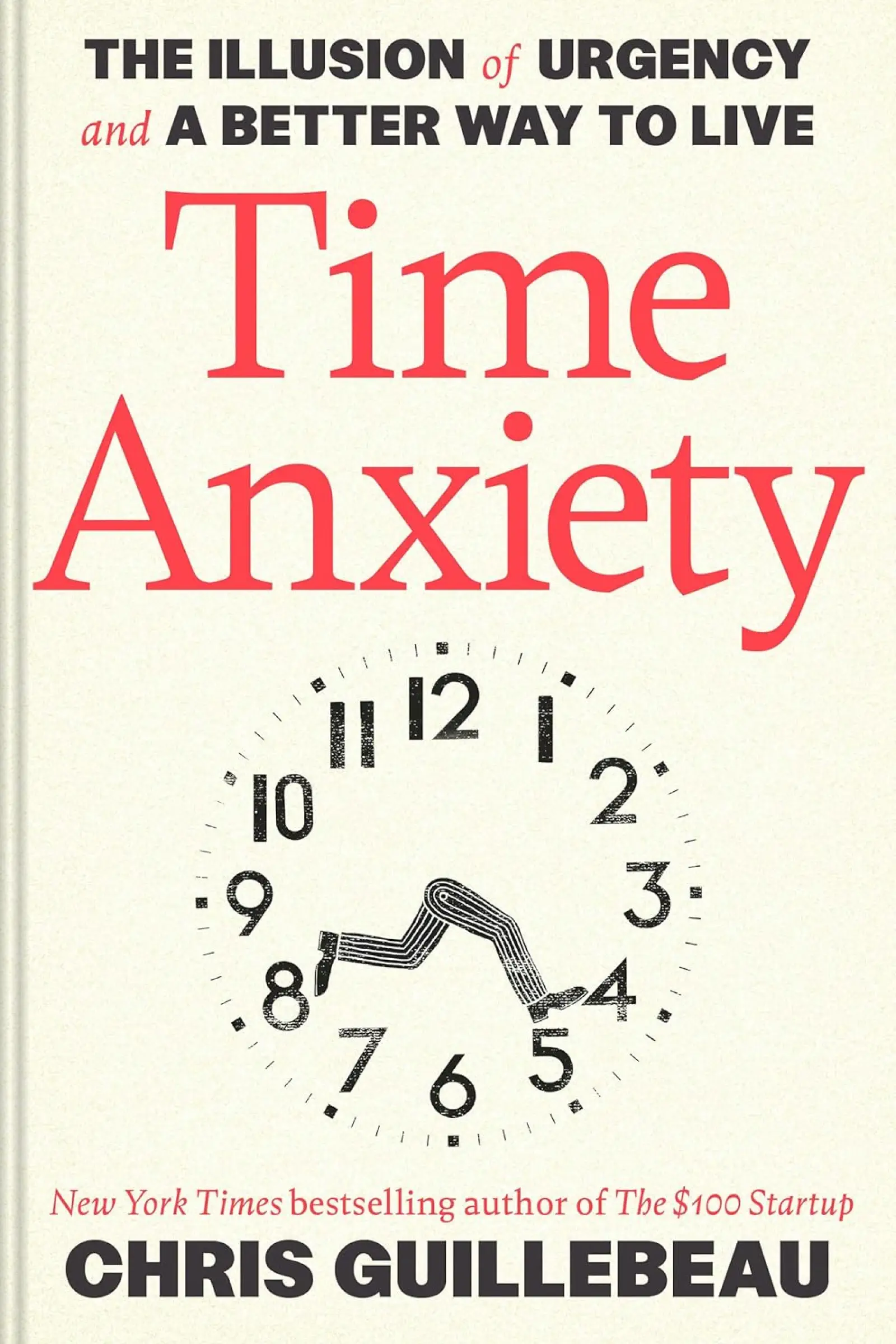
This is Chapter 7 of Time Anxiety: The Illusion of Urgency and a Better Way to Live. The full chapter develops the Santa Claus parallel further, goes deeper on the philosophy of radical acceptance, and connects it to the broader question this book keeps circling back to: what does it mean to use the time you have well?
Get the book →