Our Perception of Time Changes as We Age
How we respond to time anxiety is connected to our perception of time's passing. When we perceive a "time shortage," we become unsettled.
Time anxiety is composed of two parts: time and anxiety. The second part is clearly complex — anxiety can be situational or generalized, seasonal or chronic. But time itself? That seems straightforward.
It isn't, though. In the scientific community, debates about time run deep. Physicists and astronomers argue over everything from the precise definition of time to whether there should be a universal concept of time at all. Most of us accept that a shared understanding of time allows people to coordinate with one another — but that's a benefit, not a definition.
On the nature of time
It's as though we all acknowledged the presence of rain falling from the sky — "because it makes the grass grow" — without any idea of where it came from.
— Chapter 10, Time Anxiety
We know where rain comes from. The sun vaporizes water, droplets collect into clouds, the clouds release them, and the cycle repeats. Time, however, is much harder to pin down.
A question of perception
Time passes differently at different stages of life
If the science feels abstract, consider your own experience. At different ages, the same amount of time feels different.
When you're young, time passes slowly. Your parents seem impossibly old. You can't fathom ever reaching the age of most adults around you. From one birthday to the next, enormous change occurs. You count the days to graduation, to getting your driver's license. The waiting is hard — it seems like growing up will never happen.
But then it does. And at some point, the years start passing faster. You look back and think: where did the time go? The age your grandparents were when you were a child no longer feels remote. What felt maddening slow as a child becomes distressingly fast later in life.
Even as an adult, you can probably notice that time seems to pass differently depending on how you spend it. Long meetings and dreaded tasks seem to take forever. Hours in a flow state vanish.
Objectively, time is still the same as it's always been. Our perception of it is the variable.
This matters because a primary reason we experience time anxiety is connected to our perception of time's passing. When we perceive a "time shortage," we become unsettled. Time is running out, we think. Of course it is — but no more or less than it always has. It's only our perception that changes.
The cost of over-planning
Time crunch and self-sacrifice
One common cause of perceived time shortage is trying to pack too much into a single day. When we do this, we inevitably hit the reality that our plans were too ambitious — and then we feel unsettled. A time crunch sets in. Rapid-fire compromises follow.
Some of that may be unavoidable at certain points in life. But many of us live in a time crunch as the constant state. It's the rule, not the exception.
That state is highly stressful. We are remarkably resilient — we can endure high levels of stress for long periods. But it's not good for us, and so we feel anxious.
The compromises we make along the way often come as self-sacrifice. Unable to do everything we'd like, we deny ourselves some degree of pleasure, satisfaction, or completion. That produces its own discomfort, layered on top of the original pressure.
The framework
The two versions of time anxiety
The discomfort can arrive in either of two forms — and knowing which one you're feeling changes how you respond to it.
Existential
Time is running out in my life.
Daily Routine
There's not enough time in the day.
These problems are interconnected, though at different times you might feel one more strongly than the other. The solutions are also interconnected: doing a better job with our days helps us take better care of our lives.
Have you thought about the big picture recently? Any long-term goals, dreams, or aspirations that have been waiting? When we feel rushed, it's hard to function well in the moment — and it's difficult to plan for a different future.
As you build a plan to respond to time anxiety, you'll gradually begin melding these two perspectives — individual days and your overall life — together. How we plan our days is how we live our lives.
A practice for working with it
Create a Time-Free Zone
In a world where time often feels like our most limited resource, creating a time-free zone can be liberating. This practice helps you carve out a space to temporarily step away from the pressures of the clock and focus on something you enjoy.
Create a Time-Free Zone
Set aside at least one hour — ideally in the next week — where you can be undisturbed. Follow the five steps below, from intention to reflection.
-
Set an Intention
Choose a specific day and time within the next week. Decide on a period where you can be undisturbed for at least one hour. Write it down and put it on your calendar so nothing else gets scheduled.
"I will create a time-free zone on [date] at [time] to focus on activities that bring me joy."
-
Select Two or Three Activities
Think about activities that make you lose track of time and bring you joy — hobbies, creative projects, time in nature, reading, or anything that produces deep engagement. List two or three options so you can switch between them if needed.
-
Find a Space
Find a comfortable, quiet place — a cozy corner of your home away from any work area, a quiet park, or anywhere you feel relaxed and undisturbed. Gather whatever materials your chosen activities require.
-
Enter and Engage
When the time comes, go to your space and begin. If it helps, set a timer for the duration you've chosen so you don't worry about the clock. Engage fully without tracking productivity or deadlines.
If your mind drifts to time-related concerns, gently bring your focus back. This is your time-free zone.
-
Reflect
After your session, take a few minutes to write down what you did, how it felt to focus without the pressure of time, and any changes you noticed in your mood. Then decide when you'll create your next time-free zone.
The goal isn't to escape time permanently — it's to interrupt the habit of treating every hour as a unit of productivity. Even one hour a week changes the relationship.
From the book
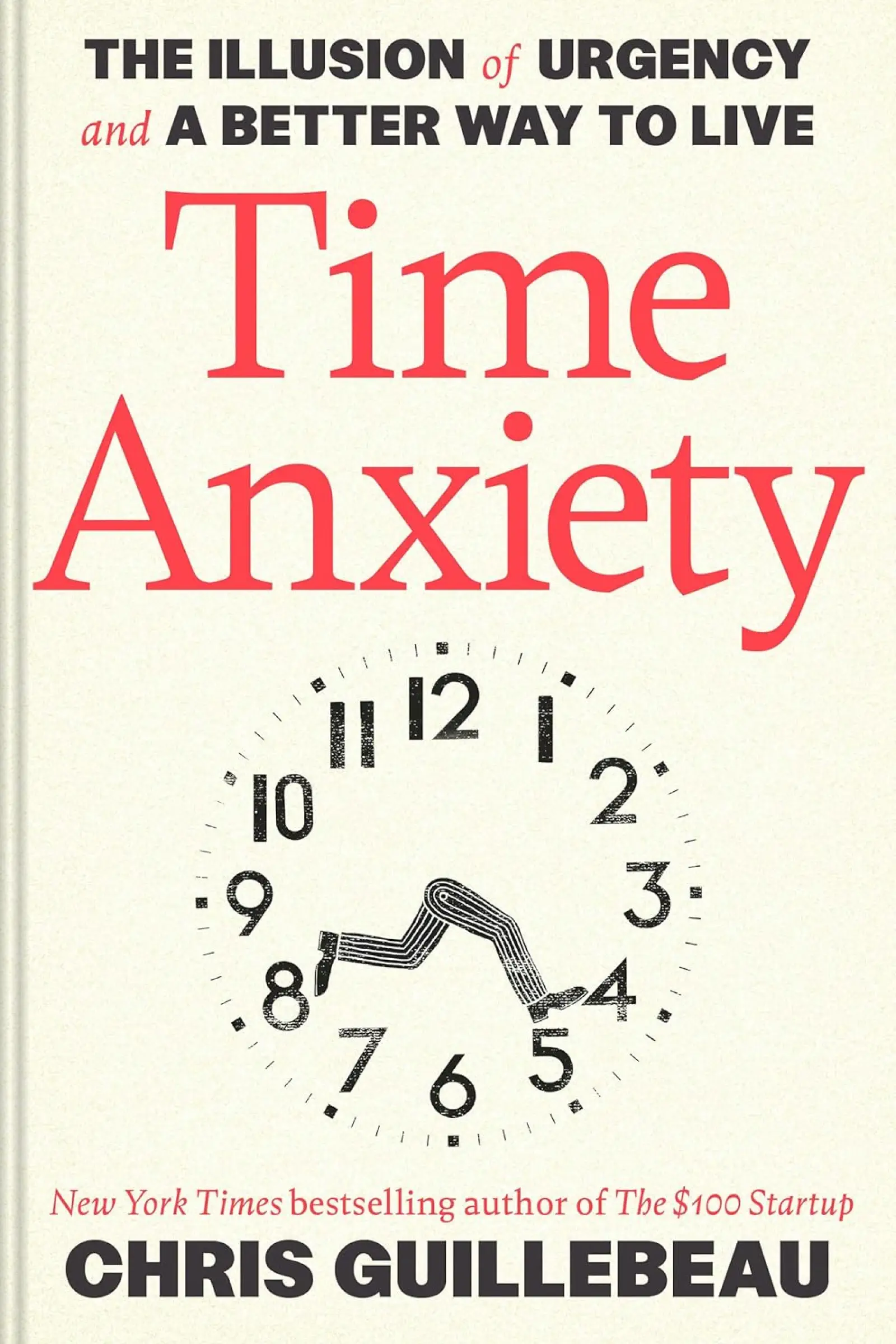
This is Chapter 10 of Time Anxiety: The Illusion of Urgency and a Better Way to Live. The full chapter explores the science of time perception more deeply and connects the two-part framework — existential and daily-routine anxiety — to the practical strategies that follow in later chapters.
Get the book →