The Real Problem Is We're Going to Die
Time feels short for a very natural and logical reason.
At some point we discover we're going to die.
I know how this might sound. Of course we know that we won't live forever. Obviously, that's how life works. Yet many people are content to live in a way that's oblivious to this fact. It's only when they're forcefully confronted with their mortality that they begin to take stock.
This is true even though the awareness of our own mortality can be helpful in showing us what matters. Thinking about death can make our lives better.
A fiction that explains everything
The countdown
In The Three-Body Problem, the first book in a science fiction trilogy by Chinese author Liu Cixin, the protagonist Wang Miao is an amateur photographer who works with analog film. One morning, after developing his images, he notices a series of numbers at the bottom of each photo.
Wang Miao's photographs
Hours : Minutes : Seconds — descending across every image he takes
That's odd, he thinks. Similar numbers appear on all the other photos, but the numbers themselves are different. He loads another roll of film, shoots more images, develops them — same result. That's when he realizes the sequence isn't random: it's a countdown, representing hours, minutes, and seconds.
Wang Miao undertakes increasingly frantic experiments, swapping out film, trying different cameras, going digital. Each time he receives the same results. The only change comes when he asks his wife and child to use his equipment instead. For the photos they take, no countdown appears.
Later, as he takes a drive to clear his head, he sees the countdown on the dashboard of his car. When he goes to the movies, it's displayed on the screen. It's following him.
The author never specifies what happens at the end of the countdown — some other things take place before then that make it irrelevant. Implicitly, however, Wang Miao understands: the countdown is the number of hours he has left to live.
He's terrified, and with good reason. If he only has six days left, the pressure to use the time well is overwhelming. The feeling is an extreme version of time anxiety.
The fiction meets your life
Our countdown is invisible
We too have the sense of a countdown for our lives. It's not one that appears on movie screens to terrorize us, and we don't usually get to know how much time is left. Nevertheless, at some point we begin to understand that time is not unlimited — at least not for us. The universe may go on indefinitely, but we won't.
The root cause of time anxiety isn't that we haven't planned our day well or spent enough time with a vision board. It's that no matter what we do, ultimately we will run out of time. And as terrifying as it was for Wang Miao to see a visual countdown of his remaining time, you could argue that most people feel the pressure even more: because we don't have a specific, visual countdown timer, we don't know how much time we have left.
With such an uncertain timeline, it's impossible to allocate a full life's worth of goals, projects, and activities. We can try, of course, but there's no guarantee the plan will hold up. As John Lennon put it in a song, "Life is what happens to you while you're busy making other plans."
A reframe worth sitting with
The problem of being mortal
Far from being irrational, the fear of running out of time is perfectly reasonable. Eventually, we do run out of time. Everyone dies.
I once wrote a book about people who undertake dazzling, life-changing quests. I wanted to understand what, if anything, they had in common. Something stood out that I didn't expect: many of the people had what I described as an emotional awareness of mortality. They were sensitive to death and often spoke about it without prompting.
Sometimes this awareness came through a tragedy — the premature death of a loved one or a close call of their own. Other times it was hard to pinpoint. For as long as they could remember, they had been thinking about death. This pondering wasn't abstract; it was personal.
To see the difference in perspective, compare these two statements:
Abstract
Everyone dies someday.
Personal
Someday, I will die.
In the second statement, mortality feels much more immediate. It's not only other people who will pass away one day; it's also you and me.
The finding from my earlier book was clear: those who personalized the lens through which they considered death were more likely to pursue a series of ambitious goals throughout their lives.
Contemplating your mortality doesn't come naturally. While it was helpful for the people I wrote about who pursued big quests, it can also be terrifying. Thinking about death can make us anxious, or it can give us purpose. How can we have less of the former and more of the latter?
An unexpected freedom
"No, thank you. I'm going to die one day."
The first thing this knowledge of death can give you is a sense of profound freedom. Whatever troubles you have, whatever recurring worries weigh on your mind — all of it will eventually end. No matter how hard something seems, it won't last forever.
The second thing: once you know you're going to die, you can use it as an excuse for anything you don't want to do. You have a terminal illness called life. Use this to your advantage.
When you're feeling pressured, when you struggle to break free from someone else's expectations, or when you don't want to go to work tomorrow, the knowledge of your mortality grants you a built-in explanation for anyone who asks for something.
"Would you like to come to this event you won't enjoy?"
"No thank you, I'm going to die one day."
"Can you drop everything you're doing and solve this problem for me?"
"I'd love to, but I can't. I only have a limited number of days to live."
"I noticed you were behind on your emails. Can you get that in order?"
"I'll do my best, but I won't always be around, so I'm trying to prioritize."
It might sound rude or abrupt, at least when you don't usually think about the fact that you're going to die. But that simple truth is what will allow you to refocus and make bolder decisions.
A clarifying question
What is unresolved in your life?
What would you do if you thought the world was ending soon or that your own death was imminent? Almost everyone I've asked about this can think of something specific. Often, the answer relates to a person in their life with whom something feels unresolved. It's not always a romantic relationship; sometimes it's an overdue apology to an extended family member. Other times it's thanking someone who made a critical difference at an important time.
Assuming you don't get the dramatic experience of seeing a visual countdown of your time on earth, there's a simpler and less stressful way to put yourself in the shoes of someone forced to think about their last minutes to live. Ask yourself: What is unresolved in my life?
It can be a scary question — but if you've read this far, you know that the willingness to ask and answer hard questions is a key to feeling better. Avoiding them sometimes feels good in the moment; facing them head-on can provide lasting relief.
If something floats to mind, here are three options for what to do with it:
A decision-making filter
Closer or further?
As we go through life, we're constantly moving toward some situations and moving away from others. We spend more or less time with friends and partners. We have hobbies that come and go, sometimes receding into the background before reemerging as a priority. Then there are all the things we're expected to respond to, which can crowd out anything else we'd like to do.
One cause of time anxiety is an attempt to manage all the things that weigh on our mind, both consciously and subconsciously. The solution isn't only to write them down and add them to a task list. If you've experienced major trauma in your life, imagine how ludicrous it would be to put "Resolve trauma" on your to-dos.
For an alternative strategy, try filtering every decision about spending time with a person or situation through the lens of closer or further. It's similar to asking, "What do I want more of and less of?" but also different — because your answers won't always overlap.
An acquaintance calls to ask you for lunch. Pause before you agree. How does the idea of spending time with this person feel? Would you rather move closer to them or further away?
You're invited to a company retreat — but it's not mandatory. On balance, do you want to engage with the retreat, moving toward it, or away from it?
You need to decide between two activities that take place at the same time. Both are things you'd normally want to do. Ask yourself: is your desire to engage one way or another stronger?
There are times when a more complex analysis is needed — but don't underestimate how powerful this question can be: "Do I want to move closer to or further away from this?"
Time feels short for a natural and logical reason. The fact that everyone eventually dies can be a scary and uncomfortable fact — or it can motivate us to live more purposefully.
A daily practice
Think About Death Every Day
Here is a life hack more powerful than "never check email in the morning": every day, take a moment to remember that someday you will die. Hopefully not before tomorrow — but it might happen. Even if the event takes place many decades from now, the fact remains that with each day that passes, you're one day closer to reaching this outcome. There's no going backward. Bob Dylan said it well: "He not busy being born is busy dying."
Think About Death Every Day
You don't need to rush around rewriting your last will and testament. This practice takes thirty seconds and works anywhere — morning coffee, evening walk, the moment before you check your phone. Here's the sequence.
-
Choose a moment
Pick one recurring moment in your day — the same one each time. Morning coffee, the first few minutes of an evening walk, the pause before you unlock your phone.
Consistency matters more than duration. Thirty seconds, reliably, beats ten minutes occasionally.
-
Remember the fact
For thirty seconds, hold the simple truth: you will die. You don't know when. The timeline is unknown and non-negotiable. Let that sit without trying to solve it or push it away.
You're not catastrophizing — you're orienting. There's a difference.
-
Notice what falls away
After sitting with mortality for a moment, notice which of the things on your mind suddenly seem less urgent. The email you've been anxious about. The grudge. The task that felt critical five minutes ago. Mentally set those aside.
-
Notice what stays
What remains after the trivial things fall away? The people, projects, or commitments that still feel important — those are the signal. They're worth spending your finite time on. The rest is noise.
Run this practice for a week before judging it. The goal isn't to make every day feel weighty and precious. It's to recalibrate — to let the awareness of a finite life help you give less attention to the things that don't deserve it, so there's more room for the things that do.
From the book
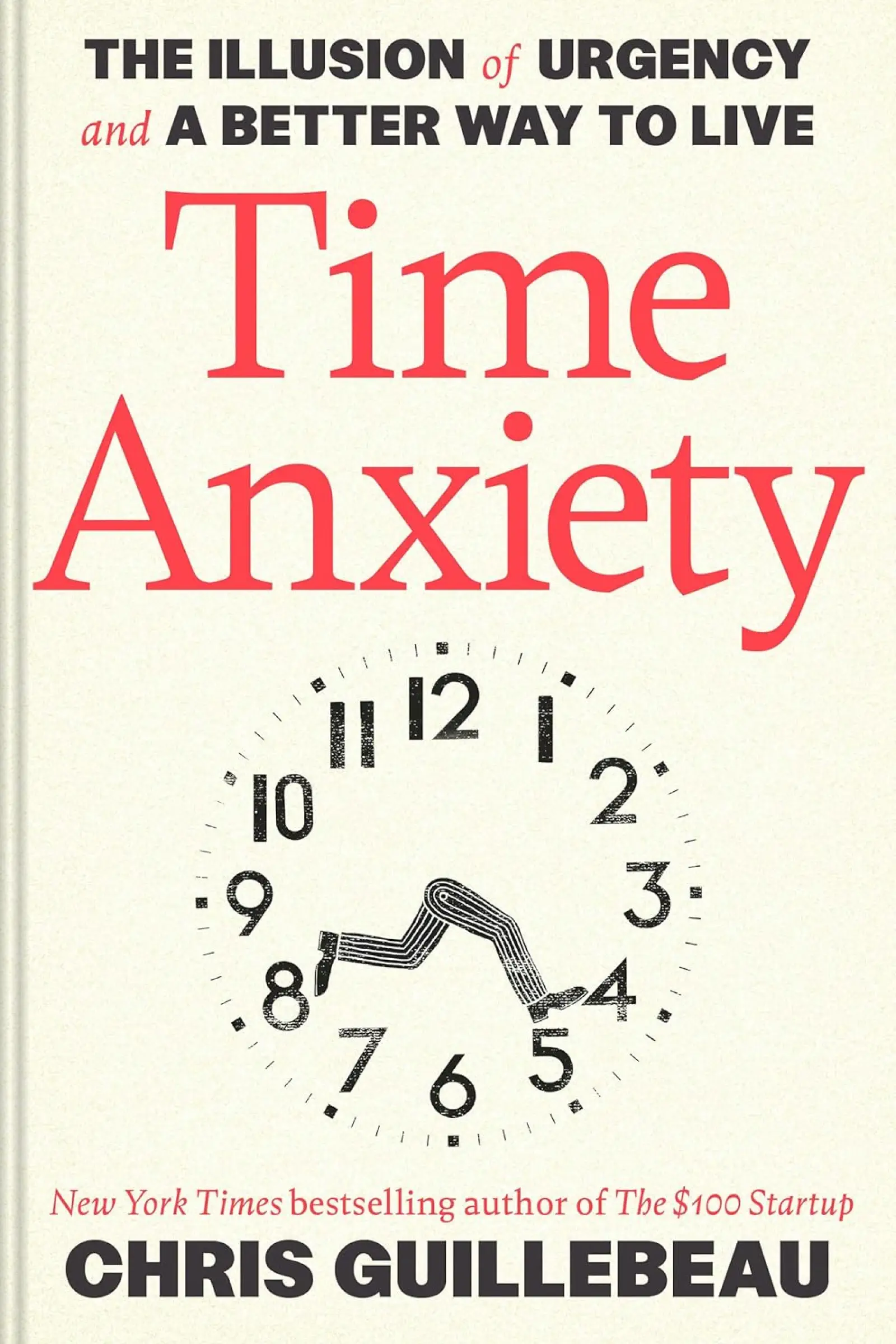
This is Chapter 19 of Time Anxiety: The Illusion of Urgency and a Better Way to Live. The full chapter goes deeper on the research behind mortality salience, explores more examples from Chris's earlier book on people who pursue ambitious life quests, and connects the "closer or further" framework to the broader way of living developed across the book's final chapters.
Get the book →