Time Blindness
Your brain processes time differently — which makes it hard to plan ahead, gauge how long things take, or stop running late.
Time blindness is what happens when your brain processes time differently — making it hard to plan ahead or gauge how long things take. It's a real perceptual difference, the kind worth giving yourself the same patience you'd give any other physical limitation. Once you know that, you can stop blaming yourself for what your brain wasn't built to do.
The clearest way to recognize time blindness isn't a definition. It's a set of moments you'll either know or not know. Read these four and see which ones land.
Does this sound familiar?
Four scenes from a brain that misjudges time
At work
You think you have plenty of time for a project, then realize the task is much bigger than expected. You panic. The panic makes it even harder to focus on what needs to happen.
Lost in something
You're having so much fun playing a game — or in any absorbing activity — that you don't notice hours have gone by. Now it's late and you still have everything else to do.
As a parent
Mornings are chaotic — getting small humans ready while preparing for the rest of your day. As the hours pass, you feel perpetually behind schedule, no matter what time you started.
With friends
Your friends have learned that you're always late, even when you try to be early. It's a joke and kind of not. You want to be reliable — and being late stresses you out — but something always comes up along the way.
If one or more of those felt uncomfortably specific, you might be experiencing time blindness. The name comes from a study in the journal Neuropsychology on teenagers with ADHD — the results showed these teenagers had time-related difficulties at a much higher rate than the control group.
A working definition
Time blindness shows up across many situations, but the underlying mechanism is consistent.
Time blindness, defined
Chronically misjudging the time you have — often leading to lateness, procrastination, or anxiety about all the things you haven't done. You don't estimate time well, even when you promise yourself you'll do better in the future. And that promise-breaking creates its own loop of guilt and stress.
— Drawn from the working definition in Chapter 3 of Time Anxiety
The compounding piece is the cruelest. Misjudging time makes you feel like you've failed yourself, which adds anxiety on top of the original problem. The anxiety then makes the next estimation harder. The loop tightens.
A reframe worth holding on to
You process time differently. That's all it means.
This is the reframe worth memorizing: time blindness doesn't mean you're careless or irresponsible. It means you process time differently.
Consider the analogy in the name. No one says a blind person is careless for not seeing. We understand that blindness is a real perceptual limitation — and we adjust the world around it (braille, audio cues, accessible design) rather than blaming the person for the gap.
Time blindness deserves the same kind of accommodation, both from the people around you and — this is the harder part — from yourself.
What it isn't
"I'm just lazy."
What it is
"My brain doesn't estimate time the way other people's do."
What it isn't
"I don't care enough to be on time."
What it is
"I genuinely thought I had more time than I did."
What it isn't
"I'll just try harder next time."
What it is
"Trying harder hasn't worked. I need a different system."
The shift from left column to right interrupts the secondary damage — the self-blame that compounds every missed estimate into evidence of personal failure. The underlying difficulty stays. The spiral around it loosens.
A practice for working with it
The Time Estimate Audit
Once you accept that your brain processes time differently, the next move is practical: find out by how much. Most people with time blindness misjudge in a consistent direction — usually underestimating. Knowing your direction and your typical margin is most of the fix.
This is a four-step audit you can run over two or three days. It works better on paper or in a notes app than in your head.
The four-step audit
Pick three or four tasks in your day — a mix of small (replying to an email, getting ready) and larger (a work session, an errand run). Run each one through these steps.
-
Predict, before you start
Before you begin the task, write down how long you think it will take. Be specific. "Quick" doesn't count — commit to a number in minutes.
Example: "Reply to client email — 10 minutes."
-
Measure, after you finish
When you're done, write down the actual time it took. Don't round down to make yourself feel better — the audit only works if the numbers are honest.
Example: "Reply to client email — actual: 28 minutes."
-
Calculate your margin
After three or four tasks, look at the gap between predicted and actual. Are you usually off by 20%? 50%? 2x? The ratio is your personal time-blindness margin — and most people are surprised by how consistent it is.
Example: "I'm consistently 2-3x off on focused work tasks."
-
Build the margin into the next plan
The next time you plan your day or commit to a deadline, multiply your honest estimate by your margin. If your margin is 2x and you think something will take an hour, plan two hours. That's accurate planning for a brain that estimates the way yours does.
Run the audit for a few days, not forever. The goal is to learn your number — and then trust it, even when "this time it'll be different" starts whispering in your ear.
From the book
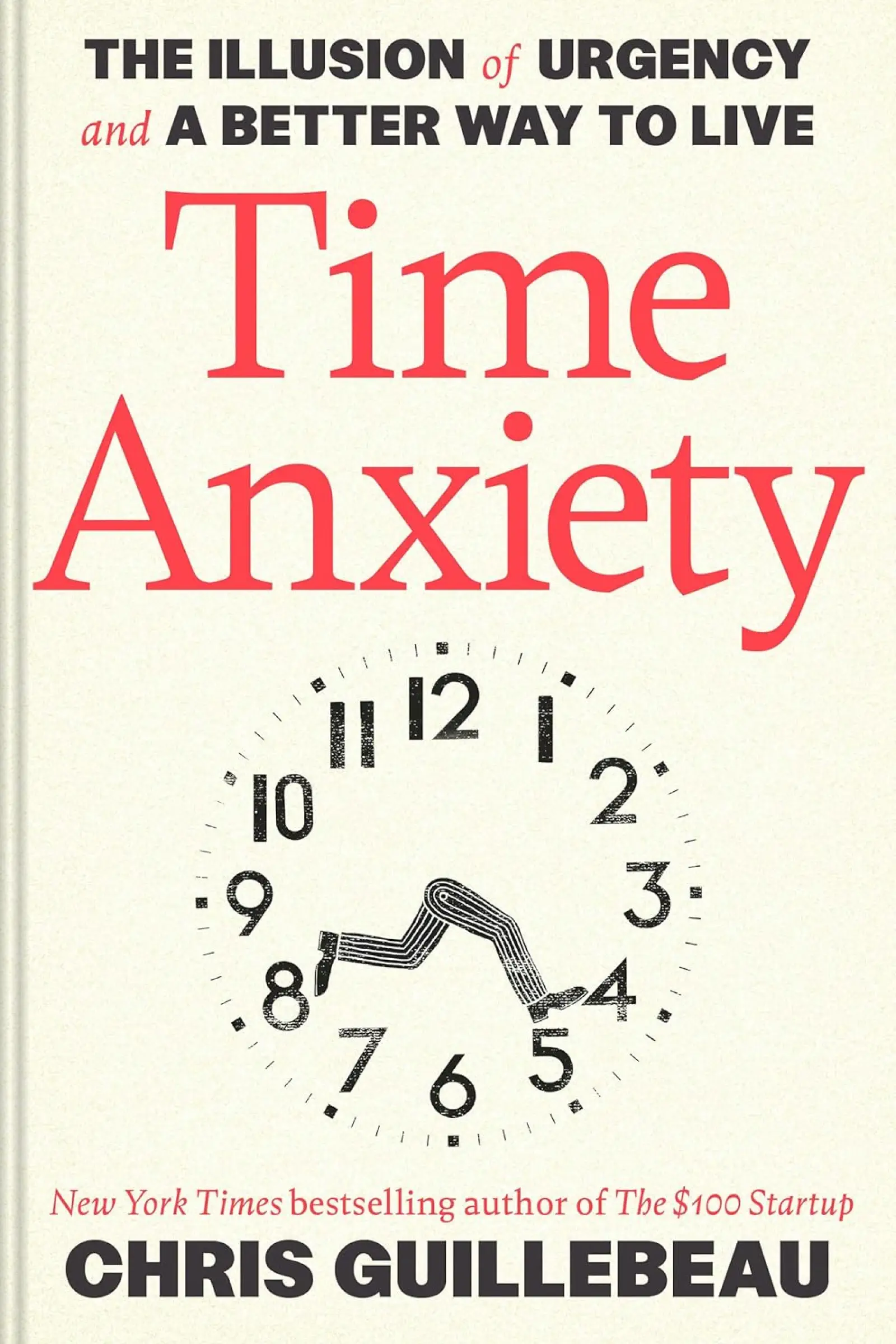
Time Blindness is Chapter 3 of Time Anxiety: The Illusion of Urgency and a Better Way to Live. The full chapter develops the ADHD research more deeply, includes more lived examples, and connects time blindness to the broader framework of "time rules" that follows in Chapter 4 — the unwritten rules about time that quietly shape what you think you're supposed to be doing.
Get the book →P.S. If this chapter sounds like your brain, you'll find a lot of company at NeuroDiversion, the gathering I host every spring in Austin for neurodivergent entrepreneurs. Early-bird tickets for ND27 (March 25–28, 2027) are open now. See ND27 →