Unlearning
If you struggle with time anxiety, somewhere along the way you got some unhelpful advice. Take note of the common suggestions, so you can ignore them in the future.
The opposite of learning isn't forgetting. Forgetting is passive — you lose your keys, you lose a fact from a long-ago test, and the loss happens without you noticing.
The real opposite of learning is unlearning. Unlearning is the deliberate process of discarding a belief or habit you absorbed at some point and have been carrying ever since. It happens by choice. And around time anxiety, it's most of the work.
Most of what you've been taught about managing time hasn't helped. Some of it has made things worse. The first move is recognizing the bad advice — and giving yourself permission to ignore it.
"Just prioritize" and other unhelpful suggestions
The advice you can stop following
If time has been a struggle, you've probably been given some version of every line below. They all sound reasonable. None of them solves time anxiety. Most of them quietly make it worse.
"Set priorities. Learn to prioritize better."
Sounds smart. Goes nowhere.
"Avoid distractions."
Everyone is distracted. Removing them helps a little; it doesn't remove time anxiety.
"Get up one hour earlier and work harder."
Works for about two days. Then your body needs to sleep.
"Fully schedule your life, down to fifteen-minute increments."
Useful for some. For many, it's overscheduling as avoidance — keeping busy so you don't have to think.
"Hire a virtual assistant and outsource your tasks."
Now you have something else to manage. Time anxiety comes from conflicting wants, not just unwanted tasks.
"Stop being lazy."
You're probably not lazy. See below.
Each of these has a kernel of truth. The problem is using them as a complete answer. They treat time anxiety as a productivity problem, when the real issue lives one layer deeper — in how you relate to time, what you believe it owes you, what you think you owe it.
A reframe worth keeping
What "lazy" is hiding
The word does the most damage. Once you've called yourself lazy, the conversation ends — there's nothing to do except feel bad. Behind almost every instance of "lazy," though, sits something more specific and more workable.
What's often called laziness is also a form of learned helplessness — a psychological pattern where, after repeated unpleasant outcomes, you stop trying to change the situation even when change is possible. The teacher who grades papers late into the night every week, exhausted and resentful, has the energy to consider self-grading assignments — but doesn't, because the loop has trained her out of looking for new options.
Hyperfocusing on some tasks while finding simple ones impossibly hard is another pattern that gets misread as laziness. It's a wiring quirk — a real one, with practical accommodations. The skills are learnable; the label is not.
Your default reaction is part of the problem
What got you here won't get you there
When you encounter a problem, you reach for the strategy that's worked on past problems. For time anxiety, that's almost always the wrong reach. The strategies that defined your competence in other areas tend to actively backfire here. Five common defaults, and how each one misfires:
High achiever
Tries to work harder. Adds more to an already-full plate. Calls it discipline.
Laid-back
Stops trying. Opts out. Calls it acceptance. Later wonders what could have been.
Avoider
Procrastinates. Diverts attention. Calls it being busy with other things.
Freezer
Goes still. Overthinks. Calls it deliberation. Never makes the call.
People pleaser
Keeps prioritizing others' time over their own. Calls it being a good person. Burns out.
The strategy that built your career, your reputation, your family life — that strategy is also the one running you into the wall around time anxiety. Recognizing your default reaction is the part most people skip. Once you see it, you can deliberately try something different instead of running the same play again expecting a new result.
A practice for unlearning
Unlearn Something Unhelpful
You can't unlearn everything at once. The cleanest way in is to pick a single piece of conventional time-management advice that hasn't worked for you, and rebuild it into something that fits your life.
Three steps with a piece of paper
Pick one piece of conventional advice you've tried — and that didn't work. Run it through these three questions. Paper works better than a notes app for this one.
-
Name the advice
Write down the exact wording, as you've heard it or as you've told yourself. Common candidates:
"Stick to a rigid schedule." / "Eliminate all nonessential tasks." / "Use every spare minute productively." / "Wake up an hour earlier."
-
Ask why it hasn't worked
The answer might be obvious. It might take some thinking. Write it out — don't keep it in your head.
"Rigid schedules don't fit how my energy moves day to day." / "When I 'use every spare minute,' I burn out by Wednesday."
-
Reword it into something that fits
Rewrite the original advice into a version that respects what you've learned about yourself.
"Stick to a rigid schedule" → "Create a flexible routine — plan with time blocks that can adapt to how you feel and what you need to accomplish."
Awareness is the first step toward change. Naming the patterns — the unhelpful advice, your default reaction, the words you use to call yourself lazy — already puts you on a different path than the one you've been on.
From the book
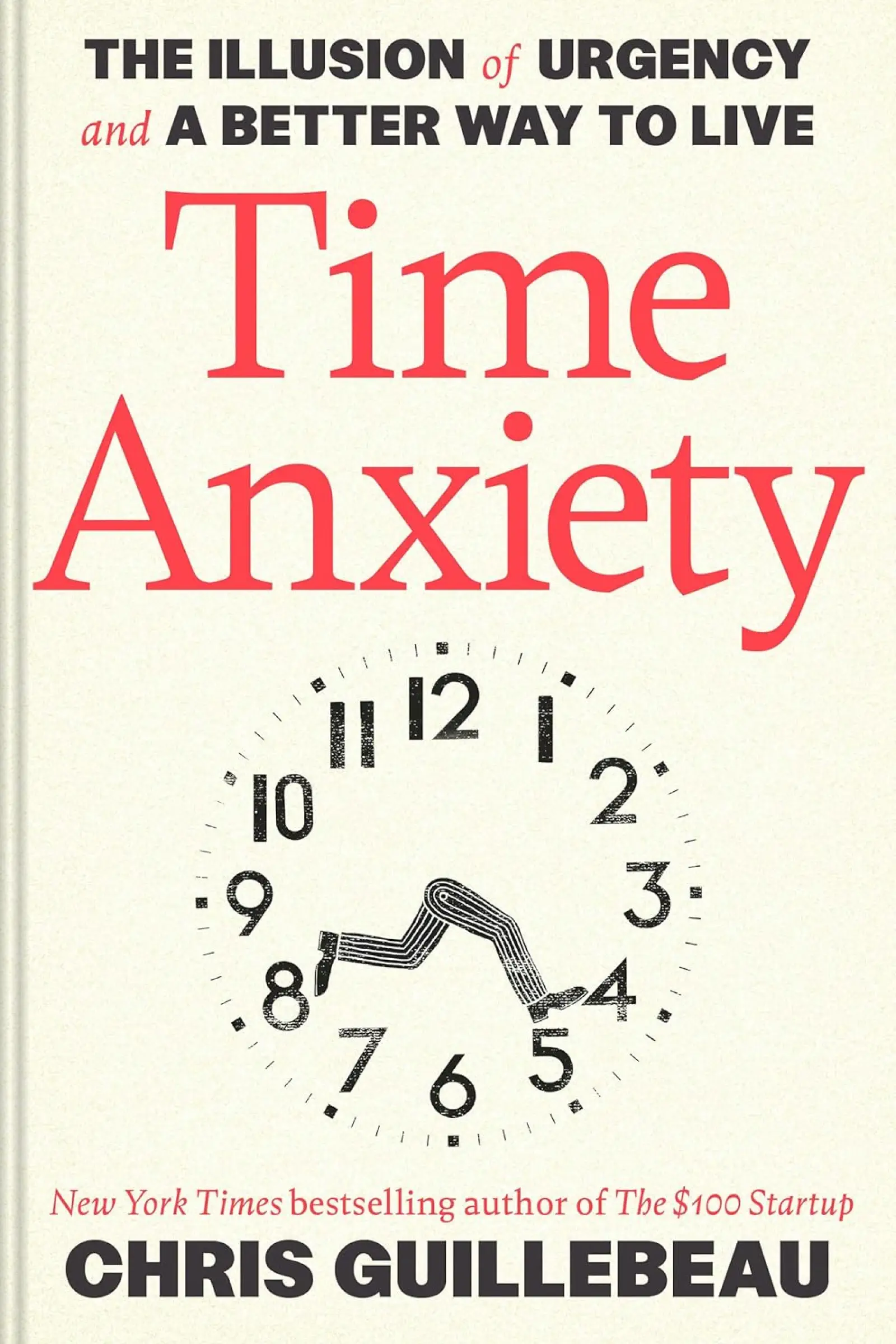
Unlearning is Chapter 4 of Time Anxiety: The Illusion of Urgency and a Better Way to Live. The full chapter develops each piece of conventional advice with worked examples, walks through the learned-helplessness research more fully, and introduces a deeper exercise for rewriting the time scripts you've inherited.
Get the book →