What Is Enough?
Decide on a logical finish line for projects and daily work.
Jessica's day was full of meetings and deadlines. She liked her work as a freelance writer, but there was one big problem: the work never ended. Once one assignment was complete, she moved on to another.
Even if she cleared her to-do list for the day, many of the completed tasks morphed into follow-up items. The task "Brainstorm ideas for new story pitches" turned into "Send pitches to editors." "Finish first draft" became "Review and edit first draft."
There was always one more thing to do.
Even if you're not self-employed, you might recognize some parts of Jessica's situation. When there are no real constraints on working more, many of us have become conditioned to the idea that work never ends. This becomes exhausting and all-consuming — even when we otherwise enjoy the work itself. The lack of milestones and end points prevents us from developing a sense of accomplishment, which is helpful in feeling purposeful.
The problem also points to an obvious solution: decide for yourself what is enough work for any particular day.
The pattern
Work as a never-ending cycle
Like Jessica, many people work at jobs or in careers that have an unlimited number of things to do. Working this way is like playing a tower-defense game, where a horde of enemies approaches your castle. You can usually defeat them at first, but they get stronger — and they keep coming. Whenever you deal with one attacking horde of tasks, it means you've leveled up in order to face a new invasion.
It's easy to fall into this pattern. Lots of people live their whole lives this way. They do so even if the loop only serves to increase their sense of anxiety while further advancing someone else's interest, typically that of their employer.
In the corporate world, some workers have responded to this by quiet quitting — purposely limiting the amount of work they do. In manufacturing, this tactic is called a slowdown. Employees are working, but not particularly hard, and no one is going "above and beyond."
Quiet quitting isn't an ideal solution for most people. If your job isn't working, you might as well quit, either quietly or otherwise. But the idea of applying self-designed limitations is the right instinct.
A framework
Three questions that change how you work
My situation is a lot like Jessica's: I work for myself and often have multiple projects in different stages of completion. I love working on my own, but when the work never ends, I tend to get overwhelmed and anxious. Instead of feeling proud of what I'd been able to do in one day, I always focused on what was undone.
There's an obvious fix: if milestones and end points don't exist, make them. Ask yourself:
Question 1
What is enough for today?
Sets a daily finish line before the day begins — something you can reach and then stop.
Question 2
What is enough for this project?
Defines completion at the project level, so progress feels like progress rather than another starting point.
Question 3
What is enough to fulfill the commitment I make to my job?
Anchors your effort in what you actually agreed to — nothing more, nothing less.
Once you reach "enough," pause before continuing. Instead of tackling yet another task in zombie mode, check in with yourself. What do you need right now? What's the best choice at this moment?
Making it concrete
What does done look like?
If you work for yourself — or work on your own for large parts of the day — the question of what "done" looks like can be especially difficult to answer. In our modern world, there's always something else to start or advance.
Set the finish line first
Decide what "done" looks like before you start, not after. When you set a finish line, you give yourself something to look forward to — and upon completion, something to celebrate, or at least take satisfaction in. Deciding what "done" means helps you avoid the trap of facing infinite work without any concept of completion.
Adopting this approach doesn't mean you stop striving or challenging yourself. There might also be times when you're so absorbed in something that you lose track of the hours and keep going — a practice that can be fun and useful in some circumstances. But those moments work best when they're chosen, not when they're the default.
A personal practice
Finding your own finish line
Aside from those times when I avoided a dreaded task, my problem wasn't starting the work; my problem was stopping. Some people struggle with getting started, but I'm usually able to handle that by using Pomodoro timers — committing to work on something for twenty to thirty minutes before taking a short break. The best part about the Pomodoro Technique, properly applied, isn't that it puts you to work. It's that it limits your work. The break between sessions is a key feature.
Applying the concept further, I began setting goalposts for my workday. Not endless to-do lists, but a couple of important priorities. That word is helpful: it implies a limited number of items. If everything's important, nothing is.
Because I was often unhappy with myself, I tried to improve my ability to take pride in how I spent my time. Most days weren't perfect, but did I spend less than an hour on mindless internet browsing? If so, great. A few other questions proved helpful:
-
Did I create something?
-
Did I help someone?
-
Did I take some amount of time for myself?
The act of answering these questions morphed into a quick checklist I sometimes referred to when walking in my nearby park before sunset. I always carry a notebook, so I'd stop and jot down what I did that was aligned with the priorities I'd identified.
That was it. No affirmations, no scientific review, no detailed procedural to plan the next day. I asked myself what would be enough — and when feelings of overwhelm crept in later, I tried to remember the answers.
When work is potentially endless, decide for yourself what the end points will be. You can always add to those end points later if you want, but the sense of completion and accomplishment will help you feel better.
A practice for this week
Reclaim an hour of your workday
If you work regular hours, you've settled into a routine that involves long stretches of work on most weekdays. When you think about free time, your mind naturally goes to evenings and weekends. This exercise pushes that assumption.
Take an hour back, mid-day
To begin placing a higher value on leisure, try to reclaim some of your working time for yourself. Start small, see how it feels, and graduate from there.
-
Pick a day this week
Choose one day — today if possible — and commit to it before you talk yourself out of it. This only works if it's a real block, not aspirational.
Example: "Thursday, 1–2pm."
-
Block 60 minutes mid-day
Put it on your calendar as a real appointment. Don't label it "free time" if that makes you feel guilty — call it "focus block" or anything else that protects it.
-
Choose one out-of-ordinary activity
Go for a walk, take a yoga class, visit an art show — anything that isn't screen-based. If you can manage it, try a movie at an actual theater. Sitting in a dark room in the afternoon feels different from sitting at a desk, and that difference is the point.
The goal is to feel like your time belongs to you, not to a task queue.
-
Notice how the rest of the day shifts
Pay attention to whether the afternoon feels different — less frantic, more deliberate. Most people find that reclaiming time makes them more focused in the hours that remain, not less. Once you've confirmed it works for you, start reclaiming more of your time this way each week.
This won't be possible for everyone in every situation. But if it's possible in any form for you, try it out and see how it feels.
From the book
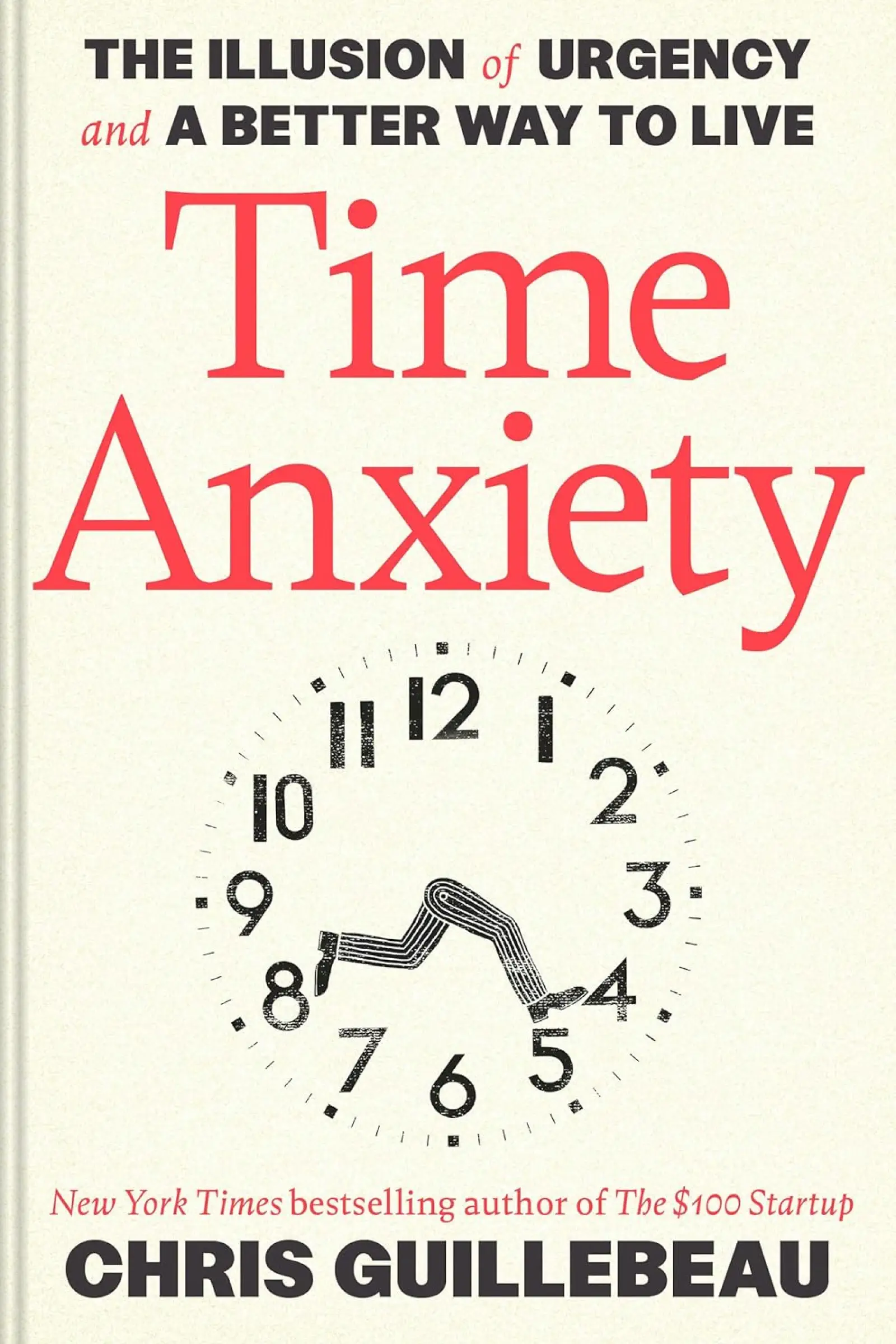
"What Is Enough?" is Chapter 8 of Time Anxiety: The Illusion of Urgency and a Better Way to Live. The full chapter goes deeper on the psychology of incompleteness, the cost of treating every finished task as a launching pad for the next, and how setting finish lines connects to the broader practice of reclaiming time from urgency.
Get the book →