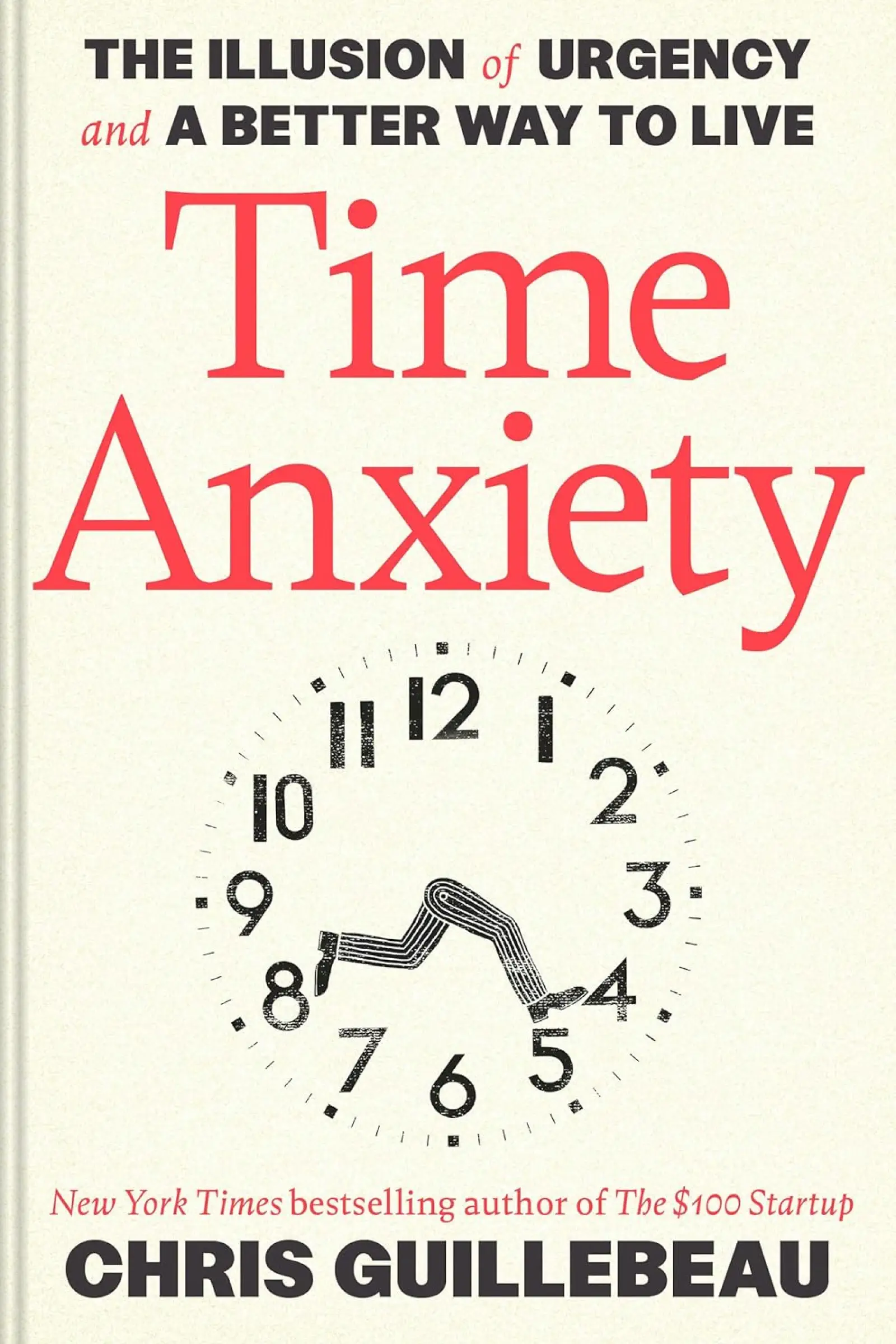
Time anxiety rarely announces itself by name. It hides inside other behaviors — restlessness, indecision, vague dissatisfaction, the sense that you're "off" without being able to say why. Below are twelve of the most common signs. None of them alone proves you have time anxiety. Several together is the pattern.
For each sign, I've added what it tends to mean — because the goal isn't to collect symptoms. It's to figure out what your time is trying to tell you.
-
The 2 a.m. mortality math
You're in bed, not asleep, calculating. How old will I be in ten years. How many summers do I have left, roughly. The numbers aren't useful. The math won't stop.
What it means → The countdown is running in the background of your normal life, and night is when the noise drops enough to hear it.
-
Deadline dread for things that aren't due
The pit in your stomach shows up when nothing is overdue. Self-imposed deadlines feel as suffocating as real ones. A free afternoon feels like a deadline you're failing.
What it means → Your nervous system has stopped distinguishing real urgency from manufactured urgency. The body is on alert for a threat that isn't there.
-
The Sunday scaries (but not about Monday)
It's Sunday afternoon. The week ahead is fine. But a wave of I should have done more this weekend rolls in, and the rest of the day is colored by it.
What it means → You're rating your time, not living it. Weekends become an exam you grade yourself on.
-
Inability to disconnect
You check email on vacation. You answer Slack on weekends. The phone is never far. "Just in case" runs the show.
What it means → The work isn't the problem. The fear of falling behind during the gap is the problem. Time anxiety at work often presents this way.
-
Guilt about rest
You sit down. You feel guilty. You get up to do something. You feel relieved. Then exhausted. Then guilty about being exhausted. This is the time guilt loop.
What it means → You've absorbed a rule that says rest must be earned. Until you question the rule, rest will keep feeling like theft.
-
Decision paralysis around an open afternoon
Three things you could do. You scroll for an hour instead of picking one, because every choice carries the weight of all the choices you're not making.
What it means → Time feels so scarce that small choices get inflated into life choices. The scarcity makes the freedom unusable.
-
The comparison spiral
A peer announces something — a book deal, a promotion, a baby, a sale. You're happy for them. You're also doing internal math about where you should be by now. The two feelings coexist.
What it means → You're using other people's timelines as a benchmark for yours. That's the "behind in life" feeling, and it's the wrong measuring stick.
-
Birthday heaviness
Not a milestone birthday. The day is fine. People are nice. But underneath the cake there's something heavy — a sand-through-fingers feeling no celebration can fix.
What it means → Birthdays are when the countdown gets a number. The dread isn't about getting older. It's about getting older without resolution.
-
Perpetual lateness or rushing
You're rarely on time. You're constantly catching up. You leave the house at the moment you should be arriving. You're not lazy; you're chronically over-scheduled to escape the feeling of empty time.
What it means → Stillness is uncomfortable, so you fill the calendar past capacity. The rush becomes a way of avoiding the question of what you want to do.
-
"I'm so busy" as personality
You can't answer "how are you?" without referencing your workload. Busy has become the shape of your identity. If you weren't busy, you're not sure who you'd be.
What it means → Busyness has become proof of worth — and the moment it stops, the worth feels in question.
-
Time is moving too fast — and you can't account for it
You blink and the month is over. You can't remember what happened in March. Years blur. How is it already May? isn't a casual remark; it's a small panic.
What it means → Most of your time is being spent on things your brain doesn't bother to record. See why time feels like it's going so fast for the mechanism.
-
The pull of "later"
The things you most want to do — the trip, the project, the conversation, the rest — all live in "later." Real life is something you're going to start once the current sprint is over. The current sprint never ends.
What it means → You've outsourced your present to a future that may or may not arrive. The cost of deferral feels small in any given week. Compounded over years, it's the whole life.
Want to see your pattern?
The Time Anxiety Test measures big-picture and daily forms in about two minutes — and shows you which is louder for you right now.
Take the Time Anxiety TestIf most of these landed
You're not broken. You're not unusually anxious. You're carrying a feeling that millions of people share but few can name — and naming it is most of the work.
The next step isn't a productivity overhaul. It's noticing which of these signs is loudest in your life right now, and asking what it's trying to tell you. Time anxiety isn't a problem to defeat; it's a signal pointing at something you care about. The work is figuring out what.
If you want the full framework — where time anxiety comes from, why it intensifies with age, and what to do about it — that's the book.