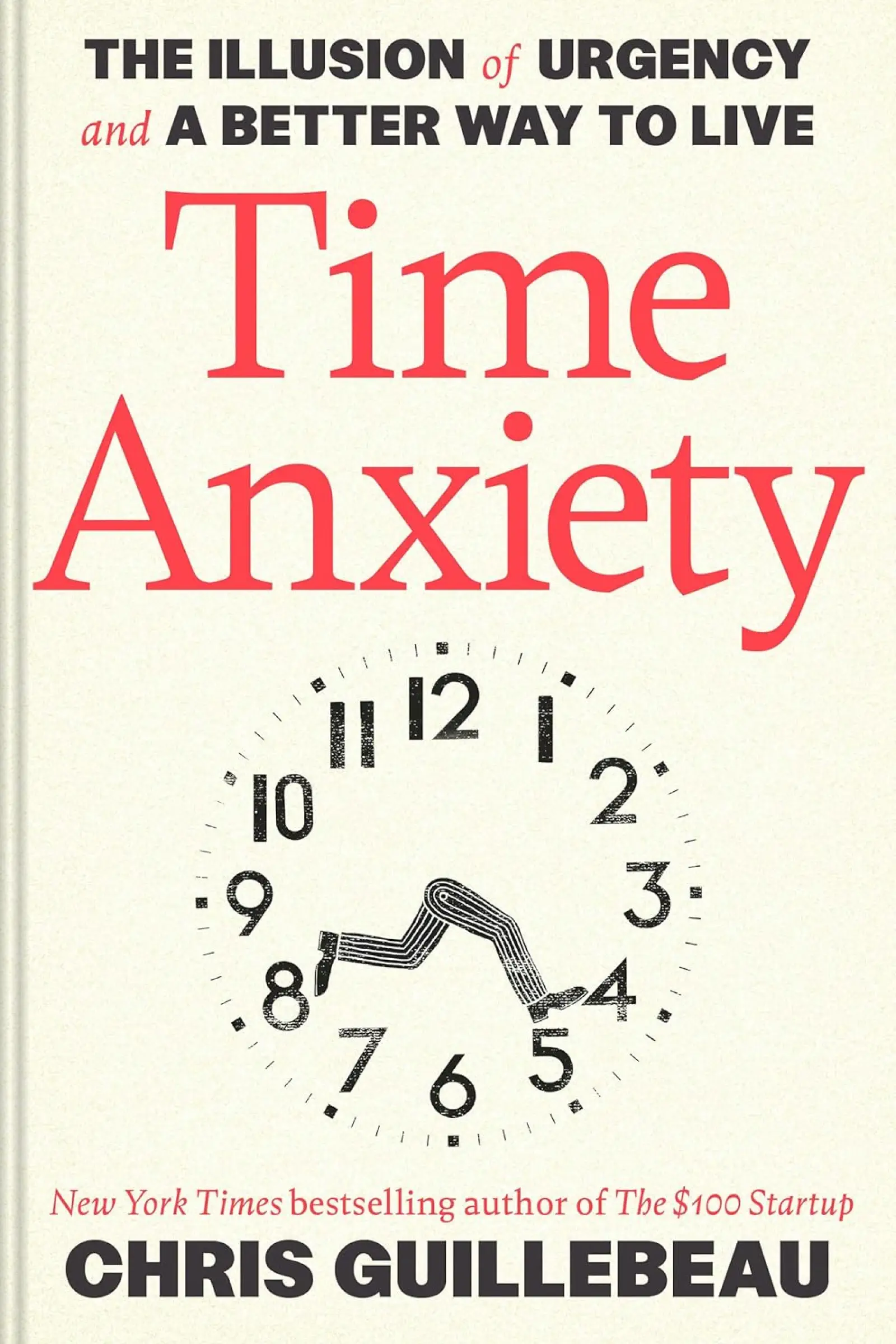
You know about the countdown. Everyone does. You may not call it that. You may not let yourself think about it for more than a few seconds at a time. But it's always there — the quiet, factual truth that you have less time today than you did yesterday, and at some point you'll have none.
Most of life is organized around not noticing.
The Countdown — Definition
The countdown is the underlying awareness that your time is finite. It's the engine beneath every form of time anxiety. Most days it runs in the background. It surfaces in birthdays, losses, transitions, and the unguarded clarity of 2 a.m.
The countdown isn't the problem
This is the part people get backwards. The countdown is not what makes you miserable. Trying not to look at it is.
If you remove the countdown — if you somehow forgot, completely, that your time was finite — your life would not become better. It would become smaller. You'd put things off forever. You'd say yes to everything because nothing would feel especially worth choosing. You'd drift. The countdown is the thing that makes choices feel like they matter, because the alternative — infinite time — would mean nothing ever needed to be chosen at all.
The countdown is a clarifier. Time anxiety is what happens when you treat the clarifier as a threat.
Two responses (both wrong)
Push it away
Stay busy enough that the countdown never gets to surface. Fill every hour. Treat stillness as a problem. The countdown doesn't go anywhere — it just runs the show from the background, where it produces anxiety with no insight.
Catastrophize it
Treat every year as proof you've already missed your window. Turn finite time into a verdict instead of a fact. Use the countdown as fuel for shame about the past and dread about the future, neither of which it can do anything about.
Both responses share a feature: they refuse to let the countdown be neutral information. They insist it must be either ignored or feared. There's a third option, and it's the one almost no one is taught.
If you want to make the countdown stop being an abstraction for a minute, the cleanest tool I know is your life as a single picture — every week as a small square, the lived ones filled in. Most people sit with that page for thirty seconds and decide something.
The third response: let it work
Acknowledge it — periodically
You don't need to think about mortality every day. You need to think about it often enough that it informs your priorities. A few minutes a month is more useful than an hour at 2 a.m.
Let it select, don't let it punish
The countdown's useful job is to help you pick — what to do, who to call, what to drop. Its useless job is to grade what you've already done. When you notice it's grading, you've slipped from selection into punishment.
Why birthdays land harder than they used to
Birthdays don't feel heavy because you're getting older. They feel heavy because birthdays are when the countdown gets a specific number. The rest of the year, it's diffuse — "time is passing." On a birthday, it's a count. You can do arithmetic with it. You can subtract from an estimate of how long you have. That precision is what lands.
This is also why losses — friends, parents, peers — change the countdown's volume. They don't introduce new information; you already knew time was finite. They make the abstraction concrete. Concrete countdowns are louder than abstract ones, which is why people often describe a kind of clarity after a loss, even alongside the grief.
How does the countdown show up in your life?
The Time Anxiety Test surfaces whether it's mostly the big-picture countdown (existential) or the daily one (deadline pressure) — or both.
Take the Time Anxiety TestWhat to do with the awareness
Three small practices that work, in the order people usually need them:
1. Look at it on purpose. Not at 2 a.m. when you can't sleep. On purpose. Sit with the fact for five minutes, deliberately, in daylight. The version of the countdown that ambushes you is much louder than the version you invite in. Inviting it in is most of how you defuse it.
2. Notice what becomes obvious. When the countdown is in the foreground, certain things lose their grip. Petty grudges shrink. Trivial obligations look more trivial. Things you've been putting off get louder. The clarification happens automatically. Your job is to write down what surfaced before you forget.
3. Move one thing. Don't try to overhaul your life. Move one thing — make the call, book the trip, drop the obligation, say the thing. The countdown is useful in proportion to how much it changes the next twenty-four hours, not in proportion to how dramatically you reorganize your year.
You cannot turn the countdown off. You can decide whether it runs you, paralyzes you, or works for you. Most people only know the first two. The third one is available. It just takes practice — and a willingness to look at the clock without flinching every time.