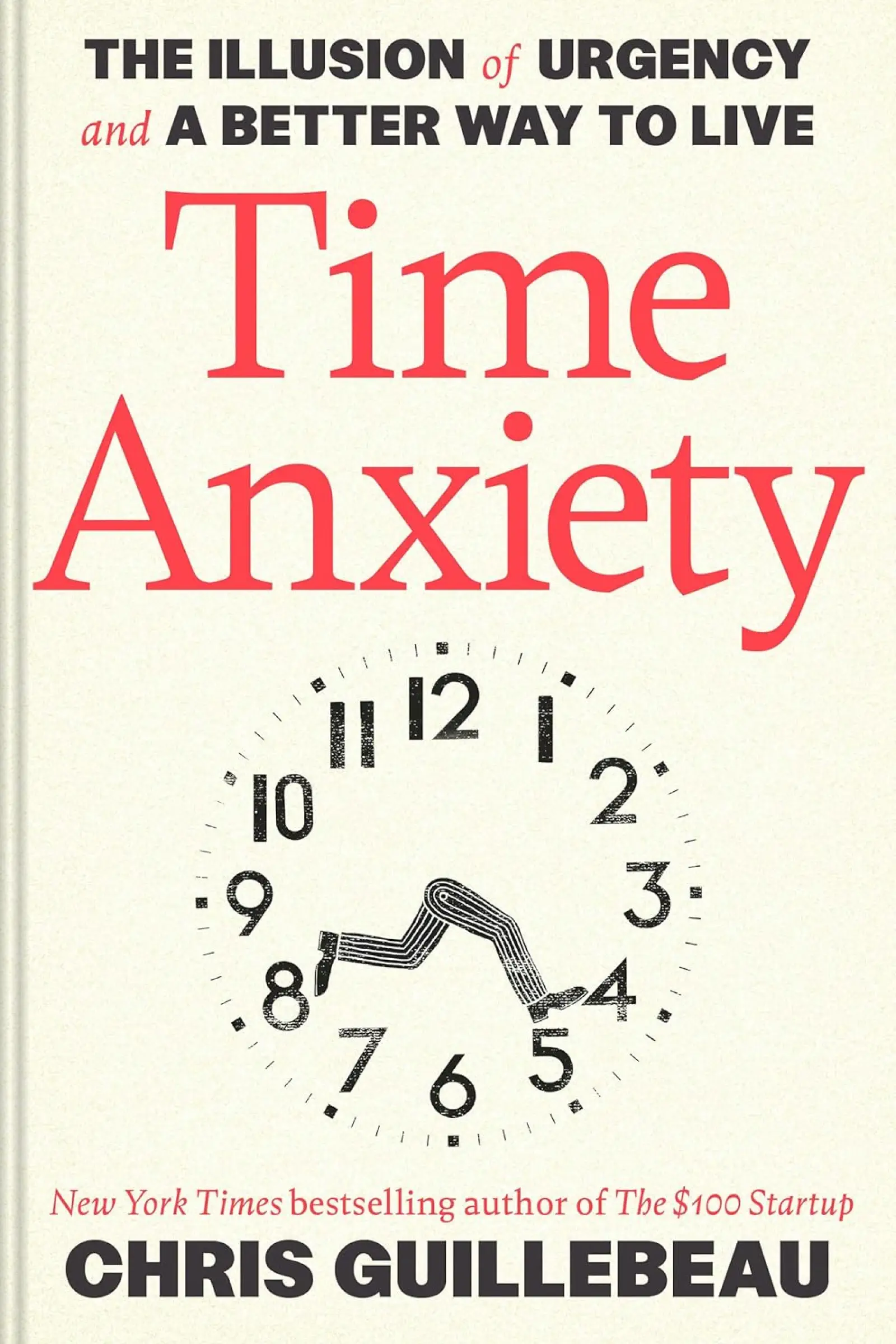
Time Anxiety
noun
Time anxiety is the persistent feeling that time is slipping away and you're not spending it well. It is not a clinical diagnosis. It is the gap between how you're living and how you feel you should be living, filtered through the awareness that your time is finite.
Read the full guide →
Related: Existential Time Anxiety, Daily Time Anxiety, The Countdown
Existential Time Anxiety
noun
Existential time anxiety is the big-picture form of time anxiety: worry that time is running out in your life as a whole. Concerns about purpose, regret over past decisions, dread of the wasted decade.
Related: Daily Time Anxiety, The Countdown, Running Out of Time
Daily Time Anxiety
noun
Daily time anxiety is the day-to-day form: the feeling that there isn't enough time in the day. Perpetual catch-up, inability to disconnect, the inbox that never empties, starting every email with "Sorry for the delay."
Related: Time Anxiety at Work, Illusion of Urgency
Time Guilt
noun
Time guilt is the nagging sense that however you're spending the current moment, it's wrong. The feeling that you should be working when you're resting, resting when you're working, with people when you're alone, alone when you're with people.
Read the full article →
Related: Time Rules, Good Enough
The Illusion of Urgency
noun
The illusion of urgency is the feeling that everything is an emergency when almost none of it is. It's why your nervous system treats an unread email like a fire alarm, and why "I'll get back to you tomorrow" feels almost rude.
Read the full article →
Related: Daily Time Anxiety
The Countdown
noun
The countdown is the underlying awareness that time is finite — the engine beneath every form of time anxiety. It's the fact that you have less time today than yesterday, and your mind knows it.
Read the full article →
Related: Running Out of Time, Why Time Feels So Fast
Behind in Life
phrase
Behind in life is the persistent sense that you should be further along by now — older self, bigger career, sturdier savings, better-formed adult. Where "by now" almost always means: where your peers seem to be.
Read the full article →
Related: Is It Too Late?
Time Rules
noun
Time rules are the unwritten rules you live by about how time should be spent — when to wake up, how quickly to respond to messages, what counts as a productive day, how long is too long for a meal, when rest is allowed.
Pay Yourself First (in Time)
practice
Pay yourself first is a personal-finance principle adapted for time: set aside time for what matters to you before the day fills with other people's priorities, not after.
Good Enough
principle
Good enough is the deliberate practice of accepting an imperfect outcome over no outcome. The opposite of the perfectionism that fuels time anxiety.