Be Right Back
Avoiding hard things feels good for a moment — and quietly costs you for much longer.
Stage 1
Small detour
Steering customers to email instead of a call
Stage 2
Missed moment
Phone in hand — 15 minutes pass — sale lost
Stage 3
Full ghost
Years of friendship, then: nothing
Extreme
Fake a coma
Two years in "coma" to avoid a fraud trial
A British man named Alan Knight was facing charges of fraud. His solution: pretend to be in a coma. Not a real coma — an act of desperation. Enlisting his wife's help, he kept up the charade for more than two years. He even checked into a hospital for a ten-week stay. Medical tests showed nothing wrong with him, but his performance was convincing enough that some doctors concluded he must have had some mystery illness.
It unraveled when CCTV cameras caught him out on the town, doing some low-key grocery shopping. Definitely not in a coma.
Over in the United States, Jennifer Wilbanks was facing a different kind of sentence: in four days, she was due to get married — a change of status she no longer wanted. So instead of having a difficult conversation, she disappeared. Resurfacing the following week after a nationwide manhunt, she falsely claimed to have been kidnapped. The "runaway bride" media drama lasted for months.
A pattern with a name
Logically illogical
You might imagine there would be easier ways of dealing with problems, even serious ones. Facing criminal charges is highly stressful — but pretending to be in a coma? Claiming to be kidnapped instead of admitting cold feet?
As wild as these stories are, they're extreme examples of what we might call logically illogical human behavior: responses to the kinds of cognitive distortions we all experience. We'll go way out of our way to avoid facing difficult situations. Numerous people have even faked their own deaths to avoid a confrontation. Creating a convincing story of your own death requires staged accidents, forged death certificates, sometimes a fake funeral service. Yet somehow, people do it — persuaded that a convoluted escape is preferable to facing the truth.
United Kingdom · 2007
Man Fakes Coma for Two Years to Avoid Fraud Trial
Alan Knight checked into a hospital, passed medical tests, and convinced some doctors he had a mystery illness — until CCTV footage caught him grocery shopping.
Logically illogicalUnited States · 2005
Runaway Bride Fakes Kidnapping Days Before Wedding
Jennifer Wilbanks triggered a nationwide manhunt instead of telling her fiancé she'd changed her mind. The media coverage ran for months after her return.
Logically illogicalThese are extreme points on a scale that most of us occupy somewhere. The mechanism is the same; the intensity is what differs.
A personal confession
I'll get back to you… never
My interest in avoidance isn't strictly academic. While I haven't faked my own death yet (I'm saving that one), I'm all too familiar with the pattern.
I began noticing it early in my entrepreneurial career, when I hated talking on the phone with strangers. Hate is a strong word, but it fits. For a while, I managed a service selling gift cards — other businesses would buy them as giveaways for their customers. I operated almost entirely online, which wasn't strange even then, but many potential customers wanted a phone call. I always steered them to email. Sometimes the diversion worked, but not everyone was comfortable making a purchase without a "real" conversation.
One time, a buyer was ready to place a large order but wanted to talk for a few minutes first. The money would have meant a lot to me, but I couldn't bring myself to make the call. I remember sitting in front of my computer with the phone in my hand, stalling for fifteen minutes or more before giving up. I never responded to his last message. I lost the sale.
I later learned that phone anxiety is a recognized phenomenon — some people develop a condition called telephobia; others (like me) have a milder aversion where any other means of contact feels preferable. Either way, the effect is the same: the call doesn't happen.
I thought of this years later when a close colleague vanished from my life without explanation. I'd known this person for years and considered them a friend. One day they disappeared — not from the rest of the world, only from my world. It was obvious I'd done something to hurt them, but I never found out what. What started with slight avoidance turned into a full-blown disappearing act. It made me sad, but I also remembered my own habit of avoiding hard conversations. Ghosting is now a common way of ending relationships. It hurts on the receiving end in a way that's hard to describe.
The mechanism
Why and how we avoid
Why do we avoid? Because it feels good, even if it doesn't help. Avoidance is rooted in our evolutionary mechanisms: there's a threat — get out of the way. Deferring something indefinitely is often the wrong choice, but it delivers relief in the moment. That relief is real. It's also temporary and it always comes with a bill.
Avoidance is a common response to stress. We can avoid even when it makes no sense to do so, even when the pain of avoidance is greater than the pain of engagement. Avoidance tools are everywhere and constantly available. Scrolling your phone for "just a few minutes" before bed — half an hour passes. Some form of avoidance is always within reach, even without a device. Exercise, mindfulness, walks in the woods — all of these are sometimes genuinely helpful, and sometimes they're well-disguised avoidance.
You can avoid at work, at home, at school. You can avoid in any relationship. The consequences follow you everywhere: avoidance can quietly sabotage your job, your friendships, and your mental health.
Then there's staying busy. If you're too busy to think, you're less anxious. You're on a mission — or at least you have something to do. It might not be the right thing or the best thing, but it's something. With time anxiety, staying busy is the equivalent of filling silence with chatter: you have to have something to do, so you go find it. The new task takes up your time, conveniently allowing you to defer whatever you should be doing.
What it costs
The lingering psychological debt
The cost
Chronic avoidance consumes a great deal of energy — mentally, emotionally, physically. You might not be actively thinking about what you're avoiding, but it's usually lurking in the background. And by thinking you're not thinking about it, you're thinking about it.
Avoidance prevents you from being present and from appreciating whatever is happening right now. Chronic avoidance also robs you of your ability to think clearly about the future. The avoided problem doesn't go away — it compounds. Dealing with it gets more and more difficult, or at minimum your perception of the difficulty grows.
A better framework
Face more, avoid less
Searching online one day, I came across a phrase that offered a clue: face everything, avoid nothing. I like that phrase — but personally, the idea of never avoiding anything is intimidating. The more achievable model I try to practice is simpler: face more, avoid less.
I'm not going to have a perfect record. But I know that when I choose to do something that's bothering me instead of continuing to put it off, I'll feel better — both in the moment and as an investment in my future self.
Face everything, avoid nothing
Face more, avoid less
If you can't jump straight into a big thing you're avoiding, start smaller. Some examples from the book: struggling with social anxiety? Set a goal of speaking to one new person a day — ask a stranger for the time, even if you know it. Afraid of driving? Sit in a parked car without going anywhere. Need to ask your boss for a recommendation? Start the day by asking a friend for a book recommendation. Asking for smaller things builds the habit of asking before you raise the harder question.
The man who spent two years pretending to be in a coma may hold the world record for avoidance — but some of the rest of us are competitive. We avoid because we don't see an alternative, and we like the immediate (temporary) relief it provides. But deliberately avoiding something you need to do has a cost. It drains your energy even when you think you aren't thinking about it. Real, lasting relief lies on the other side of avoidance.
A practice for this week
Write a to-dread list
Everything you're putting off — on one list
A to-dread list is exactly what it sounds like: a to-do list consisting of everything you probably should do but don't want to. That overdue email reply, the corrective feedback you owe a colleague, the bill you've been ignoring. The items have one thing in common — you don't want to do them. They deserve their own list.
-
Name what you're avoiding
Write down everything you've been putting off — get it out of your head and onto paper. Group by category if it helps (phone calls, errands, hard conversations).
Prompt: What am I still carrying around that I haven't faced?
-
Find the smallest first action
For each avoided item, ask: what's the absolute smallest thing I could do to make progress? One sentence of an email. One minute on the phone. Sitting in the parked car. The first step is almost never as big as the dread makes it feel.
Prompt: If I had to do one tiny thing on this, what would it be?
-
Block a half hour — only for this list
Schedule a chunk of time (30 minutes is enough to start) devoted entirely to the to-dread list. Nothing else. You might need to put it in your calendar to make it real. When the time comes, work only these items.
-
Notice the relief
When you're done, pay attention to how you feel. The psychological cost of avoidance disappears the moment you face the thing. That relief is more lasting than the relief of another delay. Carry that feeling into the next avoided item.
Prompt: What did it feel like to do the thing?
Putting things off is psychologically expensive. Stop pushing them forward day after day. Make a to-dread list; spend half an hour on it; feel better.
From the book
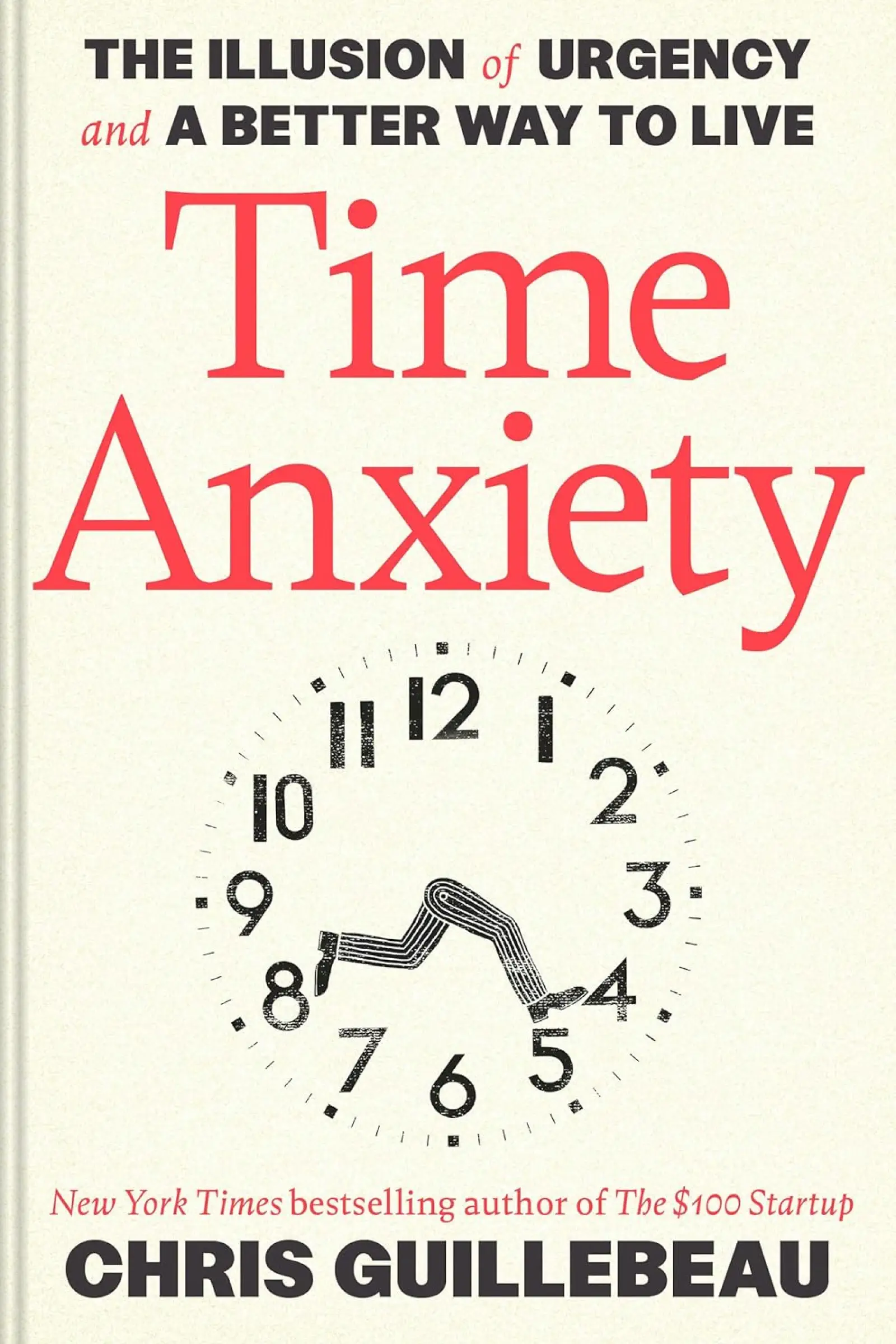
Be Right Back is Chapter 12 of Time Anxiety: The Illusion of Urgency and a Better Way to Live. The full chapter goes deeper on the evolutionary roots of avoidance and how the pattern shows up across work, relationships, and everyday decisions.
Get the book →