Move On Quickly
Half the cost of a decision is the endless cycling before you make it.
The Pattern
You're not stuck because the decision is hard. You're stuck because you keep re-deciding what you already decided.
I get stuck on small decisions all the time. What to have for lunch — I have a few go-to restaurants, but maybe I should try somewhere new. Or maybe I need a snack and an early dinner. When I open Netflix, I can spend an hour scrolling through options, reading reviews, watching trailers, and by the time I finally pick something, I'm too tired to watch it.
I'd like to make plans with friends, but it's hard to commit in advance since I have no idea what that day will feel like when it arrives. So I say no, partly to protect myself from something I might not want to do. I have a hard time committing to specific times, because I worry I'm not using the time well or that "something better will come up."
The pattern at work
What's going on here: friction loops
I call these unhelpful thought patterns friction loops. When I'm slow to make decisions or complete simple tasks, part of what happens is that a loop builds up. I neglect responding to messages — but since I've already read them, I'm thinking about them in the back of my mind even as I move on to other things. Or I've already looked at travel options, but because I failed to decide, I go back to those same browser tabs and start the process over.
The constant cycling is inefficient — and low-grade demoralizing. Friction causes you to get stuck, going back and forth without making real progress. The more friction you encounter, the more time and energy you waste — resources already in high demand.
A friction loop in real time
The 9:00 a.m. spiral
Imagine you receive an urgent request for information at work. A friction-loop thought pattern might look like this:
"Okay, there's that email from the VP about the project proposal. I should respond to this right away."
"Hmm, but how should I phrase this? I don't want to sound too eager, but I also don't want to seem disinterested."
"Maybe I should outline my thoughts first. Let me open a new document …"
"Actually, I should probably check the latest project numbers before I respond. Where did I save that spreadsheet?"
"These numbers look different from what I remember. I should double-check with Sarah from accounting."
"I'll send Sarah a quick message … oh, look, another urgent email. I should take care of that first."
"Okay, back to the VP's email. Right, the project numbers. But wait — what if the VP is looking for more of a big-picture response rather than detailed numbers?"
"Maybe I'm overthinking this. I should write a quick, professional response. But what if I miss something important?"
"You know what? I'll come back to this after my 10:00 a.m. meeting. I'll have a clearer head then."
32 minutes in. Zero words written. The loop starts again after the meeting.
By the time you return to the task, you'll need to start much of the process over. This costs time and energy and can lead to a sense of lose-lose: "The information might be helpful or outdated now, but if I don't reply at all, the VP will lose faith in me."
What's underneath
Where friction comes from
The friction in these situations often stems from an underlying fear or limiting belief. Three of the most common:
Cause 1
Perfectionism
"I have to make the absolute best choice."
Cause 2
Fear of unknowns
"If I choose this, I might miss out on something better."
Cause 3
Imposter syndrome
"Who am I to make this decision? What if I mess up?"
Friction loops keep you second-guessing and spinning your wheels instead of taking purposeful action. You feel anxious and uncertain, convinced you need to think harder, when what you need is to decide and move on. The constant cognitive reshuffling makes it hard to focus — and it contributes directly to time anxiety. How should you spend your time? What should you do next? When you defer small decisions, you go back to all the undone, unfinished things, and the loop keeps pulling.
The other direction
"Ease loops" are the opposite
You've probably heard that context-switching — sometimes called multitasking — is unhelpful. That's true. But it's not the switching itself that hurts; it's failing to complete a task before you switch. When you finish something, even something small, you feel better. Accomplishing simple tasks repeatedly moves you away from a friction loop and toward its logical opposite: ease loops.
When you move quickly through decisions instead of getting bogged down, you build up a mental reservoir of "I did this" actions. It's like replaying a video game level you've struggled with before — when you return with fresh eyes, you race through it, avoid every obstacle, and knock out the end boss without breaking a sweat. That's the target to aim for.
A practical rule
Try to touch things once
One of the best ways to move toward ease and away from friction is to practice making quick decisions. Try to "touch" things you need to do one time only.
- Working through emails or messages? Go through them one by one instead of picking and choosing or skipping around. Make it a game — reward yourself after processing a set number.
- Deciding what to have for lunch? Think about it once, then decide. Or better: pick a healthy default in advance and stick to it when you're not sure.
- Buying a gift for a friend? Do as much research as you truly need — then buy something, instead of leaving it for later when you'll go through the same search and brainstorm cycle all over again.
The "touch things once" rule won't always be possible. Work on making it more of a habit and follow it whenever you can.
A friend's model
Just book the ticket
Back when I traveled constantly, I also spent several hours each week making travel plans. I'd go back and forth over options, sometimes becoming plagued by indecision. The FOMO was real.
My friend Stephanie also traveled a lot — and while we were both experienced, she was better at booking for one key reason: she'd learned to be decisive. I asked her to explain her process, which mostly came down to "stop overthinking so much." Here's how she put it:
I waste a lot of time on minor decisions because I want the best thing. But the truth is there isn't always a best thing — or perhaps there are several best things. At the end of the day, it probably doesn't matter which hotel I stay at or how I arrive from the airport. When you make a decision, you can move on with the rest of the planning. Until you make the decision, you can't move on.
— Stephanie's model (she calls it "just book the ticket")I've thought about Stephanie's model many times since then — usually when I notice myself re-reading the same options on the same screen for the fourth time. The confirm button never disappoints.
When the loop catches you
How to recover from feeling stuck
Touching things once is a habit, not a one-and-done fix. Most likely, you'll experience a pattern of ebb and flow between friction and ease. When you get stuck, one thing helps more than anything: focus on the next right step.
Friction comes from trying to map the entire path. Ease is taking one step at a time. Ask yourself, "What's one small action I can take to move forward?" — then do that action. Doing so puts you back on an ease track.
It also helps to streamline recurring decisions and get rid of the need to remake them over and over. This is why some people meal prep for the week, or preselect outfits, or batch similar tasks so they're resolved for several days at once. The fewer variables involved, the less friction you'll encounter. Friction loops grind us down, while ease loops give us a boost.
A practice for this week
Catch and break the loop
The 2-Minute Decision Method
Next time you notice yourself cycling on a decision, run through these four steps. The goal isn't the best choice — it's a good-enough choice you can commit to and move on from.
-
Notice you're cycling
Catch the moment you've been "working on" the same decision for more than a few minutes without getting closer to an answer. Name it out loud or in writing: "I'm in a friction loop."
Prompt: How many times have I returned to this decision today?
-
Name the underlying fear
Ask what's driving the loop. Is it perfectionism ("I need the best option"), fear of unknowns ("something better might exist"), or imposter syndrome ("I might get this wrong")? Naming the fear takes some of its power away.
Prompt: What am I afraid of here?
-
Set a 2-minute decision timer
Start a timer. You have two minutes to make a call — not to keep researching or weighing options, but to decide. Whatever feels most reasonable when the timer goes off, go with it.
-
Commit and move on
Once you've decided, treat it as final. Close the tabs. Send the message. Book the ticket. The energy you free up by closing the loop is worth far more than the marginal gain from finding a better option.
Reminder: Good enough and done beats perfect and pending.
From the book
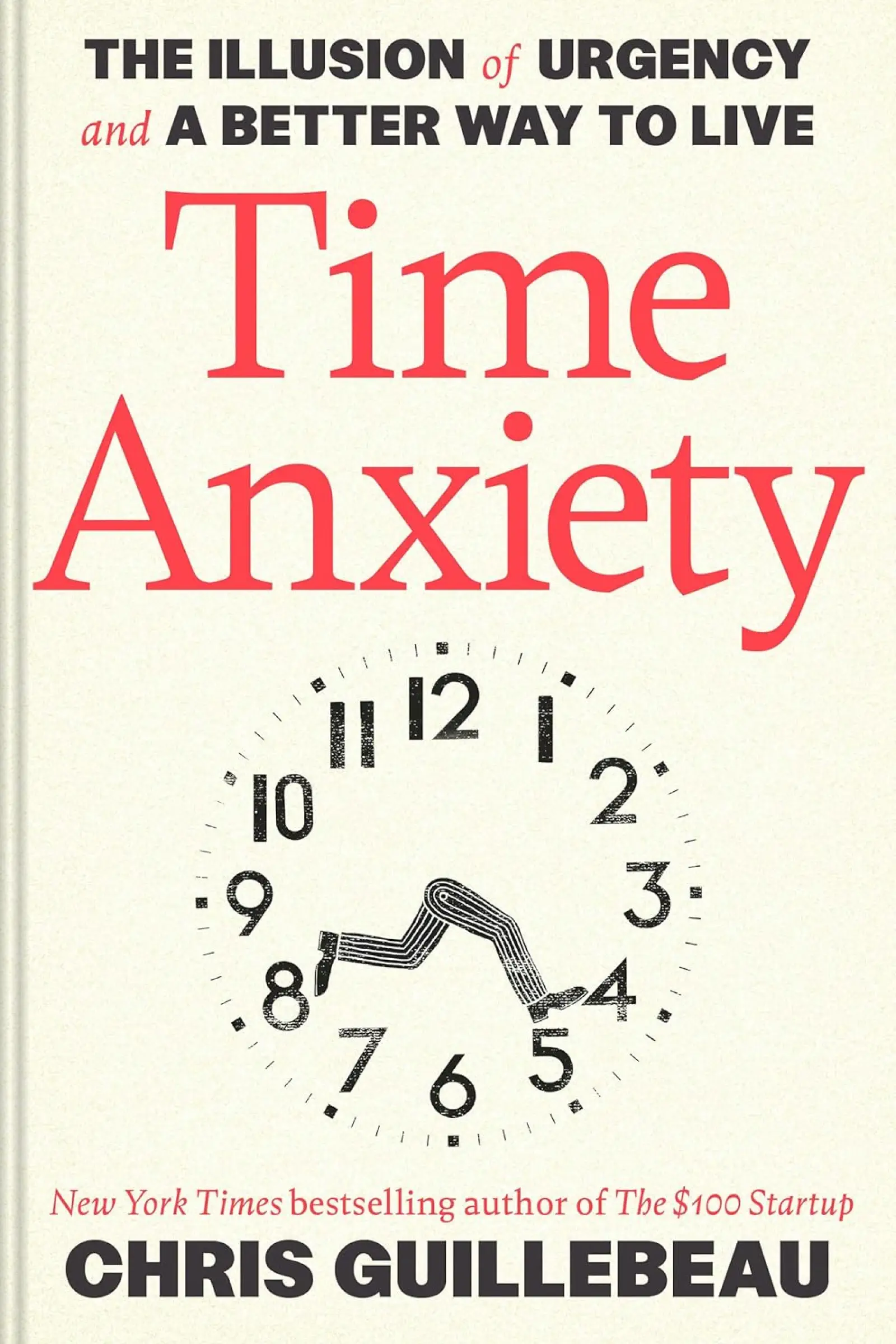
Move On Quickly is Chapter 13 of Time Anxiety: The Illusion of Urgency and a Better Way to Live. The full chapter includes more on building ease loops as a long-term practice, and how batch decisions — resolving recurring choices in advance — reduce friction across the whole week.
Get the book →