Planning for a Year Is Easier than Planning for a Day
Longer planning horizons are healthier and more effective than cramming a single day.
A single day
- Finish the proposal
- Clear inbox
- Call accountant
- Schedule dentist
- Write chapter outline
- Plan quarterly goals
- Read for an hour
- Exercise
The more you attempt, the less you accomplish.
A full year
365 days of runway. Room to breathe, miss one, and still finish.
A saying — and its opposite
— Gretchen Rubin's phrase, turned around
You may have heard the saying, "The days are long, but the years are short." Gretchen Rubin coined it in reference to parenting — watching her daughters grow up, the days packed full of details while the years slip by. It makes sense for raising children, and probably for other things too.
But I've also thought about it the other way: the years are long, but the days are short.
All too often, I cram too many things onto a single day's to-do list, only to fail at completing any important items at all. The lack of progress feels discouraging and can become a self-fulfilling prophecy: the more I attempt, the less I accomplish. Then I feel bad, and since I tend to revert to this pattern over and over, the cycle continues.
Yet I know that if I plan well — connecting the day-to-day with a greater, long-term purpose, without overscheduling — I can do so much over time. That recognition led to a core principle I use in my annual planning:
We overestimate what we can accomplish in a day, but we underestimate what we can accomplish in a year.
Most of us have access to a lot of time, if we choose to use it well. Three hundred sixty-five days gives you a lot of runway. Once I started thinking in that longer frame, bigger goals became far more attainable.
Two kinds of pressure
The big picture and the immediate moment
Thinking about time in longer spans is also less stressful. The hyperfocus-followed-by-burnout cycle common in ADHD and other neurodivergent conditions makes constant daily productivity difficult — but over time, we can accomplish a lot. Knowing this allows you to make progress and also to forgive yourself when you need to pull back.
There are two common expressions of time anxiety. Most people identify with at least one:
Big picture
"I don't know what to do with my life."
Lack of vision; missing a sense of purpose
Right now
"I don't know what to do right now."
Feeling overwhelmed and stressed in the day-to-day
The answers to both problems are connected. Once you know what you want to do with your life — or even with some parts of it — you can start applying that perspective to how you spend your days. The goal isn't to pack more in, but to pay attention and make deliberate choices.
The crossroads of dreaming and doing
Two types, each frustrated
Everything you could ever hope to achieve requires two things: an idea, and the follow-through to make it happen. Most people are naturally better at one than the other.
The Dreamer
Strong at generating ideas. Ambitious, imaginative, full of possibility. The problem is that big dreams without a plan for the inevitable distractions tend to get sidetracked.
At the end of their life, the dreamer often regrets the road not taken — the goal that never came to fruition.
The Do-er
Fastidious. Inbox at zero, never late, dedicated to quotas and goals. The problem is they're skilled at doing the wrong things.
At the end of their life, the do-er looks back and sees a long series of completed checklists — and wonders what it all amounted to.
The do-er mistakes efficiency for effectiveness. Producing becomes the end goal, not the means. They run the risk of getting lost in the details.
To live the most fulfilled life — to do more of what you want — you need to be good at both dreaming and doing. Most likely you're already strong in one of them. The constraint is the other.
What if you could apply the mindset of the dreamer to the skills of the do-er? You'd accomplish more of what matters, pursue your most important goals, and let go of the less exciting things that hold you back — while dialing down the anxiety that comes from feeling like there's never enough time.
Making it practical
Choose a yearlong project
Longer time horizons let you stretch toward goals that feel meaningful as they build. Consider what you could do for a small amount of time each day that would add up to something significant by year's end.
As a writer, my favorite example is a book. You can't write one in a day — unless it's a tiny one. But you can write a full-length book over the course of a year. My friend Laura Vanderkam read War and Peace in a year — nearly 600,000 words — one chapter a day. If she missed a day, no big deal; she caught up when she could.
You could also choose a "habit project" — something you do consistently across the year. A few examples:
- Running or walking at least one mile every day
- Writing at least one page in a journal each day
- Taking a photo daily and sharing it
- Learning a new language, a few words at a time
- Starting and maintaining a garden (built-in seasonal rhythm included)
When you're struggling with the day-to-day, adding goals and practices with a longer time horizon can feel genuinely comforting. What would you choose to accomplish in a year?
A practice for this week
Lift your most important goals off the daily list
Move from daily guilt to yearly intention
Pick the goals that keep living — and dying — on your daily to-do list. Give them a more forgiving home.
-
Empty the daily list
Write down everything you've been trying to force into single days — the goals and projects that keep rolling over without getting done.
Prompt: What's been on your list for more than two weeks without progress?
-
Lift three to the year horizon
From that list, pick the three that matter most. Move them to a "year plan" — not a daily task, but an ongoing intention with 365 days of room to grow.
Prompt: Which three would you be proud to say you finished by this time next year?
-
Find one next action for this week
Choose one of the three. What's a single, concrete step you could take this week — not the whole thing, only the next move?
Prompt: What's the smallest step that would count as real progress?
-
Release the rest from daily guilt
Let the remaining items live on the year plan without appearing on your daily list. They haven't been abandoned — they've been given proper space. A day is the wrong container for them.
From the book
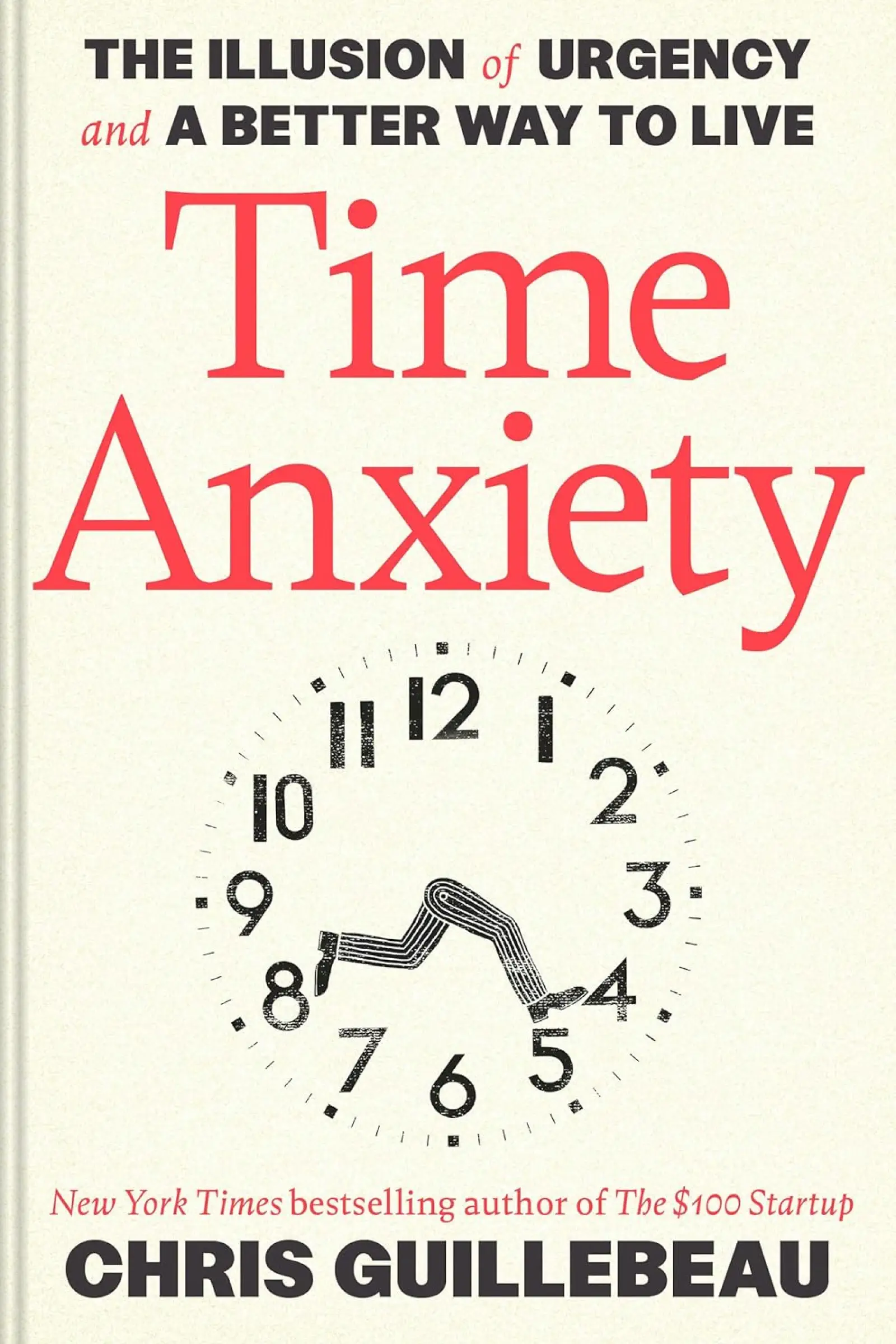
Chapter 23 of Time Anxiety: The Illusion of Urgency and a Better Way to Live goes deeper into the dreamer-doer framework and the annual planning practice — including how to connect long-horizon goals to daily choices without over-scheduling either.
Get the book →