How We Respond to Regret
Some regret is unavoidable. What you do with it matters more than dodging it.
The futile path
Avoid all regret
Live with no regrets. Make only the right choices. Undo the ones that hurt. Go back. Change it.
The real work
Respond to regret well
Accept the loss. Learn from it. Choose what comes next. Move forward without replaying the original scene.
Once a crucial choice is made, there's no going back. But there's always a next move.
Dramatic movies draw special attention to a few key choices the main character makes. One of the most interesting parts of the storyline is how the character chooses to respond to tragedy and loss. These choices create before-and-after sequences: once a crucial choice is made, there's no going back. Sometimes the character experiences sorrow about a choice and spends the rest of the movie trying to undo the consequences.
Perhaps this is why so many time travel stories are popular. Who hasn't had the fantasy of going back to change something? Maybe our longing is to mend a broken relationship, or to have studied something different in college, or to have taken that trip we kept deferring.
Paying attention to something in our past we regret — or to something we might regret in the future — can be helpful. The question is what we do with that attention.
Two sides of the same emotion
Regret can move you forward — or hold you in place
Avoiding future regret has long been a powerful motivator for me. Asking myself "Will I regret it if I don't try?" led me to undertake projects like the quest to visit every country. After I first had the idea, I couldn't get it out of my head — and I knew I'd always regret it if I didn't try.
This is called anticipatory regret, and it can be a useful tool in making decisions. Drawing on regret to think about the future and make active choices is helpful. Dwelling on it for events in the past is another thing entirely.
I was good at building small businesses to an initial level, but they always plateaued as I abandoned them for newer projects. My newer books didn't sell as well as the earlier ones, and I was plagued with the sense of not keeping up. A turbulent relationship I was in should have ended earlier, but it felt impossible for me to pull away. I regretted some things about all of those situations, and I had a tendency to fixate on my errors.
I had to learn, slowly and painfully, that some amount of regret in life is natural and unavoidable. Regret is another form of loss, as natural as the fact that all life leads to an end. This simple fact — one experienced in some form by every living adult — is uncomfortable. We want to believe we can live with no regrets, like the message of countless bumper stickers and inspirational social media posts, but this belief sets us up for failure.
We are going to have some regrets. Learning to live with them makes us stronger, not weaker.
On big decisions
It's rarely too soon
Economist Steven Levitt conducted a study on major life decisions using virtual coin flips to examine the impact of making significant changes. Participants uncertain about decisions such as quitting a job or ending a relationship flipped a coin to decide. Levitt found that those who made changes reported higher happiness levels both two and six months later, regardless of whether the coin toss influenced their choice.
The study suggests that people are often too cautious and that making bold changes can lead to increased happiness. The idea is to get comfortable with change, so that it becomes something normal instead of something unfamiliar or scary.
I've written about change for many years and heard countless stories from readers who've made big changes. One lesson keeps coming up: sometimes it's too late, but it's rarely too soon. Almost no one ever says "I wish I'd made that change later."
Here's what some of those readers shared:
For many years I considered going back to grad school to support a change in my career. Close friends recommended against it — "You don't need grad school to make a career change. Just start doing the work." True, but I kinda just wanted to go. After nearly ten years of hemming and hawing I finally decided to go for it and it was the best thing I've ever done. It's definitely the change I wish I'd made earlier.
I wish I had met my dad sooner. My relationship with him — now two years old — makes a huge difference in my life and his. And I'm proud of my courage for finally reaching out.
I decided to start therapy with a gender-affirming therapist, and shortly thereafter came out and started to transition. So — lots of changes. And I definitely wish I'd done it sooner!
The last big change I made was to stop drinking — definitely one that I feared in advance but has brought so much relief afterward.
Like my readers, I've made a lot of changes in my life, and sometimes I've been afraid in advance of doing so — but afterward, I almost always think: I'm so relieved. The relief comes from accepting that a lot of things are outside our control, while also finding purpose in focusing on the limited areas where we can make a difference.
If something's on your mind, pay attention to it.
A framework for deciding
The ten-year regret test
When faced with a choice, most of us draw on some combination of analysis and intuition — a pros and cons list, or a gut feeling. Here's a third approach.
The question to ask
"How will I feel about this decision ten years from now?"
This filters out the noise of the present moment and reduces the weight of immediate pressures that might lead you to defer the decision. Not making a choice is making a choice.
You can apply this question to many types of choices:
- Should I change jobs or pursue a new career path?
- Should I move to a new city or country?
- Should I go back to school?
- Is it time to commit to or end a relationship?
- Should I spend more time on things that don't generate income but make me happy?
In many cases, the ten-year regret test will produce an immediate answer. When your answer is "I don't know," focus on what feels right for the next step. If you aren't sure whether to pursue a course of study, think about how it feels to apply for it. Based on what happens after that, you can ask the ten-year question again when you have more information.
Some ideas here, including the ten-year regret test, are based on concepts from Dan Pink, author of The Power of Regret.
A practice for right now
Work with what you're carrying
Process a regret you're still holding
Regret tends to linger when it hasn't been examined. This exercise helps you separate what's real from what's optional — and find a way to move.
-
Name the regret
Write down one regret you're currently carrying. Get it out of your head and into words.
Prompt: What is it, and how long have you been holding it?
-
Separate the loss from the self-blame
Some part of what you feel is real and permanent — something that can't be undone. Some part is self-blame, which is optional. Name both, separately.
Prompt: What's the actual loss? What's the story you're adding on top of it?
-
Identify what it taught you
Even painful experiences carry information. What did you learn — about yourself, about what you want, about how you want to show up?
Prompt: If a close friend went through this, what would you want them to take away?
-
Choose one forward response
Name one action, however small, that honors what you learned instead of reliving the original choice. The goal is a response — not a fix, not an undo.
Prompt: What would it look like to carry this lightly instead of heavily?
From the book
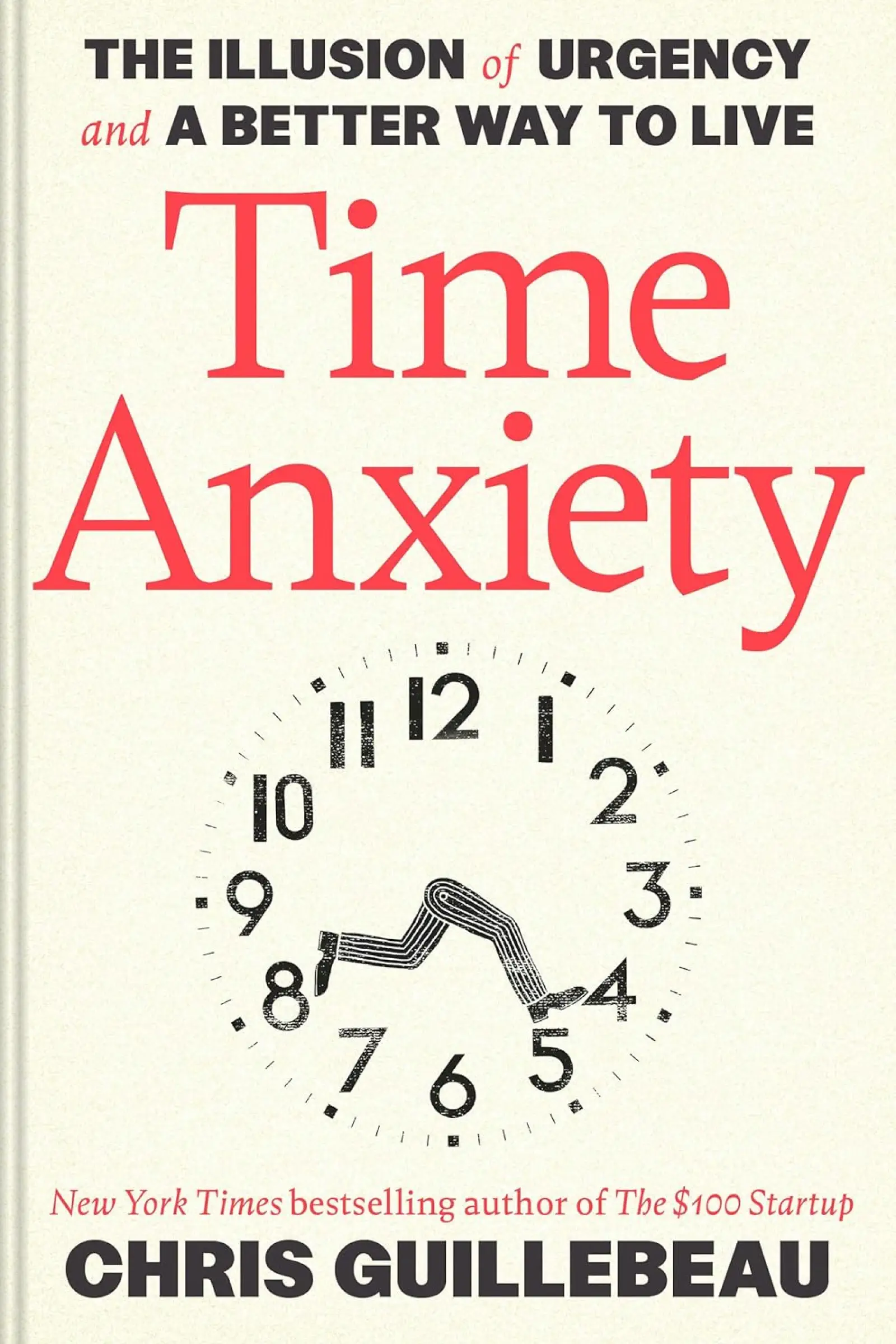
How We Respond to Regret is Chapter 21 of Time Anxiety: The Illusion of Urgency and a Better Way to Live. The full chapter expands on anticipatory regret as a decision-making tool and draws further on Dan Pink's research into why regret — understood well — is one of the most useful emotions we have.
Get the book →