Time Rules
Time rules exist to serve you. You don't exist to serve time rules.
Without ever thinking about it, you may be living your life by a set of time rules. Rules you either set for yourself, or absorbed from the culture around you. They govern how you spend your time — often unwritten, often unexamined, but deeply embedded in the decisions you make every day.
The tricky part: time rules feel like facts. They feel like basic competence, or decency, or professionalism. But they're beliefs — ones you adopted somewhere along the way, usually without a conscious choice.
The two sources
Societal rules and personal rules
Time rules come from two places: the world around you, and yourself.
Start with punctuality — a straightforward example that turns out to be far less universal than most people assume. For several years in my twenties, I lived aboard a hospital ship deployed in West Africa. In the rural communities we worked in, "village time" meant a meeting might start thirty minutes, an hour, or more past the scheduled time — not a failure, a norm. Conflicts arose not because anyone was wrong, but because two different sets of rules were operating in the same space.
Or take mealtimes. "Dinnertime" feels fixed — but only because you absorbed a specific version of it growing up. Move abroad, or marry into a family with different habits, and the rule shifts. The meal doesn't change. The rule does.
That's the nature of societal time rules: they feel absolute until you encounter someone who was raised differently.
Personal time rules work the same way — they feel like standards, but they're stories you've been telling yourself for so long they stopped feeling like stories.
A look at your own rules
Six rules worth questioning
Personal time rules are the ones you've set for yourself — sometimes deliberately, more often through accumulation. They feel like discipline or self-respect. They can also become traps. Here are six of the most common ones, each paired with the question worth asking.
"I must wake up at 6:00 a.m. every day to be productive."
Who decided that your productivity starts at 6 a.m. — and what happens on the days you don't make it?
"I can't start my workday without completing my morning routine."
Is the routine serving the work, or has it become a precondition that delays you?
"I return phone calls within an hour."
Does this expectation serve you, or does it mean you're always on call for whoever decides to reach out?
"I reply to every email the same day it was sent, without exception."
What does "without exception" cost you on days when something more important needs your attention?
"If I start a project, I always see it through."
Is finishing always the right move, or does this rule keep you committed to things that stopped making sense?
"I can't go to bed until I've completed everything on my to-do list."
Who's in charge here — you, or the list?
These rules sound reasonable in isolation. They might even be praised — "she's so responsive," "he always finishes what he starts." The problem comes with the word always. And with the word can't. Rules with no flexibility are rules waiting to break you.
The cost of rigid rules
Someone joined a work conference call from the hospital several hours after giving birth that morning. She later acknowledged it was a poor choice. But she followed her rule.
That's an extreme case, but the pattern shows up everywhere: people burning out in pursuit of standards they set for themselves, standards no one else required of them. Excessive rigidity — the unwillingness to modify a rule even when doing so would clearly be better — is one of the defining features of time anxiety.
There's also a second problem: the clock-watching that rigid rules create. When you're monitoring your compliance with a rule, you're pulled out of the present moment. You can't be absorbed in something if part of you is tracking whether you're still on schedule, still within the rule's boundaries, still measuring up.
Strict time rules tend toward an all-or-nothing mindset. Either you followed the rule perfectly, or you failed. There's no middle ground where you made a reasonable judgment call. That framing makes every imperfect day feel like a referendum on your character.
A practice for working with it
The Time Rules Audit
Rules create structure, and some of yours are worth keeping. The goal is to hold them consciously — to know which ones you've chosen and which ones chose you.
Audit your own rules
Set aside fifteen minutes. Write down the rules that govern your days — not the ones you think you should follow, but the ones that genuinely shape your behavior. Then run each one through three questions.
-
Write them down
List the time rules you follow — the ones you'd feel guilty or anxious breaking. Be specific. "I work until everything's done" is a rule. "I check email before I do anything else" is a rule. Don't edit; capture.
Aim for at least five. Most people find eight to twelve once they start.
-
Ask: did I choose this?
For each rule, ask whether you consciously adopted it or absorbed it over time. Rules you chose deliberately are worth scrutiny. Rules you absorbed without thinking are worth more scrutiny.
Example: "I return calls within an hour — did I decide this, or did I just start doing it because my boss did?"
-
Ask: what happens if I break it?
Some rules have real consequences when broken: people are let down, commitments are missed, actual damage occurs. Others have only imagined consequences — you'd feel guilty, or someone might think less of you, or something abstract might go wrong. Separating these two is the most clarifying thing you can do.
Example: "If I don't reply to every email same-day, do actual things go wrong — or do I only feel like things go wrong?"
-
Decide: keep, modify, or release
Rules that passed the first two questions — consciously chosen, with real consequences for breaking — are probably worth keeping. Rules that didn't pass deserve one of two treatments: modify them to be more flexible ("I try to reply within 24 hours when possible") or release them entirely. You don't owe every rule you've accumulated a place in your life going forward.
After the audit, you'll likely still have rules. That's fine. The difference is you'll know why — and you'll have a clearer sense of which ones are genuinely yours.
From the book
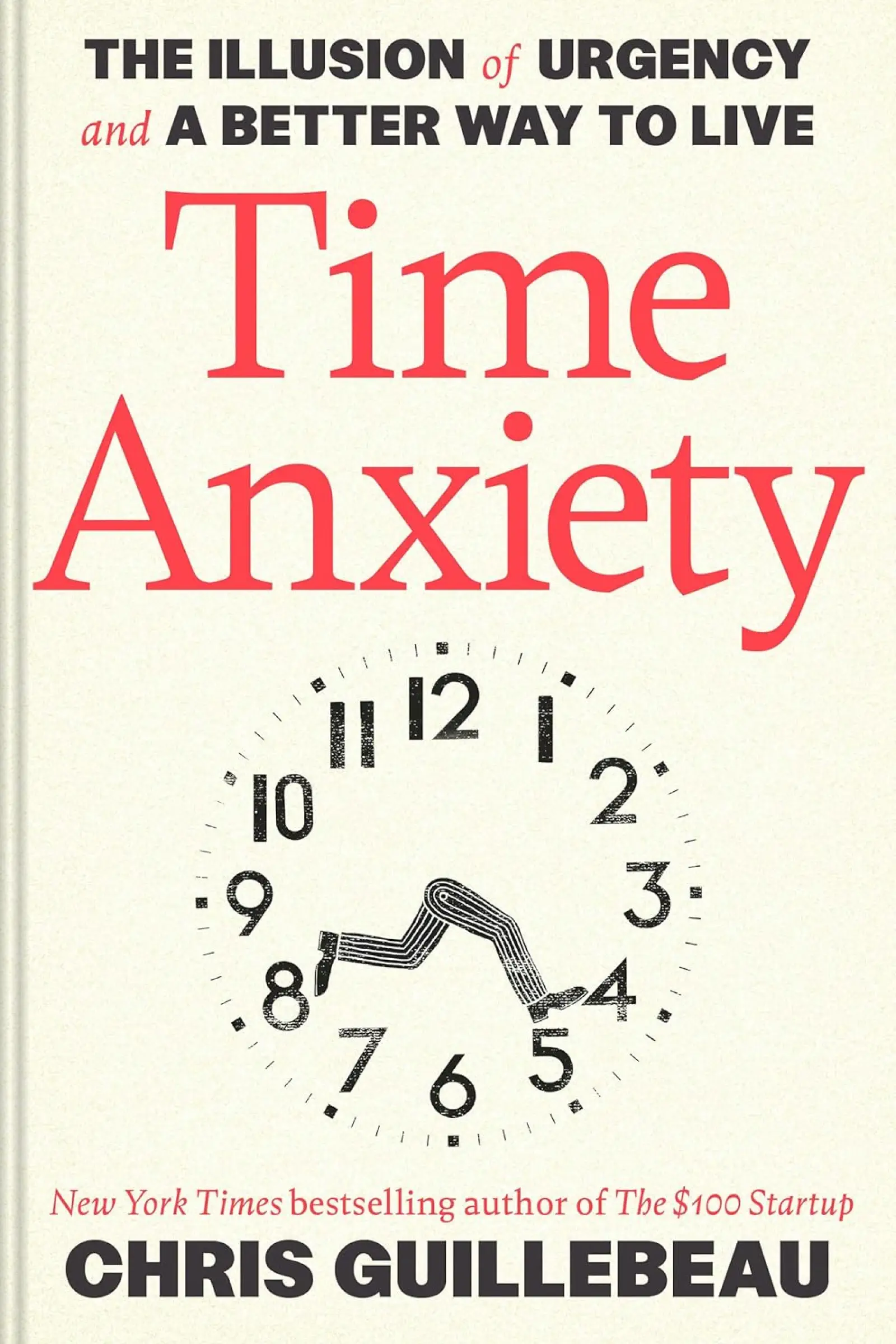
Time Rules is Chapter 5 of Time Anxiety: The Illusion of Urgency and a Better Way to Live. The full chapter goes deeper on how cultural and personal time rules interact, includes more examples of rules operating invisibly in daily life, and connects this framework to the broader argument about reclaiming your relationship with time.
Get the book →